Realtime AI News
Whatnot Acquires AI Startup Shaped to Power Real-Time Live Shopping Recommendations
Livestream shopping platform Whatnot has acquired Shaped, a machine learning company specializing in real-time recommendations and search. The deal aims to solve live commerce's toughest challenge: helping shoppers find products as inventory, auctions, and buyer demand change by the second.
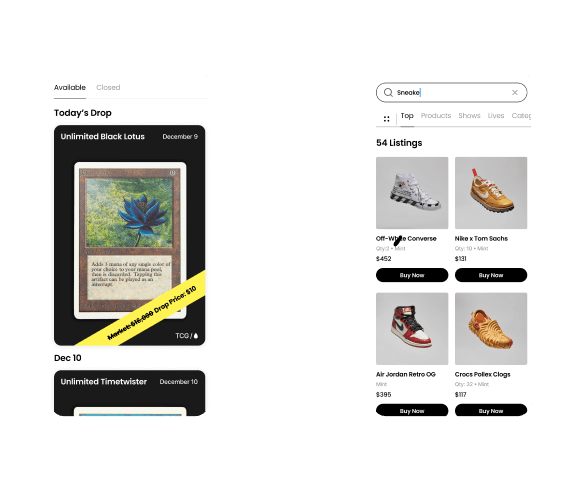
Whatnot, the livestream shopping platform, has acquired Shaped, a machine learning startup focused on real-time recommendation and search systems, according to a TechCrunch report. The deal is designed to strengthen Whatnot's personalization and discovery capabilities as the platform expands across new product categories and millions of buyers.
According to the company, the acquisition helps Whatnot solve one of live commerce's biggest challenges: helping shoppers find the right products while inventory, auctions, and buyer demand change in real time. Unlike traditional e-commerce where product catalogs remain relatively stable, Whatnot's marketplace is constantly evolving, with live auctions that can end in minutes or last for hours.
Emmanuel Fuentes, VP of Data and AI at Whatnot, told TechCrunch that the company has spent the last six years improving its recommendation engine speed, reducing latency from roughly a day to just minutes. Integrating Shaped's technology is expected to push recommendations even closer to real time. Whatnot's systems currently process more than 500,000 hours of live video and millions of real-time interactions every week.
Founded to help businesses build AI-powered recommendation systems, Shaped developed technology that combines customer data with large language models and machine learning to deliver personalized search and discovery. Its customers included Outdoorsy and QVC.
As part of the deal, Shaped founder and CEO Tullie Murrell, along with nearly a dozen engineers and AI researchers, will join Whatnot. Murrell will lead Whatnot's newly formed Applied AI Research group. Murrell previously worked at Meta before launching Shaped.
The acquisition comes amid significant growth for Whatnot. Launched in 2019, the company recently surpassed 1 billion seller orders. Last year, Whatnot raised Series F funding at a valuation of over $11 billion, adding 20 million buyers over the past year. Whatnot has also expanded aggressively, launching over 35 new categories last year and more than 45 additional categories in the first half of 2026.
The deal reflects the accelerating integration of AI across the resale and live commerce space. For Whatnot, Shaped's real-time recommendation technology could prove a critical differentiator as competition in the live shopping market intensifies.
Why it matters
The acquisition strengthens Whatnot's AI capabilities in the competitive live commerce space, signaling that real-time personalization is becoming a key battleground for e-commerce platforms.
Nearby Updates
All07/16, 01:00
Suno Hack Reveals AI Music Generator Scraped YouTube Audio for Training
A hacker gained access to Suno's source code through a supply chain attack, revealing evidence that the AI music generator scraped decades of audio from YouTube Music, Deezer, and other platforms. The breach exposes Suno's training data practices at a time when the company faces copyright lawsuits from major record labels.
07/16, 01:09
Meet GPT Red: an LLM super hacker OpenAI built to make its models safer
Meet GPT Red: an LLM super hacker OpenAI built to make its models safer. OpenAI has built an LLM super hacker called GPT Red that it uses as a sparring partner to help its other models boost their defenses against cyberattacks. Last week the company released the latest version of its flagship LLM, GPT 5.6. OpenAI says that training...
07/16, 01:27
Model Routing Is Simple. Until It Isn’t.
Model Routing Is Simple. Until It Isn’t..
07/16, 02:04
Thinking Machines amps up its bet against one size fits all AI with its first open model, Inkling
Thinking Machines amps up its bet against one size fits all AI with its first open model, Inkling. It's the company's first public proof point after a year and a half spent building AI infrastructure largely out of public view.