Realtime AI News
NVIDIA Unveils Vera Rubin Architecture, Touts Best Intelligence Per Dollar for Post-Training
NVIDIA has announced the Vera Rubin architecture, designed specifically for post-training workloads in the agentic AI era. The company claims extreme codesign delivers the lowest cost per token, maximizing intelligence generated per dollar spent.
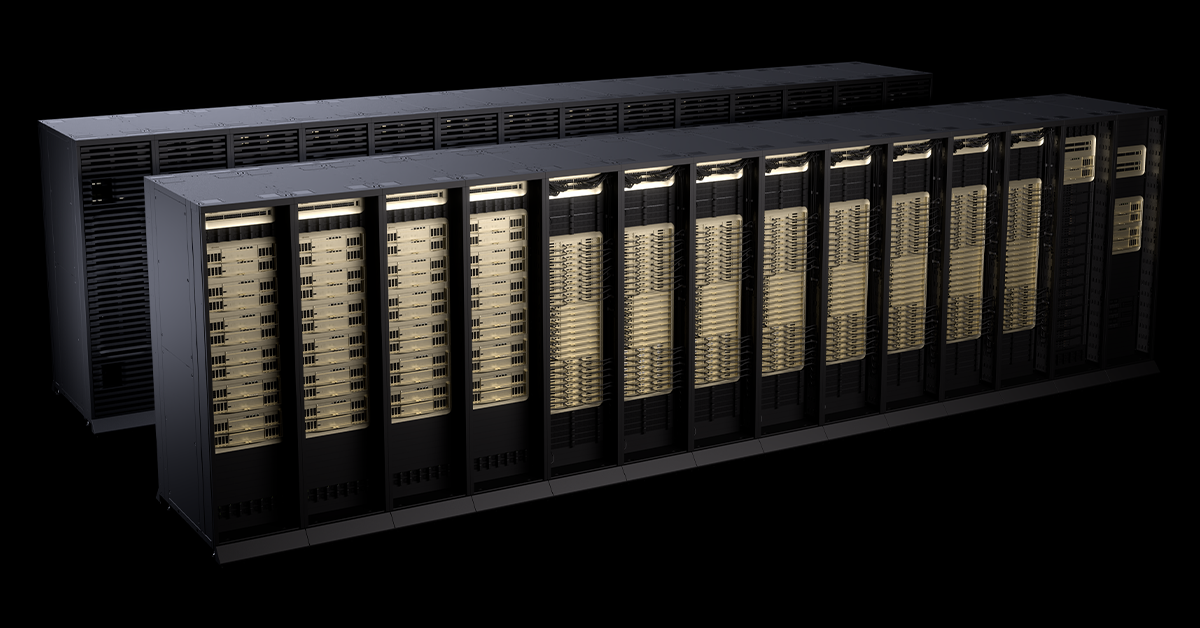
NVIDIA today unveiled the Vera Rubin architecture, positioning it as the most cost-efficient chip design for post-training workloads — the phase of AI development after initial pre-training that includes fine-tuning, alignment, and distillation.
The architecture achieves its efficiency through what NVIDIA calls extreme codesign, a hardware-software co-optimization strategy that reduces per-token compute costs. The company argues that in the age of agentic AI, post-training will become the fastest-growing segment of compute demand.
Unlike traditional GPU architectures optimized primarily for pre-training or inference, Vera Rubin's design targets the specific compute patterns found in post-training workflows. NVIDIA claims this results in significantly lower per-token inference costs at scale.
NVIDIA introduced intelligence per dollar as a new headline metric with Vera Rubin, signaling that the AI hardware procurement calculus is shifting from raw peak performance to real-world deployment economics.
The timing of the Vera Rubin announcement aligns with surging demand for post-training compute from frontier model developers as GPT, Claude, and similar models move into agentic applications. NVIDIA is positioning Vera Rubin to capture this growing slice of the AI compute market.
Key questions ahead include Vera Rubin's concrete performance benchmarks and production timeline, as well as cloud provider procurement plans. Whether competitors like AMD or custom AI chip makers will develop competing architectures for post-training workloads is also worth watching.
Sources
Why it matters
Shifts the AI chip competition metric from peak flops to intelligence-per-dollar, potentially reshaping procurement strategies for cloud providers and model developers.
Nearby Updates
All07/17, 22:41
DeepSeek Completes $7.4 Billion Funding Round, Joining Global AI Elite
Chinese AI lab DeepSeek has completed a $7.4 billion funding round, positioning it among the most well-capitalized AI startups globally. The massive raise marks the ascension of a Chinese domestic AI lab into the global first tier of AI companies.
07/17, 23:21
Patreon Stops Asking AI Bots Not to Scrape — Starts Blocking Them with Cloudflare
Patreon is partnering with Cloudflare to actively block AI scraping bots instead of relying on voluntary compliance via robots.txt. The move marks a hardening stance across the creator economy against unauthorized use of creators' content for AI training.
07/17, 23:57
NVIDIA and Hugging Face Launch Scalable Fine-Tuning for Video and Image Models
NVIDIA has integrated its NeMo Automodel with Hugging Face's Diffusers framework, enabling developers to fine-tune video and image generation models at scale. The integration automates distributed training across multiple nodes, removing key infrastructure barriers for production deployments.
07/17, 21:47
Crypto Hardware Wallet Giant Ledger Launches AI Agent Stack
Ledger, the company best known for cryptocurrency hardware wallets, has introduced an AI Agent Stack designed to connect artificial intelligence tools. The move marks a significant expansion from crypto security hardware into AI infrastructure.