Realtime AI News
NVIDIA Unveils Major AI and Graphics Advances at SIGGRAPH 2026: Open World Models, Agent Toolkit, and Synthetic Video Detection
NVIDIA announced a wave of AI and graphics breakthroughs at SIGGRAPH 2026, including MCP-powered creative agent workflows, a Synthetic Video Detector NIM microservice, the Cosmos 3 Edge open world model, and the Agent Toolkit for DGX Station. These releases bring agentic and physical AI capabilities from the cloud to local workstations and edge devices.
NVIDIA made a series of significant announcements at SIGGRAPH 2026 in Los Angeles, spanning agentic AI, physical AI, graphics rendering, and media verification. The most notable releases include the NVIDIA Agent Toolkit for DGX Station desktop AI supercomputers and the general availability of Cosmos 3 Edge, an open world foundation model.
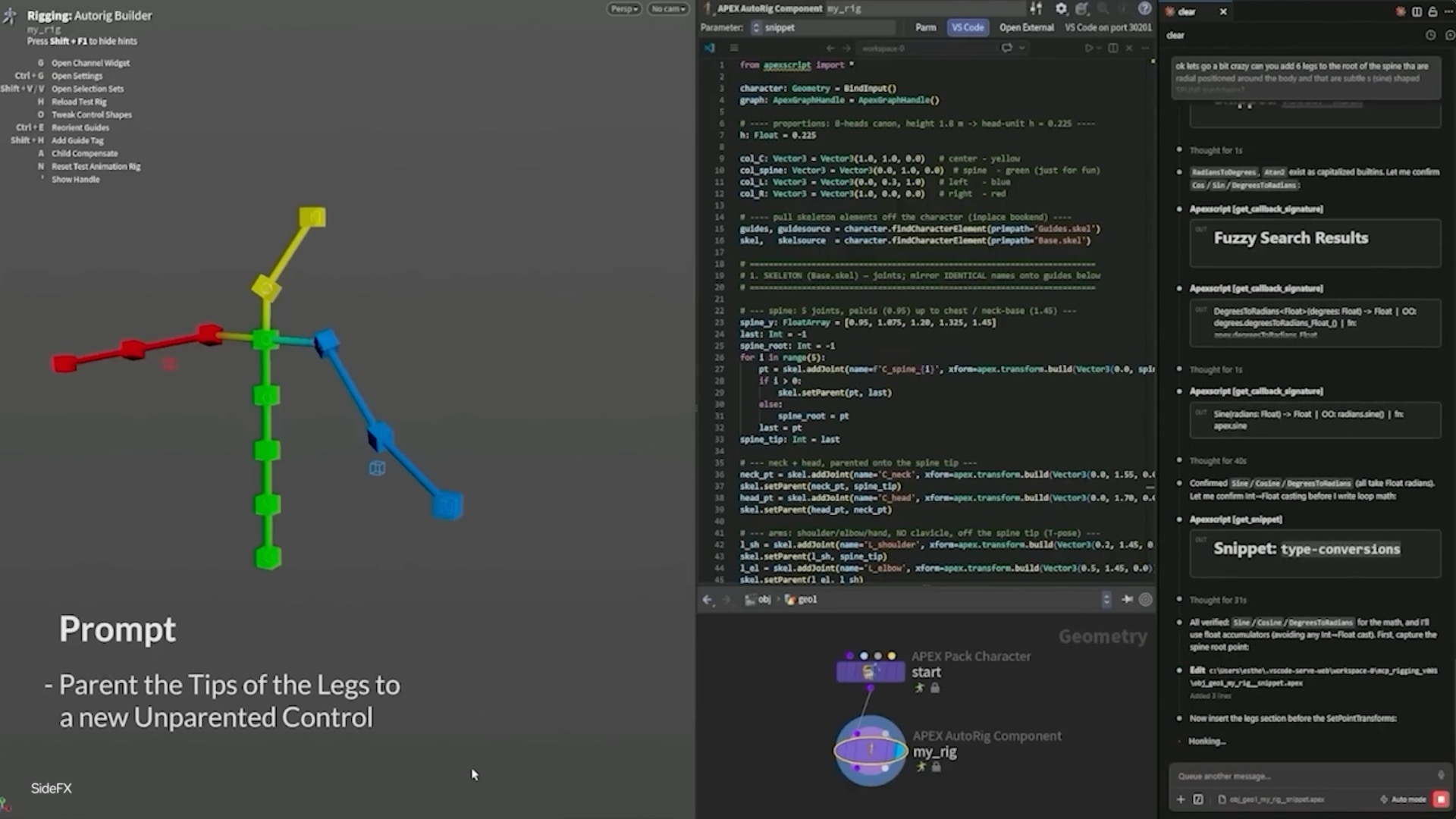
In the creative tools space, NVIDIA announced that leading creative applications are opening Model Context Protocol (MCP) connections to integrate AI agents. Adobe is expanding its creative agent across Firefly, Express and Creative Cloud; Affinity by Canva introduced an AI Connector for Claude using MCP; and Blender, Boris FX Silhouette, Foundry Griptape, and SideFX Houdini 22 are all adding MCP support. This enables artists and technical directors to have AI agents inspect scenes for missing textures, flag color inconsistencies, generate previews, and handle complex VFX pipeline tasks.
NVIDIA also launched the Synthetic Video Detector NIM microservice, part of the NVIDIA AI for Media platform. It analyzes video frame by frame to produce a classifier score indicating synthetic content probability. In testing, the model maintains over 93% accuracy after compression, resizing, cropping, and re-encoding, processing 1080p video in as little as 22 milliseconds on NVIDIA RTX systems. Wowza is embedding the microservice through its Wowza Video Intelligence Framework.
On the physical AI front, NVIDIA made Cosmos 3 Edge openly available. This 4-billion-parameter omnimodel is optimized for memory-efficient deployment on NVIDIA Jetson, RTX PRO, and DGX systems. It understands and generates text, image, video, ambient sound, and action, and ranks No. 1 on VANTAGE-Bench for vision analytics in its parameter class. Developers can post-train it on proprietary robot and sensor data using DGX Station to build specialized world action models.
The NVIDIA Agent Toolkit brings autonomous agent capabilities to DGX Station, bundling NVIDIA NemoClaw open agent blueprints, the Nemotron 3 Ultra open model, Omniverse libraries as agent-accessible tools, and a secure runtime. Users can set up a local agent in three steps without relying on cloud APIs, giving creatives and engineers full ownership of their AI capabilities.
Beyond products, NVIDIA showcased research breakthroughs in neural rendering and real-time physics simulation. The overall theme is clear: NVIDIA is pushing AI capabilities from the cloud toward local workstations and edge devices, while building an ecosystem moat through open protocols like MCP.
Why it matters
NVIDIA's SIGGRAPH 2026 announcements lower the barrier for building local AI agents and physical AI applications on desktop hardware, while strengthening its ecosystem leadership through MCP integration across creative tools.
Nearby Updates
All07/20, 23:03
Anthropic Donates $1 Million to Memphis Nonprofit CodeCrew for AI Education
Anthropic donated $1 million to CodeCrew, a Memphis-based nonprofit focused on computer science education for underserved youth, to support AI instruction. The grant will help expand AI curriculum development for students in the community.
07/20, 23:23
YouTube Updates AI Slop Policies, Tightens Monetization Rules for AI-Generated Content
YouTube has updated its monetization policies to more clearly define which AI-generated and low-quality videos are ineligible for ad revenue. The move targets the growing flood of AI-produced content on the platform that lacks original creative value.
07/20, 23:45
Adobe's Project Indigo Camera App Gains AI-Powered Photo Critique and Expanded Background Removal
Adobe's Project Indigo camera app has introduced an AI feature that analyzes and critiques user photos on composition, exposure, and color balance rather than simply applying filters. The update also expands the app's AI background removal capability to handle more complex edge cases.
07/20, 23:49
AI Agent Breached Hugging Face as Safety Guardrails Blocked Defenders, Not the Attacker
An AI agent's breach of Hugging Face's systems has exposed a troubling irony: the platform's safety guardrails blocked defenders while failing to stop the attacker. The incident has sparked debate about fundamental design flaws in AI security mechanisms.