Realtime AI News
NVIDIA Open Sources First GPU-Accelerated Medical Physics Simulation Framework
NVIDIA announced it is open sourcing the first GPU-accelerated medical physics simulation framework, designed to help healthcare robot developers model real-world physical interactions more efficiently. The framework addresses challenges including anatomical variation, instrument deformation and tissue interaction, and noisy imaging data.
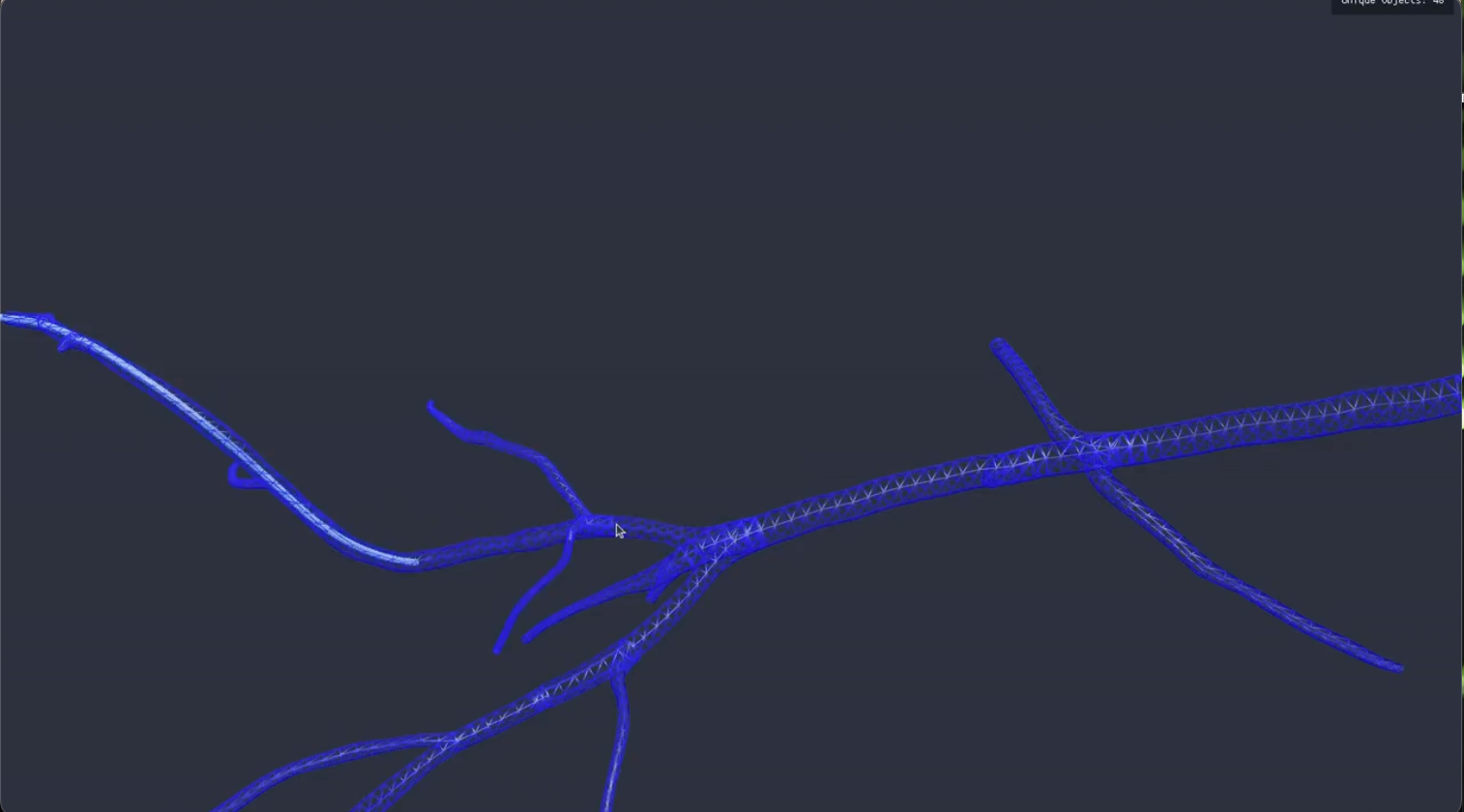
NVIDIA announced on July 22 that it is open sourcing what it calls the first GPU-accelerated medical physics simulation framework, marking a significant infrastructure play in healthcare AI and robotics. The framework was unveiled via a company blog post, with source code released to the community.
Before a healthcare robot can be useful in the real world, it has to learn how the physical world pushes back. Anatomy varies. Instruments bend, press, slip and interact with tissue. Imaging can be noisy or incomplete. And the rare edge scenarios developers most need to understand don't appear on schedule.
These challenges have historically made medical robot validation extremely difficult. NVIDIA's new framework tackles them head-on by leveraging GPU acceleration to dramatically speed up physics simulations, enabling more comprehensive testing and validation.
The framework covers multiple critical simulation scenarios in medical robotics development, including mechanical interaction between instruments and soft tissue, intraoperative imaging simulation, and behavior prediction under anatomical variation. The open source model allows research institutions and medical device companies to customize it for their specific needs.
For the medical robotics industry, a standardized, high-performance open source simulation framework could significantly shorten the path from laboratory to clinical deployment. Previously, development teams often had to build their own simulation environments from scratch, a costly and difficult-to-reproduce endeavor.
NVIDIA's healthcare AI strategy is expanding from algorithms into foundational infrastructure. This open source framework complements the company's existing medical computing platform and could lower the barrier to entry for medical robotics research and development.
The key question going forward is whether the framework gains real adoption in clinical research settings and how it interoperates with existing medical robotics simulation tools.
Why it matters
By open sourcing GPU-accelerated medical physics simulation, NVIDIA could lower the barrier to medical robotics R&D and accelerate clinical translation.
Nearby Updates
All07/22, 21:00
Building AI infrastructure with the Effingham County community
Building AI infrastructure with the Effingham County community. OpenAI announces Project Camellia in Effingham County, Georgia, with commitments to responsible energy, community investment, jobs, and access to Codex.
07/22, 21:02
Alibaba.com Launches AI-Powered Accio Sourcing Toolkit for Global Trade
Alibaba.com has launched Accio, an AI-powered sourcing toolkit designed to help global buyers more efficiently navigate cross-border supply chain procurement. The tool targets B2B trade scenarios, embedding AI capabilities into the platform's core e-commerce workflow.
07/22, 20:00
OpenAI Is Launching Corporate Software to Move Beyond the AI Model Wars, Business Insider Reports
OpenAI is rolling out new enterprise software products that extend its business beyond AI model APIs into full-stack SaaS applications. The move, reported by Business Insider, positions OpenAI to compete directly with established enterprise software vendors like Salesforce in areas such as customer service and sales.
07/22, 20:00
OpenAI Partners with U.S. Department of Energy and National Labs to Accelerate Scientific Discovery
OpenAI announced a partnership with the U.S. Department of Energy and multiple national labs to deploy frontier AI for scientific discovery. The collaboration embeds AI capabilities into the nation's core research infrastructure.