Realtime AI News
Microsoft openly competes with OpenAI and Anthropic, pitches own AI models to enterprises
Microsoft CEO Satya Nadella told Wall Street analysts during the company's quarterly earnings call that Microsoft is selling its own homegrown AI models, agents, and security as cheaper alternatives to services from OpenAI and Anthropic. The company reported $90 billion in quarterly revenue and $35.8 billion in net income for Q4.
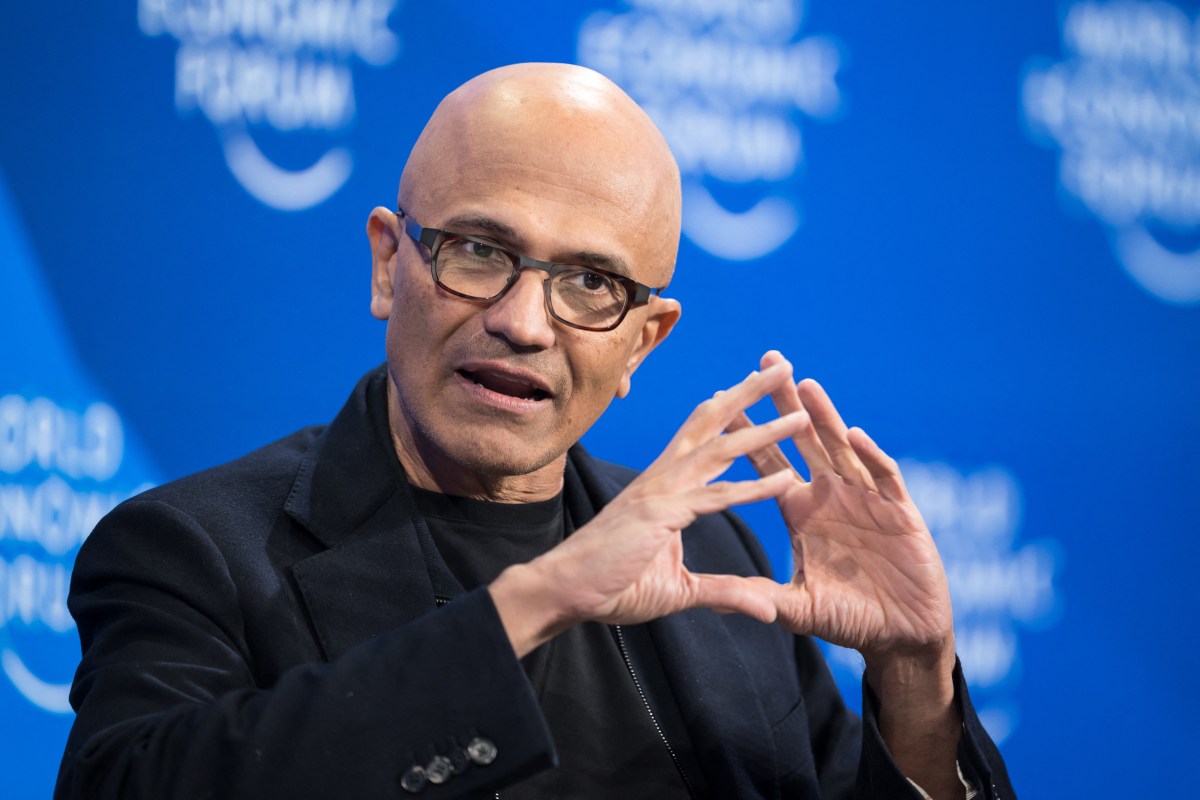
Microsoft is openly positioning itself as a competitor to OpenAI and Anthropic in the enterprise AI market. During the company's quarterly earnings call on Wednesday, CEO Satya Nadella told Wall Street analysts that Microsoft will sell its own homegrown AI models, agent platforms, and security solutions as lower-cost alternatives, positioning the company as a direct competitor to the premium services that OpenAI and Anthropic are developing for their own growth.
The remarks came as Microsoft posted blockbuster financial results: $90 billion in Q4 revenue with $35.8 billion in net income, and $331.8 billion in full fiscal year revenue with $133.7 billion in net income. Nadella made clear he would not let OpenAI and Anthropic's expansion into applications and agentic infrastructure threaten that cash flow.
Nadella has been warning enterprises to use multiple models rather than relying on any single frontier AI lab. On the call, he escalated that message, arguing that enterprises should maintain a "swappable" model architecture. "The goal is to have the firm be in control of their own destiny," he said. "You got to keep your harness separate from the model ... that means any model at any given time is swappable." He cited last week's Hugging Face breach as evidence that depending on any single model is dangerous.
Microsoft is actively selling its MAI family of models running on its own Maya chips. Nadella announced over a dozen new models across image, voice, transcription, coding, and security, including the company's first reasoning model, MAI Thinking One. For Anthropic's flagship Mythos product, Microsoft earlier this week unveiled MAI Cyber One Flash, which Nadella said "achieves better performance than the much larger Mythos model, but at half the cost when combined with our multi-agent security harness."
Microsoft's strategy is dual: Azure offers over 11,000 models including those from OpenAI, Anthropic, Mistral, and xAI, while simultaneously pushing its own alternatives. The company's core message is that enterprises should use frontier models but not trust them enough to rely on any single one. This "swappable architecture" philosophy is transforming Microsoft from an AI investor into a direct AI competitor, creating growing commercial pressure on both OpenAI and Anthropic.
Why it matters
Microsoft's shift from AI investor to direct competitor could reshape the enterprise AI market, putting pressure on OpenAI and Anthropic to rethink pricing and product strategy.
Nearby Updates
All07/30, 08:00
How avatarin built a 24/7 retail agent with GPT Realtime
How avatarin built a 24/7 retail agent with GPT Realtime. avatarin uses OpenAI’s GPT Realtime to give Yamada Denki shoppers 24/7 multilingual support. In two weeks, 30,000 people used the agent and 92% of survey responses were positive.
07/30, 08:45
Jia Yangqing and Andrew Ng announce AI agent startups on the same day
Two prominent AI figures — Jia Yangqing (former Alibaba VP and creator of Caffe) and Andrew Ng (co-founder of Google Brain and former Baidu chief scientist) — announced their respective startup ventures on the same day, both focused on AI agents. The rare synchronized announcement has sparked widespread discussion about where the AI agent landscape is heading.
07/30, 08:56
Moonshot AI may complete Pre-IPO financing early, accelerating path to public listing
Sina Finance reports that Chinese AI unicorn Moonshot AI, the company behind the Kimi large language model, may complete its Pre-IPO financing ahead of schedule, accelerating its push toward a public listing. The development signals that the company's commercial progress is outpacing expectations.
07/30, 07:38
American AI Industry Swings in Favor of Open-Weight Models, Marking a Major Shift
According to HPCwire, the American AI industry is swinging in favor of open-weight models, signaling a significant shift in the industry’s overall stance. The trend reflects a reassessment of the balance between model openness and commercial competitiveness, with potential implications for global AI governance.