Realtime AI News
Apple pulls Qwen usage manual from China site within a day of publishing
Apple's China website removed a usage manual for Alibaba's Qwen model within less than a day of publishing it, according to Sina Finance. Apple customer service said there are currently no related AI features and that the integration is still being applied for, raising fresh questions about the rollout of Apple Intelligence in China.
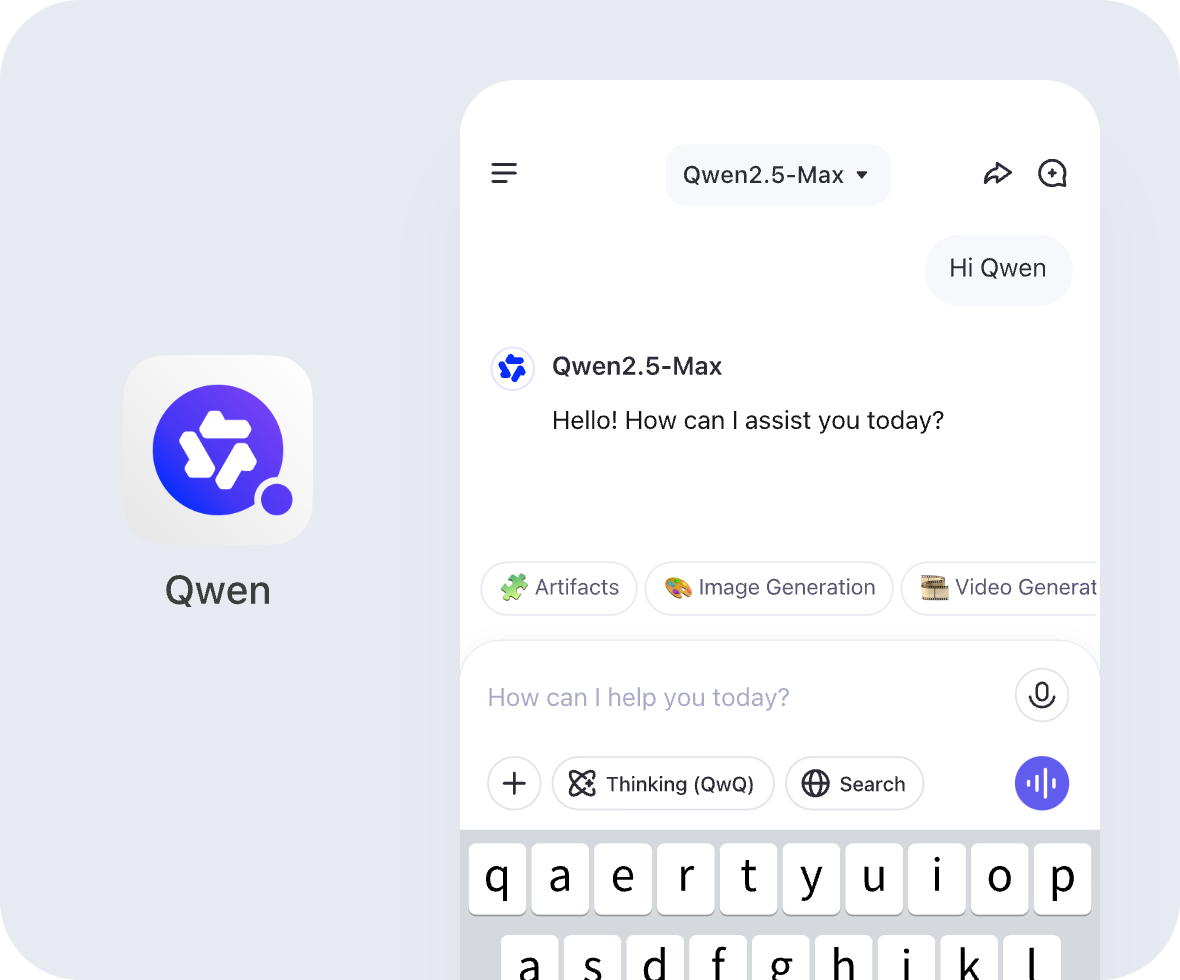
Apple's China website has pulled a usage manual for Alibaba's Qwen model less than a day after it went online. Responding to inquiries, Apple customer service said there are currently no related AI features and that the relevant capability is still being applied for, according to Sina Finance.
The manual, which briefly appeared on Apple's China site, explained how users of certain domestically sold Apple devices could use Qwen together with Apple Intelligence. Its rapid removal drew widespread attention to the partnership between Apple and Alibaba's large language model.
The customer service response — that no such AI feature exists yet and that it is still being applied for — has added uncertainty about the progress of the Qwen integration with Apple Intelligence in China.
Qwen is the flagship model family from Alibaba's Tongyi Lab, and a formal integration with Apple Intelligence would make it a key part of the AI experience on iPhones and other devices sold in China, which is why the manual's fate drew so much attention.
The manual's quick appearance and quick removal, combined with the "being applied for" framing, suggests the partnership may still be in an approval or adjustment stage rather than fully rolled out. Market observers read the move as adding uncertainty to the timeline of Apple Intelligence's China launch.
Apple has not released further official statements about the removal. The key questions now are whether the manual will be restored, and which domestic models will ultimately power Apple Intelligence when it formally launches in China.
Why it matters
The removal of the Qwen manual within a day of publishing, plus the customer service statement that the feature is still being applied for, indicates the Apple-Alibaba AI integration is not finalized and clouds the timing of Apple Intelligence's China debut.
Nearby Updates
All08/09, 15:13
South Australia premier signs draft deal at OpenAI headquarters
South Australia Premier Peter Malinauskas signed a draft deal at OpenAI's headquarters in San Francisco during his US trip, The Australian reported. Australian media described the move as a landmark agreement between OpenAI and the South Australian government, though the specific terms have not been disclosed.
08/09, 16:47
Sapiom raises $35M to route AI agents to cheaper models, with Anthropic as a backer
San Francisco startup Sapiom has raised $35 million in a Series A led by Dragonfly, bringing total funding to $50 million just 11 months after founding. Its core Router product sends each AI agent model call to the cheapest capable model, and investors include Anthropic — the very frontier lab whose inference revenue the product is built to reduce.
08/09, 17:16
GPT-5.6 and Fable Team Up to Crack a 25-Year-Old Math Problem
Microsoft Research principal researcher Dimitris Papailiopoulos used GPT-5.6 and Fable 5 to prove a polynomial-time algorithm that exactly hits the maximum-likelihood threshold for MIMO detection, an open problem for 25 years. The week-long human-AI collaboration also resolved the very problem that stumped him as a first-year PhD student 17 years ago.
08/09, 17:25
A $1.8M Claude Task: Amazon Learns the Price of Runaway AI Costs
Amazon employees say the company tried using Claude Sonnet to fill in author details on its website, a task that ended up costing $1.8 million — 860% over budget — and was discovered only after five months, with no successful deployment. At public pricing that sum could have burned 600 billion tokens, roughly twice the GPT-3 training corpus, reigniting concerns about runaway AI costs.