Realtime AI News
NVIDIA Unveils Nemotron 3.5 Lightning and NeMo Switchyard for Efficient Agentic AI
NVIDIA is expanding its Nemotron 3 model family with Nemotron 3.5 Lightning, which the company describes as the highest-efficiency model in its class for long-running agentic AI workloads. The release pairs the model with NeMo Switchyard tooling aimed at making autonomous agents faster, smarter, and more efficient to run.
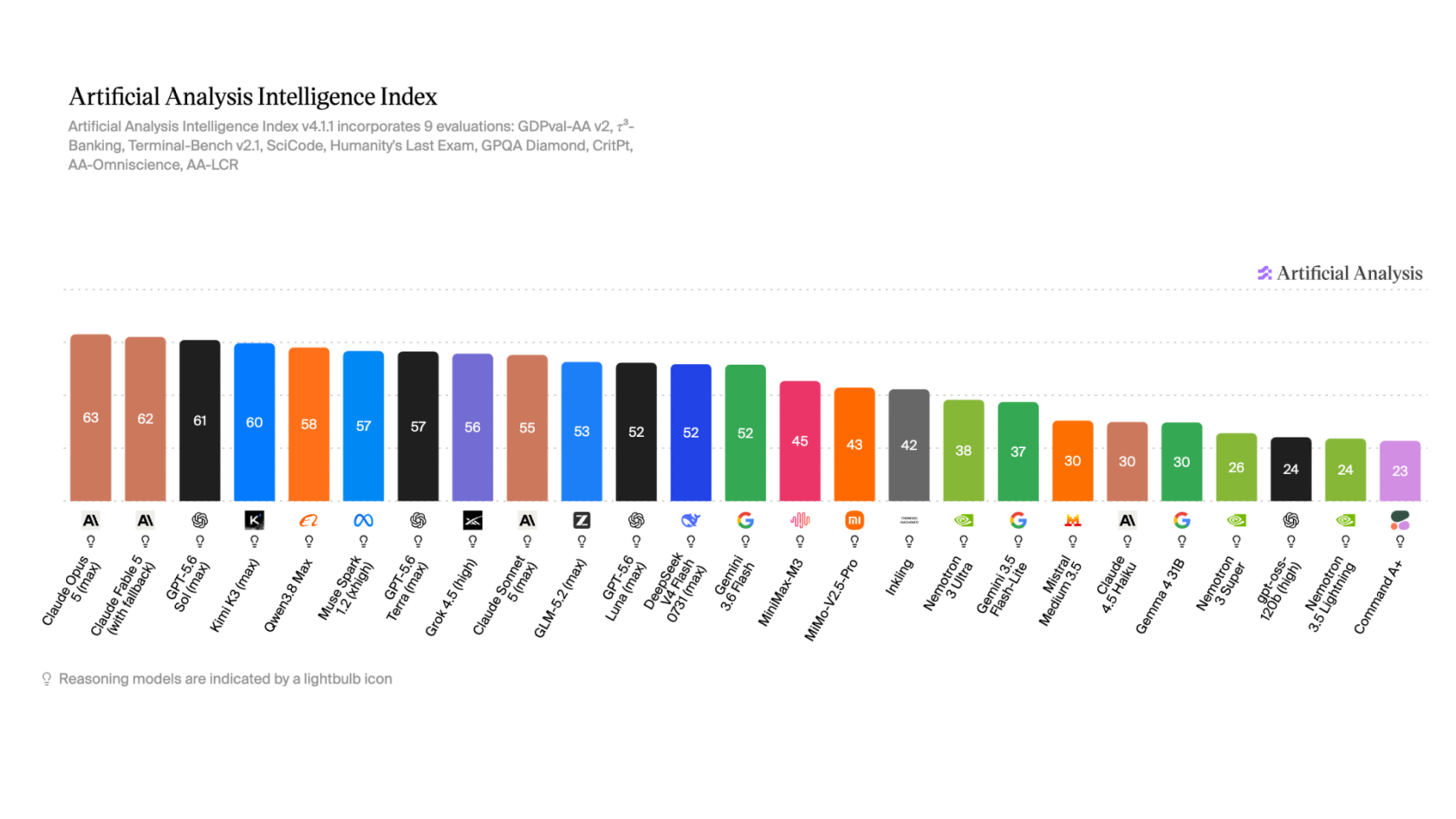
NVIDIA is expanding its Nemotron 3 model family with Nemotron 3.5 Lightning, which the company describes as the highest-efficiency model in its class for long-running agentic AI workloads, according to a post on the NVIDIA Blog.
The release arrives as AI shifts from chatbots to autonomous agents, and as open models increasingly serve demand for full control over where AI runs and how it is deployed and evolves.
Nemotron 3.5 Lightning is positioned as the efficiency-focused addition to the Nemotron 3 line, aimed at workloads where agents must run for extended periods without excessive compute cost.
The announcement also introduces NeMo Switchyard, NVIDIA's tooling for building and deploying agentic AI systems, pairing the new model with the software stack needed to put it to work.
The launch is tied to NVIDIA's push for local and on-premises AI, with the release covering both RTX and DGX platforms so users can run open models in environments they control.
Why it matters: efficiency is becoming the deciding factor for agentic AI, where long-running loops multiply inference cost, and a model that maintains quality at lower overhead changes the economics of deploying agents at scale.
The move also strengthens NVIDIA's position in the open-model ecosystem, where local AI communities are building, customizing, and running increasingly capable agents on their own hardware.
What to watch next: benchmark results against other open agentic models, adoption within NVIDIA's NeMo ecosystem, and how the broader Nemotron 3 family evolves in the coming months.
Why it matters
By betting on efficiency for long-running agent workloads, NVIDIA's Nemotron 3.5 Lightning could accelerate open-model adoption in local and on-premises agentic AI deployments.
Nearby Updates
All08/11, 21:00
Spotify to Label 'AI Persona' Profiles and Exclude Their Music from Recommendations
Spotify is introducing 'AI Persona' labels for artist profiles that represent AI-generated identities, and their music will be excluded from editorial, algorithmic, and personalized recommendations by default. The policy gives the streaming giant a clear governance framework for synthetic artists as AI-generated music spreads across the platform.
08/11, 21:00
NVIDIA and Local AI Community Fuel Open Source Models and Intelligent Agents
NVIDIA and Local AI Community Fuel Open Source Models and Intelligent Agents. The open source ecosystem is making it easier for AI enthusiasts and developers to build, customize and run increasingly capable agents locally. Throughout August, NVIDIA is celebrating the partners and open source communities moving local AI forward, along wi...
08/11, 21:57
Ant Group leads strategic round in Daimon Robotics, first tactile bet as startup unveils world-first ‘physical interaction brain’
Daimon Robotics said on August 11 it closed a strategic funding round worth hundreds of millions of yuan led by Ant Group, marking Ant's first move into the tactile sensing layer of embodied AI. The company also released Daimon-TWM, a 10B-parameter tactile-grounded world model it calls the world's first “physical interaction brain.”
08/11, 19:36
New-energy major backs world's largest AI computing super-unit as power becomes the bottleneck
A report from Chinese tech media QbitAI highlights how a major new-energy company is supporting the world's largest AI computing super-unit. The story underscores that the compute race is increasingly a power race, with electricity supply becoming the decisive constraint.