Realtime AI News
Google teams Gemini and Pixel with five football clubs to elevate fan matchday experience
Google announced that its Gemini AI assistant and Pixel smartphones will partner with five global football clubs to elevate the fan matchday experience through AI and smartphone technology. The collaboration puts generative AI into one of the world's most-watched consumer arenas, with club names and feature details still to be revealed.
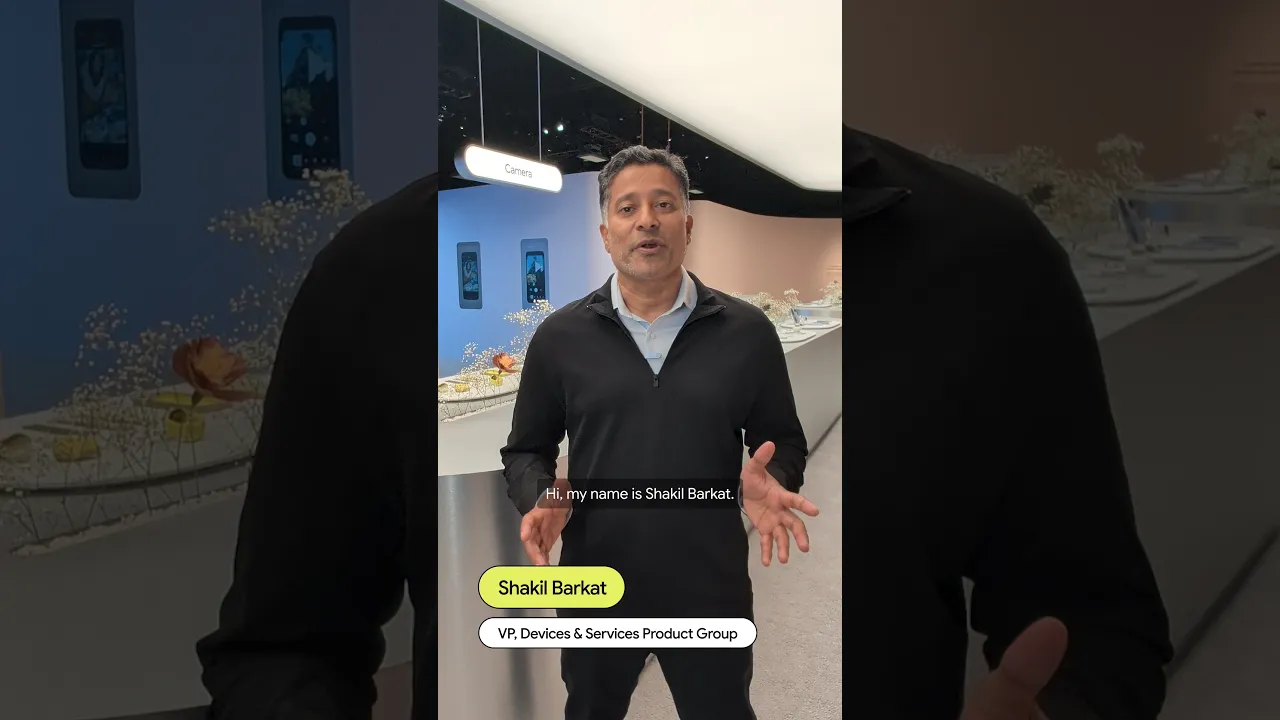
Google has announced on its official blog that its Gemini AI assistant and Pixel smartphone line will partner with five global football clubs to elevate the fan matchday experience. It is a rare product-level tie-up between Google's consumer AI stack and top-tier football properties.
According to the announcement, the collaboration combines AI capabilities with smartphone technology across the fan's complete matchday journey, aiming to make following the game smarter and more immersive for fans whether they are at the stadium or watching from afar. The post frames the effort around fan experience rather than pure technology demonstration.
Football is one of the most widely followed sports in the world, so five clubs means the partnership will reach large fan bases in multiple countries. For Google, it is a high-visibility stage to put Gemini and Pixel at the center of everyday consumer moments, and a rare entry point into live sports for its AI services.
From a product standpoint, the announcement continues Google's strategy of tying generative AI to consumer hardware: instead of leading with model specs, it uses concrete real-world scenarios to make the case for Pixel devices and Gemini services. The club tie-ups could also build Pixel brand recognition among sports fans.
The blog post did not name the five clubs or detail the specific features that will launch. As the new season progresses, the clubs and Google are expected to reveal more of the collaboration, which will clarify what the partnership actually looks like on the ground.
The tie-up underscores how AI and sports are becoming a new battleground for consumer attention: large models can generate personalized content and deliver real-time value in match coverage, data analysis, and fan engagement, making sports IP an ideal testing ground for AI deployment.
What to watch next is how the partnership takes shape — whether Pixel's built-in Gemini features power club-exclusive fan experiences, or whether the work extends to club apps and stadium screens. The clubs' and Google's follow-up announcements will determine whether this is a marketing move or a long-term product strategy.
Why it matters
The partnership gives Gemini and Pixel a high-visibility entry into mainstream consumer moments and shows how generative AI can reshape live-sports experiences, turning sports IP into a new front in the AI attention war.
Nearby Updates
All08/17, 16:01
SpaceX closes $60bn acquisition of AI coding agent Cursor, report says
SpaceX has closed a $60bn acquisition of Cursor, the AI coding agent, according to a report from UK tech outlet verdict.co.uk. Few details beyond the headline figure were disclosed, and the deal's impact on Cursor's roadmap awaits official confirmation.
08/17, 15:52
TCS launches AI agent platform aimed at transforming drug development
Tata Consultancy Services has launched a new AI agent platform designed to transform drug development, according to Business Standard. The move extends the Indian IT giant's AI push into life sciences and signals that agentic AI is entering specialized industry workflows.
08/17, 16:26
PhanRouter Goes Live on Zhipu GLM-5.3, Open for Calls Today
FanShi's model routing product PhanRouter has gone live on Zhipu's GLM-5.3, with developer access open immediately. The debut adds another leading Chinese LLM to the router's lineup and gives GLM-5.3 a new distribution channel into more developer and enterprise workflows.
08/17, 17:04
Humanoid robots play a full 11-point table tennis match with no remote control
Two humanoid robots from the HKU-Chaowei team played a complete 11-point table tennis match entirely on their own, with no remote control and no human feeding balls, ahead of the second World Humanoid Robot Games opening August 22. The feat is powered by the team's SMASH 2.0 system, a closed loop spanning visual perception, trajectory prediction, motion planning, and whole-body control.