Realtime AI News
RayNeo unveils iO AI glasses: 34g frame, two-day battery, always-on proactive AI, from 1,996 yuan
RayNeo held its 2026 AI glasses launch event on August 21, unveiling the iO series with a 34-gram frame, two-day battery life and always-on proactive AI, priced from 1,996 yuan at launch. The glasses ship with DeepSeek V4 Pro and Qwen 3.7 Max support, no camera, and a privacy-by-design architecture, positioning them as the industry's first 'human augmentation AI glasses'.
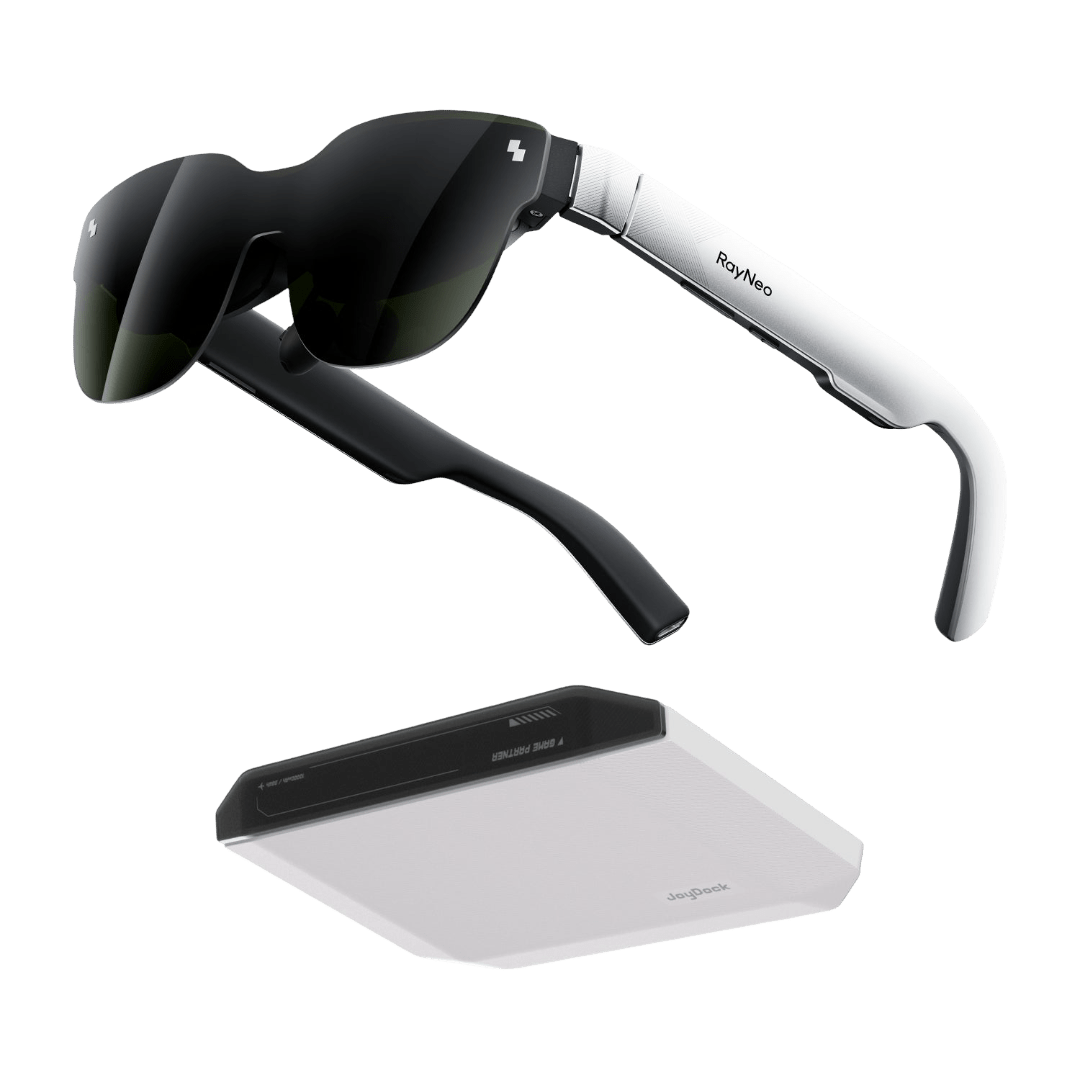
On August 21, consumer AR brand RayNeo held its 2026 AI glasses launch event and unveiled a new product line, the iO series. The first model, RayNeo iO, is built around the idea of "returning to the essence of glasses," reworking the frame structure, optical display and form factor, while an always-on proactive AI adds knowledge, expression and memory enhancement. RayNeo positions it as the industry's first "human augmentation AI glasses," with a launch price starting at 1,996 yuan and prescription options from 0 to 1000 degrees.
The design brief was to make people want to wear the device all day. The iO weighs just 34 grams, with a classic crown frame, a lightweight magnesium-aluminum front frame and double-layer titanium temples; the front frame edge averages 2.25 millimeters wide and the temples taper to 1.15 millimeters. The display system was rebuilt around a new Blue Lake optical waveguide with three-layer optics, reaching 93% transmittance in the optical area and over 98% elsewhere, with color error held to Delta E 2.52 — making it, per RayNeo, the only AI glasses product meeting the EU's EN ISO 12312-1 daily lens safety standard. The new Firefly Light Engine Nano is smaller than a red bean and delivers an equivalent 33-inch display at 1,800 nits of luminance, with DC dimming and TÜV Süd no-flicker, low-blue-light certification.
The core differentiator is the always-on proactive AI, enabled by two days of battery life — long enough for the assistant to shift from a tool that waits for commands to a continuously online augmentation layer. The software stack is built on open-source large models, supporting DeepSeek V4 Pro and Qwen 3.7 Max at launch, with Kimi K3 and RayNeo's in-house RayNeo AI model planned later. The RayNeo all-day memory engine processes sound and location signals into situational, semantic and behavioral memory, recording 24 hours of context from daily wear; an all-day smart notes feature generates daily summaries of conversations, to-dos and personal status, and a real-time prompt mode surfaces reference answers on the lenses while a conversation is happening.
Interaction is handled by a Smart Crown dial that supports one-handed rotation and pressing, plus head gestures — nod to confirm, shake to cancel — and an information dashboard that puts weather, schedules, to-dos and stock subscriptions directly in view. Four array microphones and one bone-conduction microphone use beamforming to distinguish speakers in crowded settings; translation comes from partner Timekettle's BabelOS 3.0 engine, covering 55 languages and 109 accents, and an AI teleprompter mode scrolls and highlights speech at the wearer's pace.
Privacy was designed in from the start. The iO has no camera, and a privacy indicator light on the temple is hardware-bound to the recording and translation modules, so it cannot be switched off or bypassed in software. Raw conversations are anonymized and desensitized irreversibly on-device before anything is uploaded; all data uses financial-grade encryption, and history can be exported, migrated or permanently deleted. Accounts are bound one-to-one to the glasses, and the company's information security system holds ISO 27001 and ISO 27701 certification, covering GDPR, CE, EN 18031 and CRA compliance.
On market position, RayNeo says Counterpoint and IDC data put it at No.1 in both China and global AR glasses shipments in Q1 2026, and it took single-product sales crowns in China's 618 promotion and North America's Prime Day. The iO retails at 2,499 yuan with a launch price from 1,996 yuan, available now on JD.com, Tmall, Douyin and offline eyewear channels; the AI camera glasses RayNeo V4 also gained a 32GB version at 1,999 yuan (1,699 yuan with subsidy).
RayNeo says it will expand the iO's third-party ecosystem, planning new scenarios with Alipay, JD, AutoNavi and Tongcheng for parking payments, package tracking and flight information. As AI glasses move from proof-of-concept to product competition, the iO positions itself as a "human augmentation AI glasses" device that fuses everyday wear, always-on proactive AI and trustworthy privacy protection. RayNeo's bet is that the category's next battleground is not raw capability but whether an AI companion earns a permanent place on the wearer's face.
Why it matters
RayNeo's iO pushes consumer AI glasses toward all-day wearable form factors, and its camera-free privacy design plus multi-model open-source support could reset expectations for the category's next product cycle.
Nearby Updates
All08/21, 17:01
Anthropic adds AI watermark to Claude, sparking strong user backlash
Anthropic has added an AI watermark to Claude to flag AI-generated content, and the move has sparked strong backlash from users. The controversy highlights the tension between content-provenance requirements and the everyday product experience that users expect.
08/21, 16:59
Tencent Cloud and Elastic deepen strategic partnership for AI-era context infrastructure
Tencent Cloud and Elastic have upgraded their strategic partnership to jointly build "context infrastructure" for the AI era. The deepened cooperation targets the growing demand from AI applications for data retrieval and context capabilities.
08/21, 17:44
Minglue Technology and Hikrobot Debut “Agent + Embodied” Push for Commercial Robots at World Robot Conference
Minglue Technology (2718.HK) and Hikrobot jointly exhibited at the 2026 World Robot Conference, showcasing their “Agent + embodied” progress in commercial services. The partnership marks a push to bring large-model agents and physical robots into real commercial robot scenarios.
08/21, 16:03
Ping An reports AI agents drove 57.3B yuan in sales in H1 2026 as daily token usage hits 120B
Ping An has released its first-half 2026 results, reporting that AI agents helped generate more than 57.3 billion yuan in sales. The company's AI systems now consume 120 billion tokens per day, a scale that shows large models deeply embedded in its insurance and financial operations.