Realtime AI News
Salesforce launches Slack Code, bringing AI coding agents into shared team channels
Salesforce has launched Slack Code, a new feature that lets development teams work with AI coding agents inside shared Slack channels. Available across all Slack plans, it supports agents such as Claude Code, GitHub Copilot, and ChatGPT, with dedicated code channels for plans, diffs, and live previews.
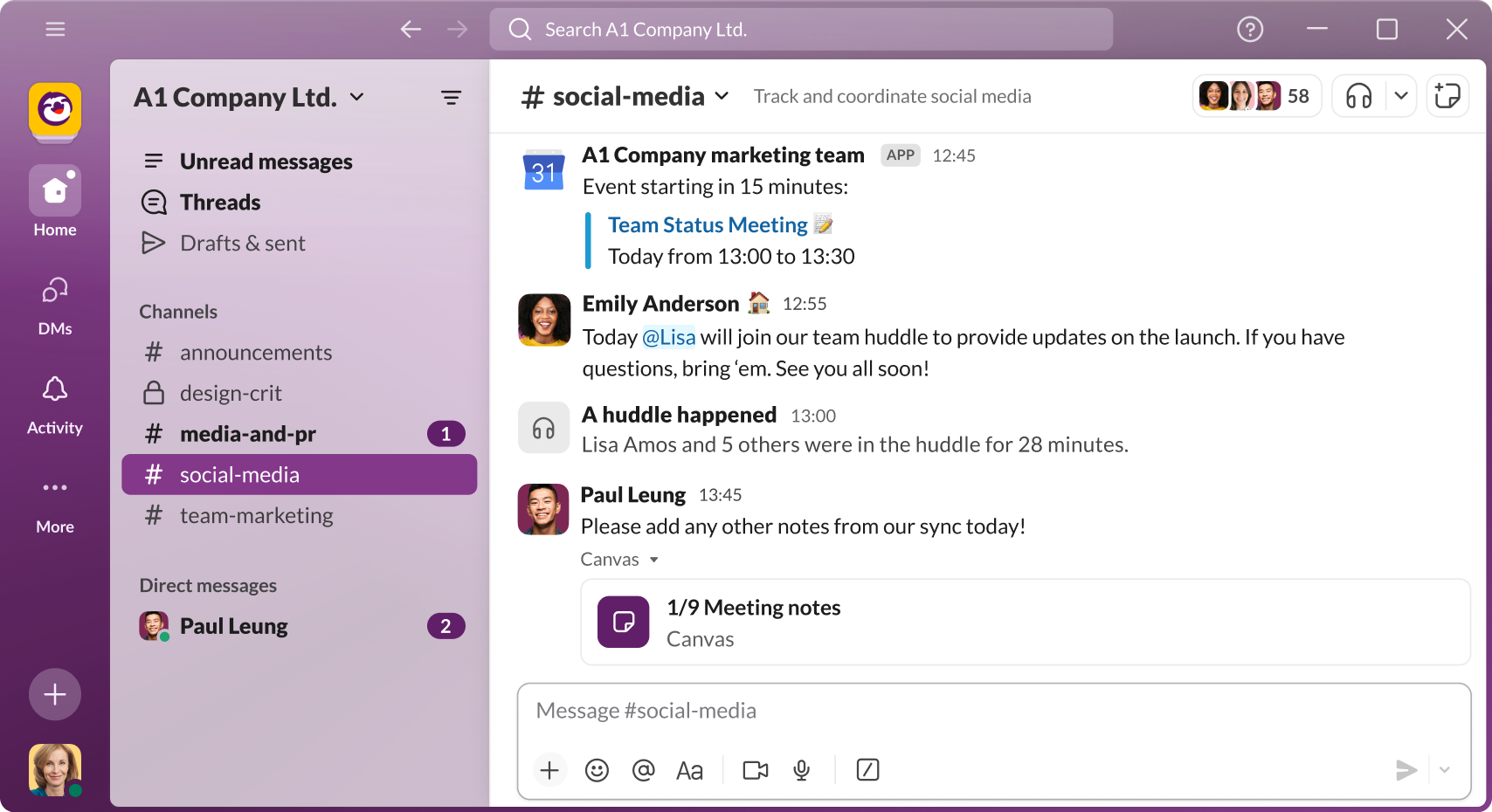
Salesforce has launched Slack Code, a new feature that allows software development teams to work with AI coding agents inside shared Slack channels, as the company seeks to move AI-assisted programming beyond individual developers working in separate tools.
Available across all Slack plans, Slack Code supports AI coding agents including Anthropic's Claude Code, Cognition's Devin, GitHub Copilot, OpenAI's ChatGPT, and Vercel agents. Access to the partner AI services must be obtained separately.
The feature introduces dedicated "code channels" where developers and other team members can interact with AI agents while keeping conversations, development plans, code changes, and previews of running software in one workspace, with separate tabs for team discussion, the agent's proposed plan, line-by-line code differences, and a live preview of the output.
Salesforce said the setup addresses a limitation of current AI coding workflows, where developers typically interact with assistants through private terminals, browser tabs, or development environments that teammates cannot readily see.
Users can start a code channel by tagging a supported AI agent in a Slack conversation, and the channel can be archived when the work is completed while retaining its history as a searchable record. The approach also lets non-developers such as product managers, designers, and marketers participate by providing requirements, reviewing output, and giving feedback.
Human controls remain part of the workflow: participants can pause, redirect, or stop an AI agent while it is working, and final changes require human approval before being pushed to production. Slack Code also operates under Slack's existing administrative permissions and security controls, allowing companies to apply their existing governance policies to AI agents operating within the platform.
Partners welcomed the move. Anthropic said the shared environment reflects how much engineering work already starts as a conversation in Slack, GitHub is bringing Copilot into Slack Code as agents become integrated into development workflows, and executives at Vercel and Cognition said code channels make increasingly complex agent work visible and steerable by the whole team, with all context and history kept in one shared place.
Why it matters
By moving AI coding into shared team channels, Slack Code could shift how enterprises govern and collaborate on agent-driven development, extending AI-assisted programming beyond individual developers.
Nearby Updates
All08/24, 13:09
Alibaba launches Wan3.0 video generation model, praised as “stable, realistic, textured”
On August 24, Alibaba officially launched Wan3.0, the latest version of its video generation large model, according to a report by QbitAI. Industry observers praised the release as “stable, realistic, and textured,” pointing to notable progress in generation quality and usability.
08/24, 13:35
Micron CEO Says He Sees 'No End' to AI Memory Demand
Micron's CEO said publicly that AI-driven demand for memory chips has no end in sight, signaling strong confidence in the sector's outlook. The comments land as AI data center buildouts become the strongest demand driver for memory.
08/24, 14:51
Data Robotics unveils Hairui Cloud Brain 6.0 and Taishi OS 1.0, touting an “Android moment” for robotics
On August 24, Data Robotics released Hairui Cloud Brain 6.0 and the Taishi OS 1.0 operating system. The company, which raised a 3 billion yuan seed round — the largest for a Chinese tech startup — framed the launch as an “Android moment” for the robotics industry.
08/24, 15:04
Zhongcheng Hualong Unveils HL200 Inference Chip and 10,000-Card Supernode Cluster
Zhongcheng Hualong held its 2026 GPU launch event in Beijing, unveiling the second-generation HL200 inference chip and a supernode computing cluster that scales to 10,240 cards. The company says single-card FP8 and FP4 compute reach 2P and 4P respectively, positioning the lineup as a full-stack domestic answer to large-scale AI inference deployment.