Realtime AI News
NVIDIA accelerates local AI at IFA 2026 with faster inference, NVIDIA PAIR and October RTX Spark PCs
At IFA 2026, NVIDIA, Microsoft and partners unveiled a wave of local AI upgrades: simplified local model setup for Hermes Agent, OpenClaw and Perplexity Portable Computer, up to 1.9x faster llama.cpp inference, and a free NVIDIA PAIR tool that routes AI inference across PCs on a home network. Compact NVIDIA RTX Spark Windows PCs from Lenovo and Acer are set to arrive in October.
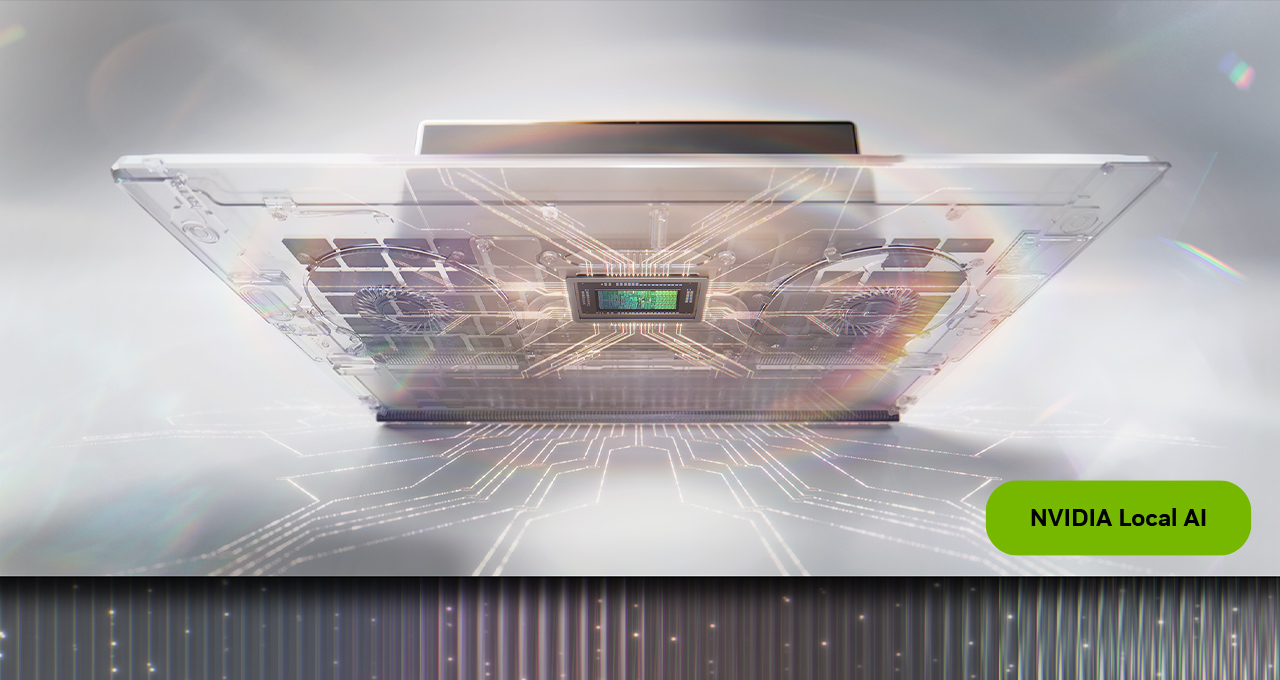
At IFA 2026, NVIDIA teamed up with Microsoft and a range of partners to roll out new products and tools aimed at making frontier intelligence easier to install and run on local hardware. The company also confirmed that compact NVIDIA RTX Spark Windows PCs will arrive in October, giving AI enthusiasts, developers and creators more ways to run capable agents locally and securely.
A core theme of the announcements was removing the setup friction that has slowed local AI adoption. NVIDIA said simplified local model support for its GPUs is coming to three widely used agent applications — Hermes Agent, OpenClaw and Perplexity Portable Computer — each built on llama.cpp and incorporating NVIDIA's latest inference optimizations, so users no longer have to pick a model, find a compatible inference server and dial in quantization settings by hand.
The company also detailed concrete inference speedups. New llama.cpp optimizations deliver up to 1.9x higher throughput on a GeForce RTX 5090 through kernel improvements, enhanced speculative decoding and faster prefill, while vLLM gains reach 1.2x on an RTX PRO 6000 Blackwell Workstation Edition and up to 1.4x on two DGX Spark clusters. The gains are available now on both inference backends, and can also be experienced through the LM Studio and Ollama applications.
New software widens the local compute pool. NVIDIA PAIR (Personal AI Router), a free, open-source tool now in beta for Windows, macOS and Linux, automatically discovers compatible PCs on a local network and routes independent inference requests to whichever machine has capacity, working with Ollama and LM Studio so agent tasks spread across multiple GPUs in parallel instead of queueing on a single card.
On hardware, NVIDIA said RTX Spark will land in October with new Windows machines from Lenovo and Acer; Lenovo announced its Yoga Pro 9n and Yoga 9n 2-in-1 at IFA, while Acer showed a compact desktop concept. RTX Spark systems pair a 1-petaflop RTX Blackwell GPU with up to 128GB of unified memory and a 20-core Grace CPU, and are designed to work with the new Windows Agent framework so agents can run safely in the background under OS-level control.
The ecosystem push extends to gaming and creative software: Electronic Arts, Embark and Ubisoft are the latest publishers bringing their titles to RTX Spark, joining KRAFTON, NetEase, Riot Games and Xbox, and CyberLink's PhotoDirector AI PC Mode is being optimized for RTX Spark at its October launch, with a choice between local and cloud processing.
The underlying signal is that local AI is moving from a hobbyist exercise toward a mainstream PC feature, with Windows-native support and multi-PC pooling reshaping where agent workloads run. The next milestone to watch is October's RTX Spark launch and how quickly Hermes Agent, OpenClaw and Perplexity's Windows support follows.
Why it matters
Local AI is shifting from developer tinkering to a mainstream Windows experience, with NVIDIA and Microsoft aligning on agent-friendly hardware, software and inference stacks ahead of the October RTX Spark launch.
Nearby Updates
All09/04, 00:09
Ollie bets privacy can win the AI assistant race
Family-focused AI assistant Ollie is betting that strong privacy protections can set it apart in the increasingly crowded personal assistant market, saying it will not train AI models on user data or share it with others. The startup is positioning itself as an assistant users can trust with the details of everyday life.
09/04, 00:24
Tencent open-sources Hunyuan Hy4 preview in an open-source AI push
Tencent has released and open-sourced Hy4 preview, the latest addition to its Hunyuan AI family, a Mixture-of-Experts model with 770 billion total parameters, 49 billion active parameters and a context window of more than one million tokens. It is rolling out across WorkBuddy, CodeBuddy, Yuanbao and ima, with API access on Tencent Cloud TokenHub and OpenRouter priced at $0.834 per million input tokens.
09/04, 00:36
NVIDIA agrees to buy Hugging Face for US$12.93 billion
NVIDIA has agreed to acquire Hugging Face, the leading open-source AI platform, for US$12.93 billion, according to a report that circulated on September 3. The deal would put the most important distribution layer in open-source AI under the chipmaker's control and raise new questions about the platform's neutrality.
09/03, 23:00
Google DeepMind's WeatherNext 3 AI weather model brings 5km hourly forecasts to Search, Maps and Gemini
On September 3, Google DeepMind and Google Research released WeatherNext 3, a new AI weather forecasting model that predicts key variables at 5-kilometer resolution, is 60% better at rain evaluations than WeatherNext 2, and produces hourly forecasts. Google says the model will feed weather information shown in Search, Google Maps and Gemini and will be available to users and researchers on its cloud platforms.