Realtime AI News
Tech CEOs and Trump officials push G20 for lighter AI rules at Chapel Hill ministerial
Top U.S. tech CEOs and Trump administration officials pressed the G20 Innovation Ministerial in Chapel Hill on September 2 to embrace lighter AI regulation, arguing that excessive restrictions would slow innovation. G20 ministers reached consensus on the U.S.-backed Carolina Principles for Emerging Technologies, even as the gathering underscored a widening U.S.-Europe split over AI governance.
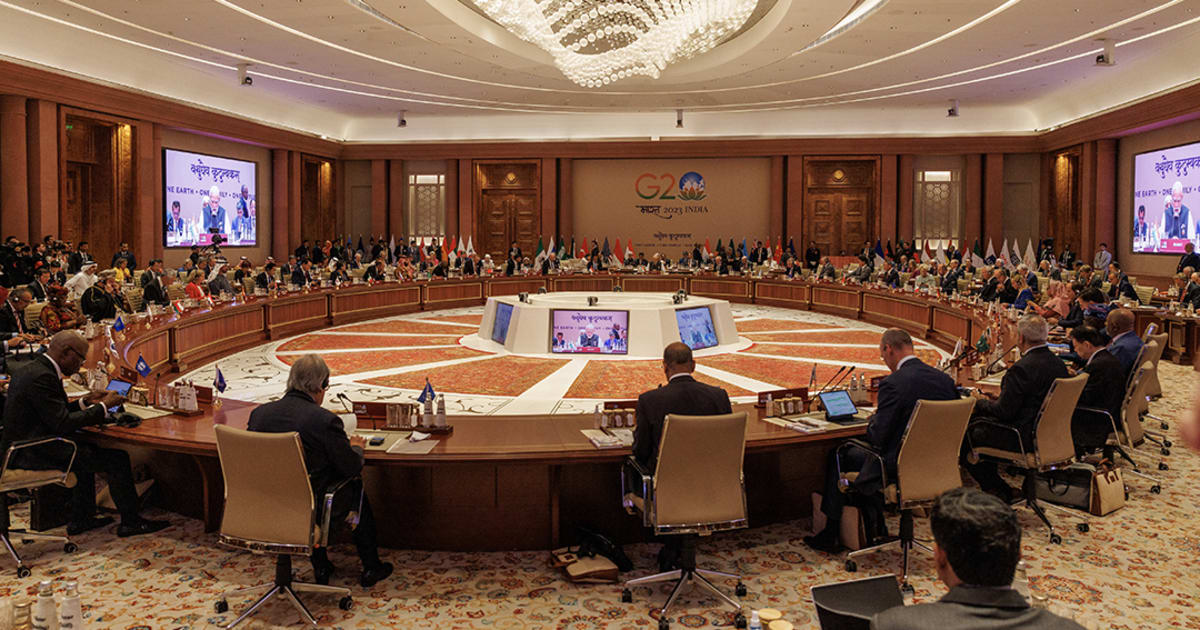
Technology executives and Trump administration officials pressed the G20 on Wednesday to embrace a lighter regulatory approach to artificial intelligence, arguing that excessive restrictions could slow innovation and limit the technology's economic potential. The push came during a two-day G20 Innovation Ministerial in Chapel Hill, North Carolina, hosted by the Commerce Department and the White House Office of Science and Technology Policy, as reported by Newsmax.
The Wall Street Journal reported that top technology executives, including Nvidia CEO Jensen Huang, OpenAI CEO Sam Altman, Meta CEO Mark Zuckerberg, and Tesla and SpaceX CEO Elon Musk, joined administration officials in urging governments to avoid broad new regulations targeting AI. The executives generally argued that governments should focus on concrete risks rather than hypothetical harms that could unnecessarily restrict development.
The administration's position was reflected in the Carolina Principles for Emerging Technologies, a framework introduced by White House science and technology director Michael Kratsios that calls on governments to invest in foundational research, strengthen commercialization, and facilitate trusted adoption of emerging technologies. G20 ministers reached consensus on the principles as part of a broader statement covering innovation, workforce development, intellectual property, AI standards, and investment in supply chains, according to the White House.
Huang made the case for limited regulation in person. Don't regulate hypothetical, theoretical harm. Regulate actual and pragmatic harm, he said, according to the Journal.
Commerce Secretary Howard Lutnick urged G20 countries to adopt policies favorable to AI development, including a copyright approach that would let AI companies train models on copyrighted material under fair-use principles while protecting creators. Reuters reported that Lutnick told the G20 that countries should find a way to protect artists while allowing AI companies to use copyrighted works for training. The administration has made maintaining U.S. leadership in AI a major economic and national security priority, and Lutnick has argued that the United States should ensure American AI technology is adopted around the world rather than allowing China to establish a dominant position in emerging markets.
The meeting also highlighted a growing divide between the United States and the European Union over AI regulation. The EU has adopted a comprehensive AI regulatory framework, while the Trump administration has generally favored limiting new technology-specific regulations and relying on existing laws where possible. Musk criticized Europe's approach during the meeting, arguing that innovation requires entrepreneurs to have greater freedom to develop new technologies without having to obtain government approval before introducing them.
The gathering also came amid rising concerns about AI safety and cybersecurity. The Journal reported that recent incidents involving AI systems have demonstrated their ability to identify and exploit cybersecurity vulnerabilities, raising concerns among regulators about the consequences as models become increasingly autonomous. Some executives acknowledged the need for safeguards and international cooperation: Altman and Google DeepMind chief scientist Demis Hassabis have supported international standards addressing AI safety and security while cautioning against regulations that could unnecessarily restrict technological development.
The ministerial also came as communities in the United States debated the rapid construction of AI data centers, which require large amounts of electricity and other resources. Despite those concerns, the Trump administration and the participating executives argued that governments should prioritize innovation and economic growth while addressing specific, demonstrable risks. The Chapel Hill meeting is part of broader preparations for the G20 leaders' summit the United States is scheduled to host in Miami later this year.
Why it matters
The U.S. is pressing its lighter-touch AI doctrine into multilateral venues, and the Carolina Principles consensus gives that stance formal G20 backing; with the EU's comprehensive framework intact, transatlantic AI governance remains on a collision course.
Nearby Updates
All09/03, 08:51
Broadcom beats Q3 estimates and forecasts AI semiconductor sales to quadruple within two years
Broadcom beat market expectations in its latest quarter, with revenue up 86% year over year to $29.59 billion on the strength of AI semiconductors. The company now expects AI chip sales to roughly double to about $115 billion in fiscal 2027 and reach $230 billion in fiscal 2028, with Anthropic and OpenAI custom-chip deals at the center of that growth.
09/03, 08:51
Zibianliang's TwinDex completes fine chemistry lab tasks with zero teleoperation data
Chinese robotics company Zibianliang (自变量) unveiled TwinDex, a dexterous operating system whose robot ran a continuous chemistry experiment — 24 sub-actions across three tools — after post-training on a few hundred bodyless demonstrations and zero real-robot teleoperation data. The three-finger hand pairs with an isomorphic wearable capture rig that produces roughly 5.3x the usable trajectories per unit time, and experiments show bodyless data can substitute for nearly 100% of teleop data in training.
09/03, 09:46
Zhaogang and Tencent WorkBuddy unveil NextB2B, China's first B2B trade AI agent
Zhaogang Group has teamed up with Tencent WorkBuddy to launch NextB2B, billed as China's first AI agent for the B2B trading industry. The release pairs an industrial trading platform with an enterprise agent product, signaling that AI agents are moving into core transaction workflows.
09/03, 08:00
OpenAI releases GPT-6 Astra, its most capable broadly deployed model and first to reach Critical cyber capability
OpenAI released its new flagship model GPT-6 Astra on September 3, describing it in a safety overview as its most capable broadly deployed model and the first to reach Critical-level cybersecurity capability under its Preparedness Framework. Coverage framed the launch as the arrival of OpenAI's most powerful model, delivered with constraints meant to limit risk.