Realtime AI News
Ex-Huawei large-model duo's Physical AI startup Xirang Kaiwu raises hundreds of millions of yuan
Physical AI startup Xirang Kaiwu, founded by two former Huawei large-model leaders, has closed several hundred million yuan in consecutive seed and angel rounds at a USD 500 million valuation. The company is pretraining an LPM — a Large Physics Model — on video, robot trajectories and real interaction data, and reports early leaderboard results for its model RiXin.
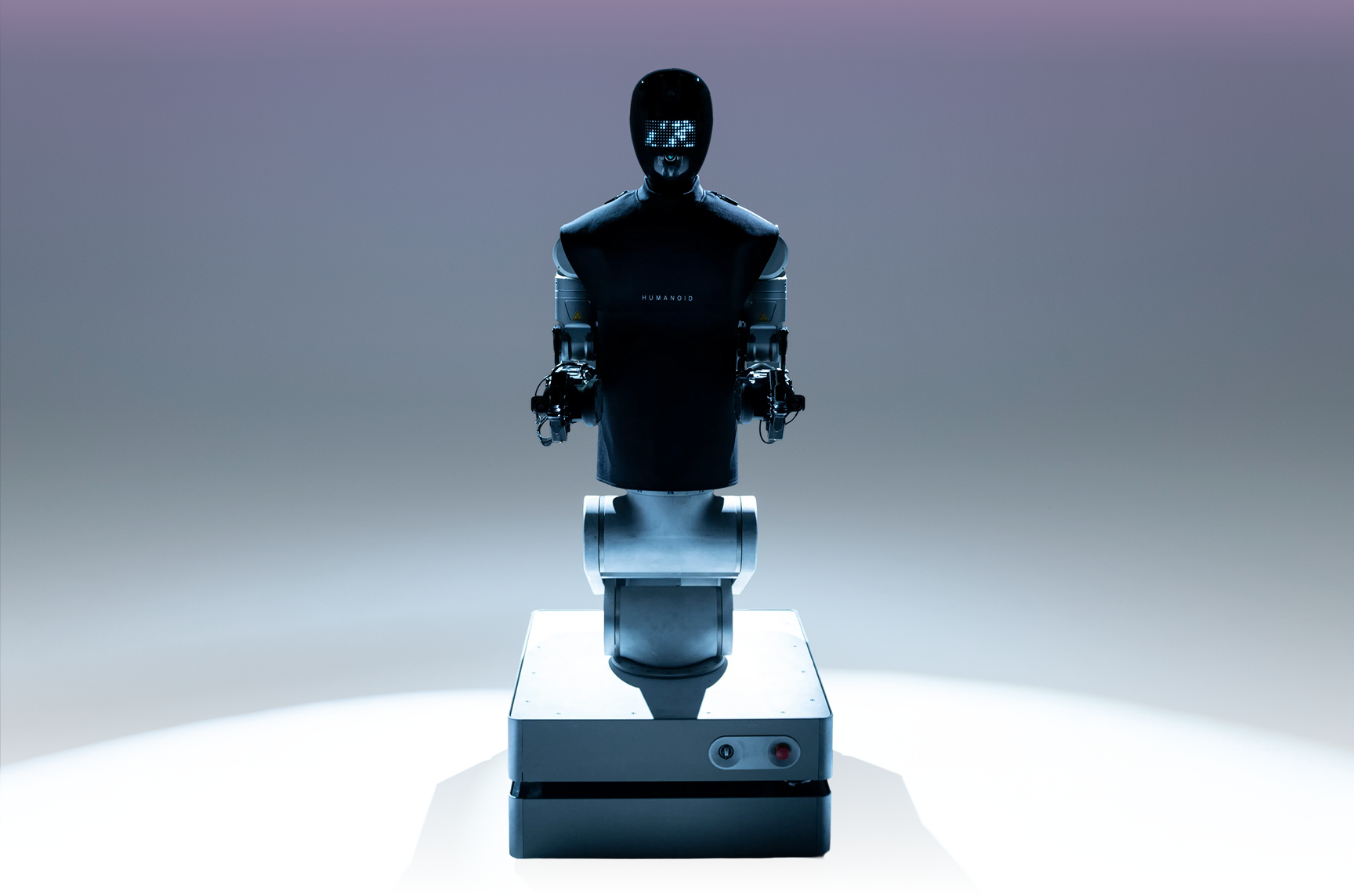
A Physical AI startup called Xirang Kaiwu has announced that it completed several hundred million yuan of seed and angel funding in consecutive rounds, at a valuation of USD 500 million. Dunhong Asset led, with Huakong Fund, Sanhua Holding, Yinxinggu Capital, Zeran Capital, Benjian Fund, Angel Cornerstone and Biaopu Investment among the participants.
Behind the company are two people Chinese tech media describe as Huawei's large-model twins. Founder and CEO Li Yin was previously CTO of Huawei Cloud's large-model effort and a core member of Huawei's large-model work from zero to one. Co-founder Zhang Hanwang, a former chief scientist for multimodality at Huawei, is set to serve as Xirang's co-founder and chief scientist.
What Xirang is building is not another language model but an LPM, a Large Physics Model. The plan is to pretrain a physics foundation model on massive video, robot trajectories and real interaction data, then transfer it across different embodiments and tasks — rather than the current pattern in which every new robot and scene requires fresh data collection and fine-tuning.
The team's argument is that LLMs learn knowledge humans have already abstracted into language, code and formulas, while the physical world offers only pixels, sound, position and force, with no single correct representation — the same expression can read as speechless, a wry smile, or hidden pain. That continuous, changeable complexity, they say, has to be learned by the model itself from billions of observations, actions and feedback.
There are early signals. Xirang says its model, RiXin, ranked first on the Trajectory Accuracy sub-metric and second on Physical Adherence in World Arena 2.0 Track 1 — the first measuring whether predicted object motion is accurate, the second whether generated future states obey basic physics. The company also reports an initial upward trend in performance as data and training scale grow, which it reads as a reason to keep going.
On architecture, the LPM uses a Unified AR Transformer as its backbone, decomposing complex processes into consecutive conditional predictions, with Diffusion as an optional module for rendering future states into continuous video. Six foundations sit underneath: unified tokens, a unified model architecture, reinforcement learning, a data system, an evaluation system and engineering infrastructure, forming a loop from data to action and back into training.
The team's track record is the main reason investors backed a model that has not finished pretraining. Li Yin once led a 400-person team that trained an 8B video model in two months on a ten-thousand-GPU cluster using a million-hour video dataset, and on the industrial side ran embodied-AI innovation centers, delivering to more than 200 customers across 30 industries including autonomous driving, mining, finance, healthcare and meteorology. Zhang Hanwang has published 228 papers with more than 42,000 citations and an H-index of 81, focused on causal machine learning, multimodal understanding and model generalisation.
The product plan splits model capability into three layers: L0, a general physics foundation model meant to work across tasks, scenes and embodiments; L1, domain models that learn an industry's objects, processes and constraints; and L2, deployable robot tasks. Its first training result, XIRRA v0.1, is planned to appear later this year, the point at which the question of whether the physical world has its own scaling law gets a more concrete test.
Why it matters
Hundreds of millions of yuan are now going into a physics foundation model that has not finished pretraining, giving the non-consensus question of whether physical intelligence has its own scaling law a serious team and a real capital base to test it.
Nearby Updates
All09/25, 14:20
Kimi launches a browser extension that turns web actions into reusable Skills
Moonshot's Kimi has shipped a browser extension that upgrades its earlier Kimi WebBridge: users can now chat with Kimi from a browser sidebar and let it operate the current page, and record actions they perform on a site into a reusable Skill. The older path, where a local agent drives the extension, is still supported.
09/25, 13:52
Mifeng, billed as 'China's Index', recruits ordinary people to teach robots for extra income
A Chinese robot-data platform called Mifeng has arrived, described by media as 'China's Index' and pitched at ordinary people who teach robots while earning money on the side. It targets the scarcest input in embodied AI, real operation data, though whether crowdsourcing can deliver usable quality is still an open question.
09/25, 13:00
Lightspeed targets $250M for a new India fund focused on early-stage AI
Lightspeed is targeting $250 million for a new India fund that will focus on early-stage AI, TechCrunch reported on September 25. The Silicon Valley firm is aligning its India fundraising cycle with its global funds for the first time and moving to a shorter investment period.
09/25, 17:16
The Pentagon wants $30 million to build an AI-powered lie detector
The US Department of Defense has requested $30.3 million over five years for an improved lie detector, according to a budget request reported by MIT Technology Review. The program, named "Polygraph+" or "Polygraph Next", would focus on AI and machine-learning scoring algorithms and on a technique called "standoff sensing".