Realtime AI News
IBM brings its Bob coding agent inside the firewall for regulated companies
IBM has introduced self-hosted deployment for Bob, its agentic software development platform, letting it run on-premises and in private, sovereign, and air-gapped environments. The move targets regulated enterprises that need to keep sensitive code and data inside infrastructure they control.
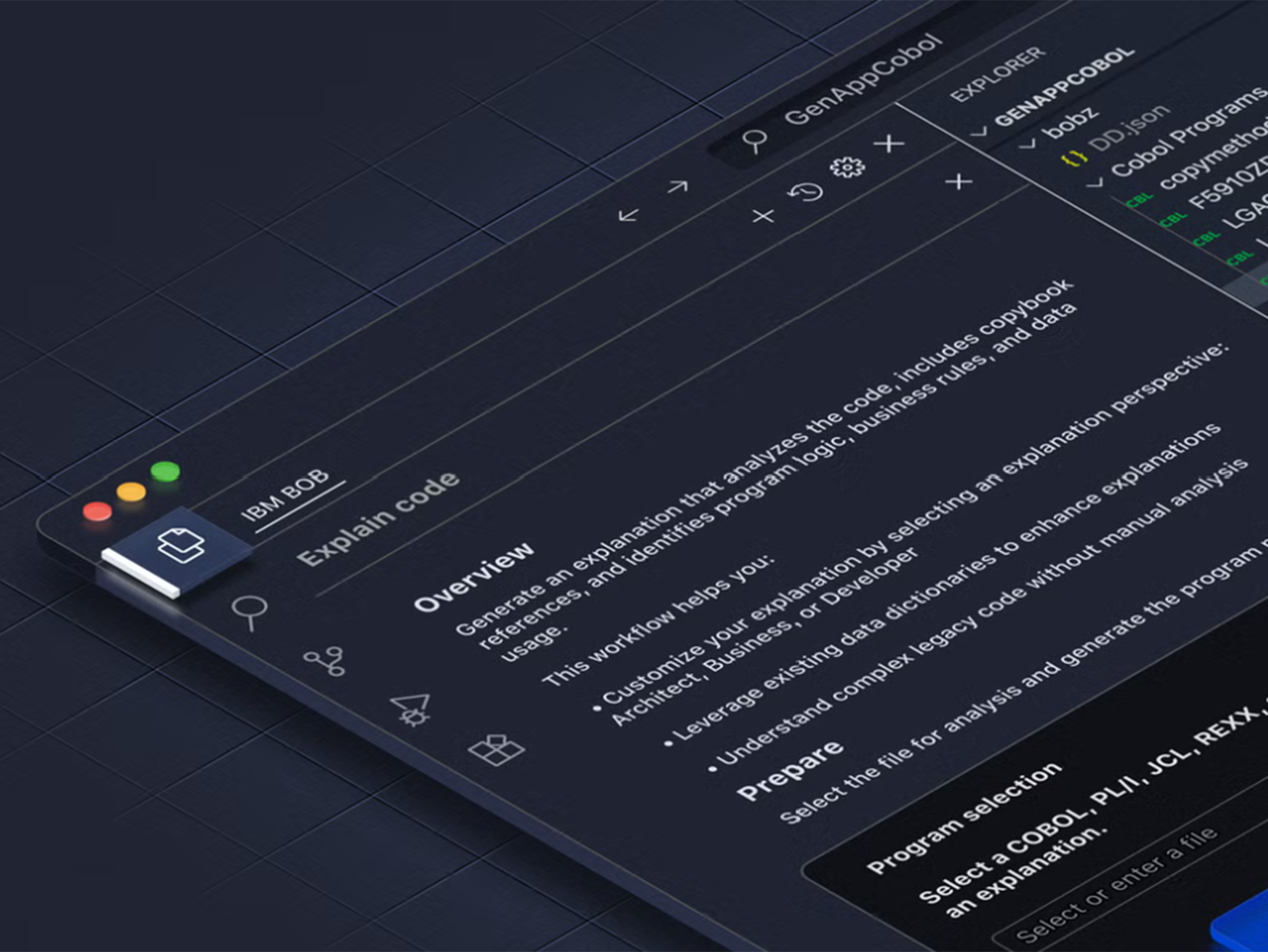
IBM has introduced self-hosted deployment for Bob, its agentic software development platform, letting regulated companies run the AI coding agent inside their own firewalls rather than on a public platform, as reported by Forbes.
Under the new option, Bob can run on-premises and in private-cloud, sovereign-cloud, and fully air-gapped environments. IBM says that in these setups organizations keep control of their code, data, and workflows.
Bob is positioned as more than code completion. IBM describes it as an agentic platform for software delivery and modernization, aimed at applying AI across the software engineering process rather than just generating snippets.
Data sovereignty and governance are the core pitch. For banks, healthcare providers, and government agencies, sending source code, internal data, or workflows outside the corporate boundary is often a compliance non-starter, so the ability to run inside existing infrastructure can decide whether a deal happens at all.
The timing also lands on a sensitive industry nerve. Recent security incidents involving AI coding agents, from a deleted database to an infrastructure breach, have pushed enterprises to weigh isolation and permission controls more heavily before adopting autonomous coding tools.
Moving the agent inside the firewall hands the security boundary back to the customer's own network and identity systems. That is a familiar IBM play for large enterprises and governments: trade model-only competition for controllability and trust.
What to watch is how deployments take shape, including how enterprises allocate compute for air-gapped setups, how Bob integrates with existing DevOps pipelines, and how quickly self-hosted installs keep pace with cloud feature updates. Those details will decide how far this approach penetrates regulated markets.
Why it matters
For regulated industries, adoption of AI coding agents now hinges less on cloud access and more on whether the tool can run safely inside the enterprise boundary. IBM is using that to differentiate in compliance-first accounts, and rivals may follow with self-hosted options.
Nearby Updates
All10/02, 23:57
Florida asks court to place temporary limits on OpenAI and ChatGPT
Florida's attorney general has asked a court to impose temporary restrictions on OpenAI and ChatGPT while litigation proceeds, according to multiple reports. Coverage says the requested injunction would restrict new model training and cut minors off ChatGPT, and frames it as part of the state's lawsuit against OpenAI over alleged harms.
10/03, 00:00
OpenAI dismisses three employees over sensitive information
OpenAI has dismissed three employees in connection with sensitive information, according to a Taipei Times report carried through Google News. The report does not disclose the roles involved or the nature of the information at issue.
10/02, 23:49
Redefining enterprise intelligence with autonomous AI
Redefining enterprise intelligence with autonomous AI. Enterprise AI is no longer a future ambition. It is in full operational flight. Model capabilities are advancing faster than most organizations can absorb, while the cost of performance continues to fall. Globally, AI investment is set to reach $2.5 trillion i...
10/02, 23:45
MiniMax releases M3.1 Flash, targeting a capability that made Opus 5.5 go viral
MiniMax has introduced M3.1 Flash, a new model that the Chinese outlet Sohu says can perform the same capability that made Opus 5.5 a viral talking point. The item reached the feed through Google News aggregation and offers limited technical detail so far.