Realtime AI News
ICANN publishes application list, with OpenAI seeking .gpt, .chatgpt and .agi
ICANN has published the list of applications for new generic top-level domains, and OpenAI is among the applicants. OpenAI is reported to have applied for the strings .gpt, .chatgpt and .agi, signalling an effort to turn its brand and core concepts into internet addresses.
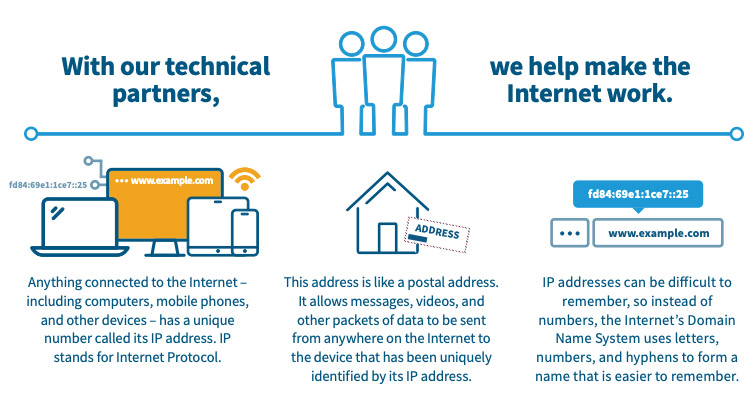
ICANN has published the list of applications for new generic top-level domains, and AI company OpenAI appears among the applicants.
According to a report by Pasquale Pillitteri, the top-level strings OpenAI applied for include .gpt, .chatgpt and .agi.
A top-level domain is the final segment of an internet address, usually tied to a brand, organization or industry category. Applying for a dedicated domain means a company could let users reach its services through names ending in that suffix.
.gpt and .chatgpt map directly to OpenAI's core product brand, while .agi points to the broader concept of artificial general intelligence.
Publication of the application list is only the first step in a long process. ICANN's top-level domain applications still have to pass evaluation, possible dispute resolution and final delegation before any of them go live.
For OpenAI, controlling a dedicated top-level domain supports brand protection and control over an entry point, extending its brand into the address layer at a time of intensifying competition in AI services.
For the industry, several AI-related strings being contested at once reflects growing competition over naming and access points.
What to watch next is how the applications progress through evaluation, whether any string attracts competing applicants, and whether these new domains ultimately go live.
Sources
Why it matters
Top-level domain applications are a long-term play for brand and entry-point control. If OpenAI secures strings like .gpt, AI companies would move into the foundational address layer of the internet at scale for the first time.
Nearby Updates
All10/09, 15:00
Sophos cuts threat investigation time by 96% with OpenAI Daybreak
OpenAI has detailed how the security vendor Sophos uses its Daybreak offering to cut cyber-threat investigation time by 96% and automate 52% of MDR cases. The case highlights agentic AI moving into security operations while keeping humans in the loop.
10/09, 14:57
Three AI agents debut at 2026 World Manufacturing Conference as AI moves into energy
Three AI agents took the stage at the 2026 World Manufacturing Conference, a sign that AI is pushing deeper into core sectors such as energy. The shift suggests agent deployments are moving beyond general office work toward vertical industries.
10/09, 14:54
JetBrains releases Mellum 2.1, an open-source model for agentic coding
JetBrains has released Mellum 2.1, an open-source model that emphasizes agentic coding and supports local deployment with efficient inference. For a company known for its developer tools, the release marks a move deeper into the model layer.
10/09, 13:00
Descartes launches Agent Control Plane for logistics AI agents
Descartes Systems Group has introduced the Descartes Agent Control Plane, an AI agent coordination platform that automates complex logistics workflows across applications, supply chain partners and business systems. Built on the Descartes Global Logistics Network, the platform lets AI agents coordinate tasks within customer-defined permissions and approval processes to cut manual work on shipment updates and operational coordination.