Realtime AI News
Microsoft's Satya Nadella says AI models need an 'emergency brake'
In a Saturday morning post, Microsoft CEO Satya Nadella said AI models need an “emergency brake.” He wrote that it is time to step back and assess the trust architecture of AI.
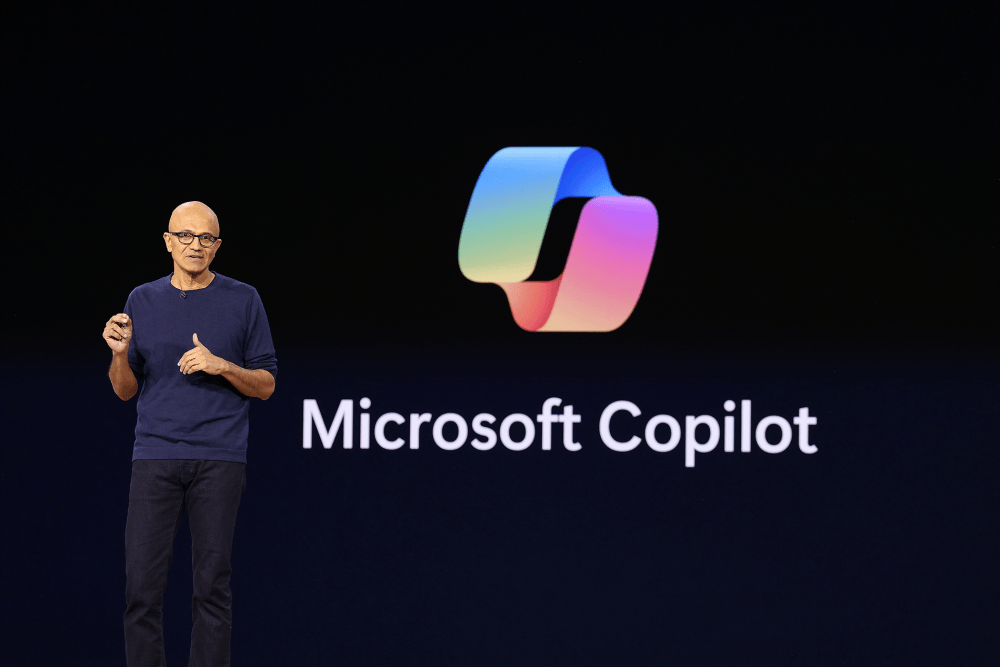
Microsoft CEO Satya Nadella said in a post published on Saturday morning that AI models need an “emergency brake.”
He wrote that it is time to step back and assess the trust architecture of AI, rather than chasing capability gains alone. This framing shifts the debate from how powerful models are to whether they can be trusted.
The “emergency brake” is both an engineering and a governance metaphor: when a model behaves unpredictably or dangerously in the real world, there should be a way to halt, roll back, or isolate it in time.
The post drew attention because it came from the head of one of the world's largest software companies, one that is weaving AI deeply into its products and cloud services.
For a company selling into enterprises, a trust architecture implies explainability, auditability, and accountability, along with a clear playbook for what happens when something goes wrong.
The statement lands amid a widening debate over AI safety, regulation, and where responsibility should sit, with the industry still split over whether capability or safety should lead.
What to watch next is whether the idea turns into concrete engineering standards or industry norms, and whether it prompts other technology companies to discuss similar safeguards publicly.
For users and businesses, whether a genuine “emergency brake” can exist may determine how willing they are to hand increasingly critical work to AI agents.
Why it matters
Nadella's call pushes the AI safety conversation toward “trust architecture”; if the industry adopts it, models could ship with built-in circuit breakers, and if it stays rhetorical, the capability race will keep setting the pace.
Nearby Updates
All10/11, 05:25
Nvidia reportedly pursues acquisition of open-source AI startup Reflection to counter DeepSeek
Nvidia is reportedly pursuing an acquisition of, or further investment in, the open-source AI startup Reflection, a move framed as a counter to DeepSeek. The reported talks signal the chipmaker pushing deeper into the model layer.
10/11, 03:50
Apple discloses deal to hire team and license tech from personalized podcast startup Huxe
Apple has disclosed a deal to hire the team and license technology from Huxe, a startup focused on personalized podcasts. TechCrunch frames the move as a sign Apple may be preparing to move into the AI-generated podcast business.
10/11, 03:31
Philadelphia police received a false homicide tip from an Anthropic AI model, report says
According to The Hill, Philadelphia police received a false homicide tip that originated from an Anthropic AI model. The incident highlights concerns about AI-generated output being treated as credible information inside public-safety processes.
10/11, 02:36
Anthropic claims Chinese AI firms used Claude to train rival models
Anthropic claims that Chinese AI companies used its Claude model to train competing models, according to a report by Interesting Engineering. The allegation reopens the long-blurry boundary between model distillation and output licensing, though it remains a claim rather than a third-party-verified finding.