Realtime AI News
Nebius and Nscale Build on NVIDIA Vera CPUs as Agentic Workloads Push Demand to the CPU
NVIDIA says European cloud providers Nebius, Nscale and Verda are building infrastructure around its Vera CPU, with server makers and data-platform vendors also testing the chip. The pitch is that agentic workloads such as retrieval, tool calls and code execution depend on fast CPU processing alongside GPUs.
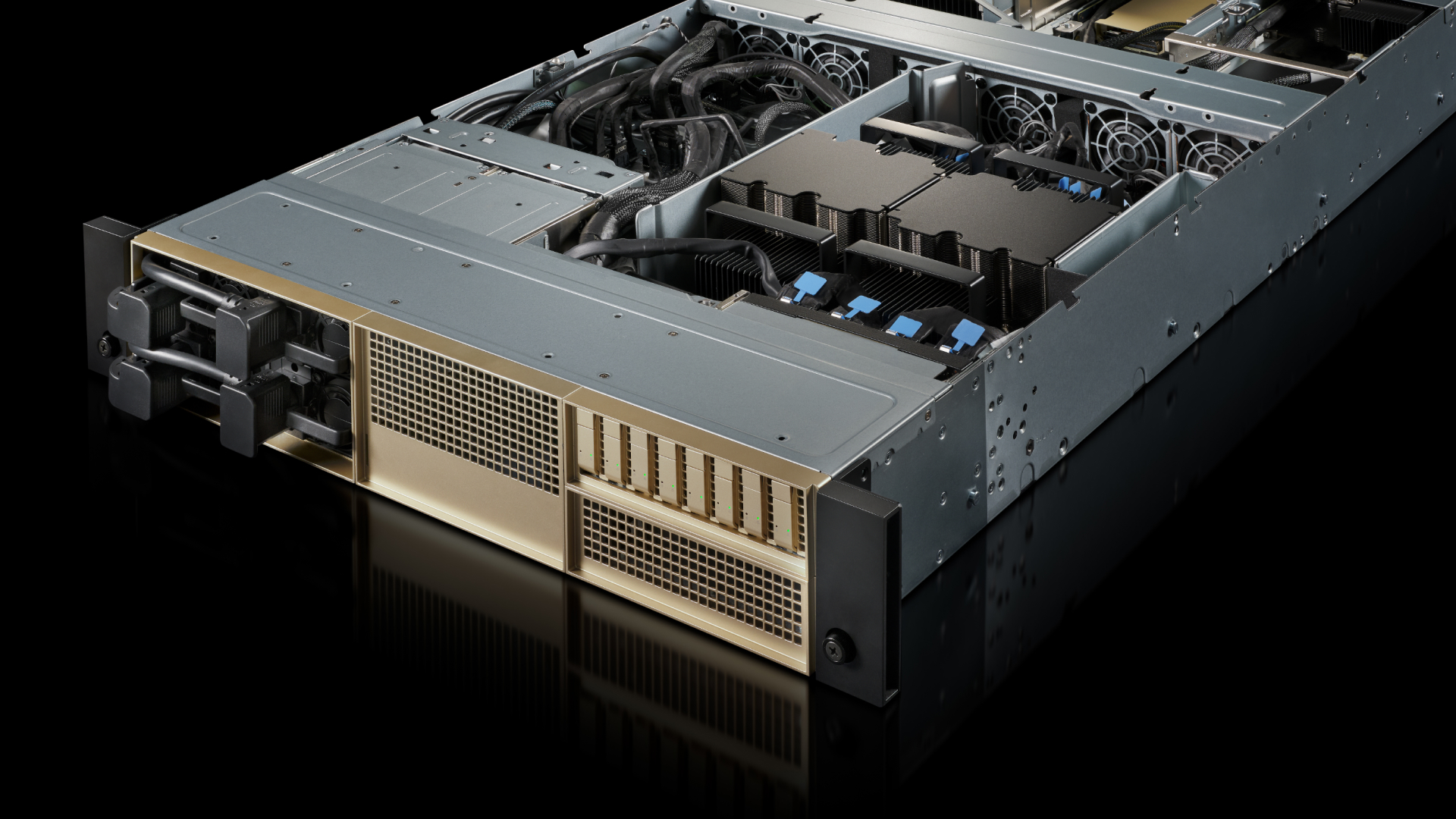
NVIDIA said in an October 20 blog post that European AI cloud providers and sovereign AI platforms are building the next wave of infrastructure around its Vera CPU, naming Nebius and Nscale among the partners.
The stated reason is that agentic computing changes the shape of the workload. Agents do more than generate answers: they retrieve information, run software tools, execute code and evaluate results, and each of those steps depends on fast CPU processing.
According to NVIDIA, Vera is designed to sustain that speed while running thousands of tasks simultaneously, so data centers can expand services without trading responsiveness for scale. That maps onto a real shift: as agent density rises, the CPU side becomes the constraint.
The partner list spans several layers. Nebius, Nscale and Verda are named as AI cloud providers, with sovereign infrastructure provider Aleria also in the ecosystem. On the server side, Bull, Dell, Lenovo and Supermicro are building Vera-based systems that can run as standalone CPU servers or alongside GPUs in accelerated systems.
Data and software vendors form a second track. ClickHouse, Cloudera, Duck Labs, Elastic, Polars, Redpanda and Starburst reported strong results for analytical, ETL and semantic search workloads in early testing. Atlassian is looking to Vera to accelerate the data processing behind semantic search indexes for its AI products, Inherent is considering it for environments where agents work alongside engineers on research, and Nous Research uses it to authenticate agent identities and validate actions before execution.
A less obvious group is cloud sandboxes. Baseten-Blaxel, Daytona, E2B, Modal, Prime Intellect and Vercel treat sandboxes as computers for agents, spinning them up millions of times a day, where the speed of each startup cycle compounds at scale. NVIDIA argues that per-core performance and high-bandwidth memory fit exactly that pattern.
On specifications, the post credits per-core performance, LPDDR5X memory bandwidth and the NVIDIA Scalable Coherency Fabric. Those are memory and coherence attributes rather than peak throughput, which matches a workload made of many small, rapidly switching tasks.
The timing ties the announcement to GTC Berlin, where Jensen Huang's keynote was scheduled for October 21, framing the pitch as sovereign AI plus agent infrastructure. The open questions are how quickly partners move from testing and intent to volume deployment, and whether the CPU-to-GPU ratio actually pays off under agentic load.
Why it matters
Agents turn AI infrastructure from a GPU-only story into a mixed CPU-GPU queue, and the vendor that defines that ratio gains leverage in the next procurement cycle.
Nearby Updates
All10/20, 18:53
Report: Anthropic's junior hiring stalls as agent work hours hit 6x employees
A 36Kr report says Anthropic has all but stopped hiring junior staff, with the share of junior roles falling 33% in 18 months. The same report says work hours handled by agents now run six times those of employees.
10/20, 19:00
Yelp now lets its AI call restaurants to check wait times for you
Yelp is embedding a set of new AI features into its app, including one that phones a restaurant on a user's behalf to ask about current wait times. The company is also adding personalized recommendations that remember a diner's preferences, moving AI from answering questions to performing concrete tasks inside the app.
10/20, 19:00
Otter.ai raises $320M from General Catalyst's Customer Value Fund
Otter.ai announced on Tuesday that it has raised $320 million from General Catalyst's Customer Value Fund, a vehicle that earns returns from marketing results instead of diluting equity in a conventional round. The company says the money will go to enterprise growth, go-to-market, international expansion, and product innovation.
10/20, 19:00
A new AI agent wants to take the admin out of benefits renewals
Employee Benefit News reports on an AI agent built for employee benefits brokers, designed to absorb administrative renewal work so advisers can spend more time with clients. The article frames the problem bluntly: employers are leaving their brokers, and paperwork-heavy renewals are a big part of why.