Realtime AI News
NVIDIA Expands Its Open-Model Family With Nemotron 3.5 Super VL, Bolt and a New Retriever Line
NVIDIA has expanded its open-model family across language, robotics, biology and quantum computing, adding the Nemotron 3.5 Super VL and Nemotron 3.5 Bolt models plus a new Nemotron Retriever line for embedding and reranking. The company frames the release as a way for developers, researchers and enterprises to build applications tuned to local languages and industries, with Europe as the explicit backdrop.
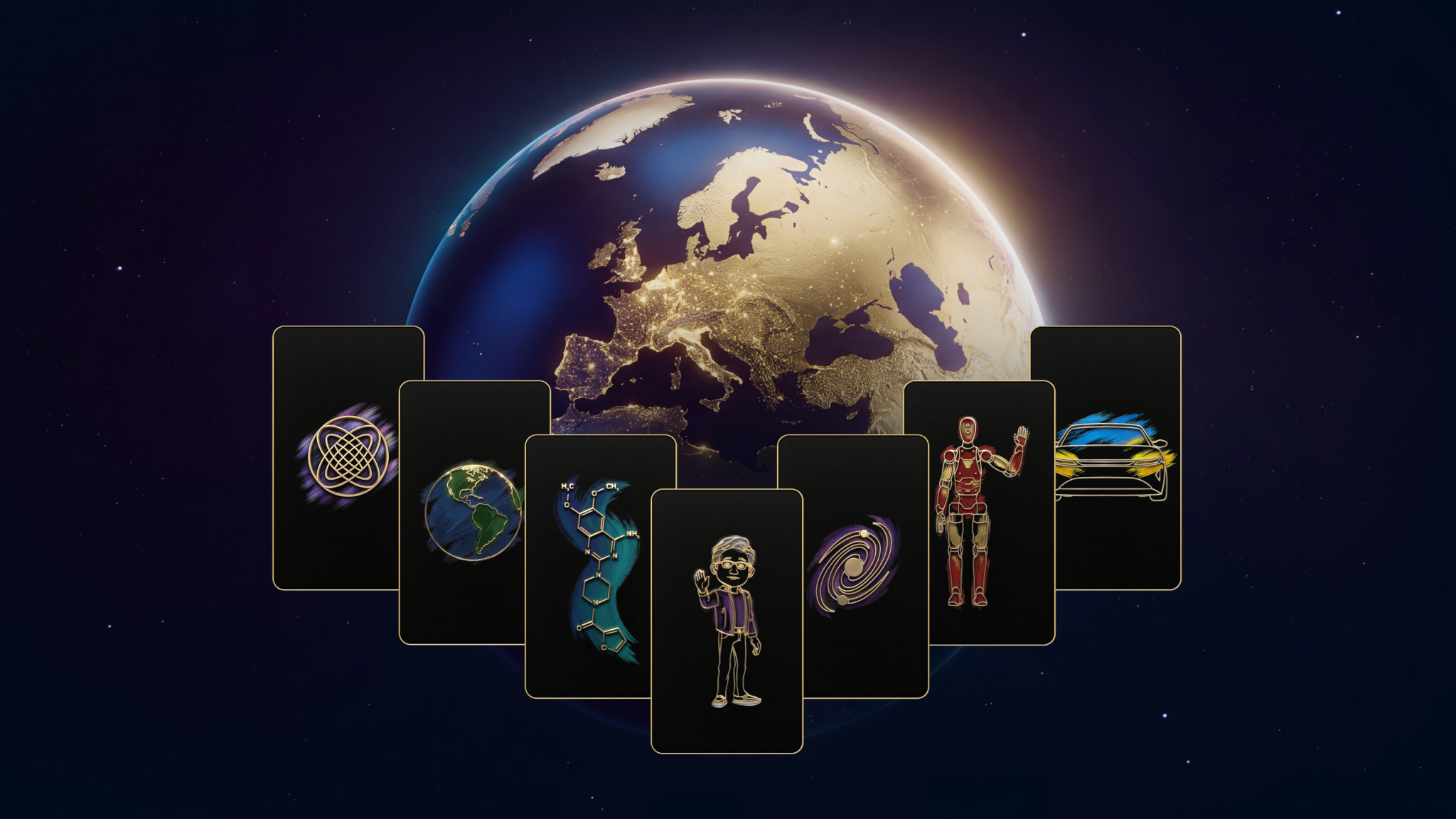
NVIDIA used an October 21 blog post to detail an expansion of its open-model family, extending it across language, robotics, biology and quantum computing. The stated goal is to give developers, researchers and enterprises building blocks they can adapt to local languages and local industries.
The update centers on three groups of models. The first is the new Nemotron 3.5 generation, which arrives as Nemotron 3.5 Super VL and Nemotron 3.5 Bolt. The second is a new line of Nemotron Retriever models, positioned for two retrieval tasks: embedding and reranking.
The Retriever addition is the quiet structural change. Embedding and reranking are the two stages that make retrieval-augmented generation work at production scale — the first turns documents into vectors that can be searched, the second reorders what came back so the most relevant passages reach the model. Shipping both as named models puts retrieval inside NVIDIA's open stack rather than leaving it to third-party components.
The breadth of the domains is the other signal. Language, robotics, biology and quantum computing each carry different data types, different evaluation norms and different buyers. Committing open weights to all four in one release suggests NVIDIA treats these models as an on-ramp to a broader platform rather than as a single benchmark play.
The framing matters too. The announcement places the models under the banner of Europe's sovereign intelligence, aimed at applications built for local languages and industries. For European buyers, language coverage and deployment location are the two practical constraints that decide whether an open model is usable, and open weights address both in ways a hosted API does not.
That is also where the competitive question sits. Open-weight releases have become crowded ground, and the differentiator is less the headline model than whether the surrounding components and tooling arrive with licenses and documentation enterprises can actually ship.
What to watch next is concrete: model cards and parameter counts for Super VL and Bolt, the license terms attached to each model, benchmarks that separate multilingual performance from English-only results, and early deployments that show whether local-language tuning holds up outside demo settings.
Why it matters
For developers, it adds another open-weight stack that can be run and fine-tuned locally across languages and domains. For enterprise buyers, whether the retrieval layer ships alongside the models may matter more to deployment cost than headline benchmark scores.
Nearby Updates
All10/21, 18:02
NVIDIA Publishes OpenShell Reference Architecture to Govern AI Agent Workloads at Scale
NVIDIA's developer blog detailed an OpenShell Reference Architecture that pairs an open-source runtime with Vera CPUs and BlueField-4 hardware isolation to control large-scale AI agent workloads. Its argument is that agents cannot govern themselves, so permissions and sandbox boundaries must be enforced by infrastructure.
10/21, 18:10
NVIDIA expands open source Agent Toolkit to ground enterprise agents in company data
NVIDIA has expanded its open source Agent Toolkit with new tools for customizing and controlling enterprise agents and grounding their answers and actions in company data. The company argues that agents are only as useful as what they know and only as trustworthy as the boundaries they run within, and says leading enterprises are already using the toolkit to monitor what agents do.
10/21, 17:45
Shengshu Opens a Two-Week Public Livestream of Motubrain 2.0 Embodied-Model Training
Shengshu Technology's world-model team started a public livestream of the full Motubrain 2.0 training run on October 21, planned to last half a month and cover four stages from pretraining to recursive self-improvement. The embodied model is due to be open-sourced, and the team is opening the process before release.
10/21, 17:30
GTC Berlin 2026 Opens With Huang's Keynote, and Agents and Robots at the Top of the Agenda
NVIDIA opened GTC Berlin 2026 on October 21 with a keynote from founder and CEO Jensen Huang at the Tempodrom, as the three-day event hosts more than 100 sessions on agentic AI, robotics, physical AI, open models and accelerated computing. Journalists, analysts and partners gathered for the main address, which set the tone for how NVIDIA wants to be positioned in Europe.