Realtime AI News
NVIDIA launches Minerva for end-to-end observability of AI factories
NVIDIA has launched Minerva, an AIOps platform that combines infrastructure and AI-workload telemetry and applies purpose-built models to produce timely, actionable insight for AI factories. Pricing and availability are not disclosed, leaving integration with existing monitoring as the key open question.
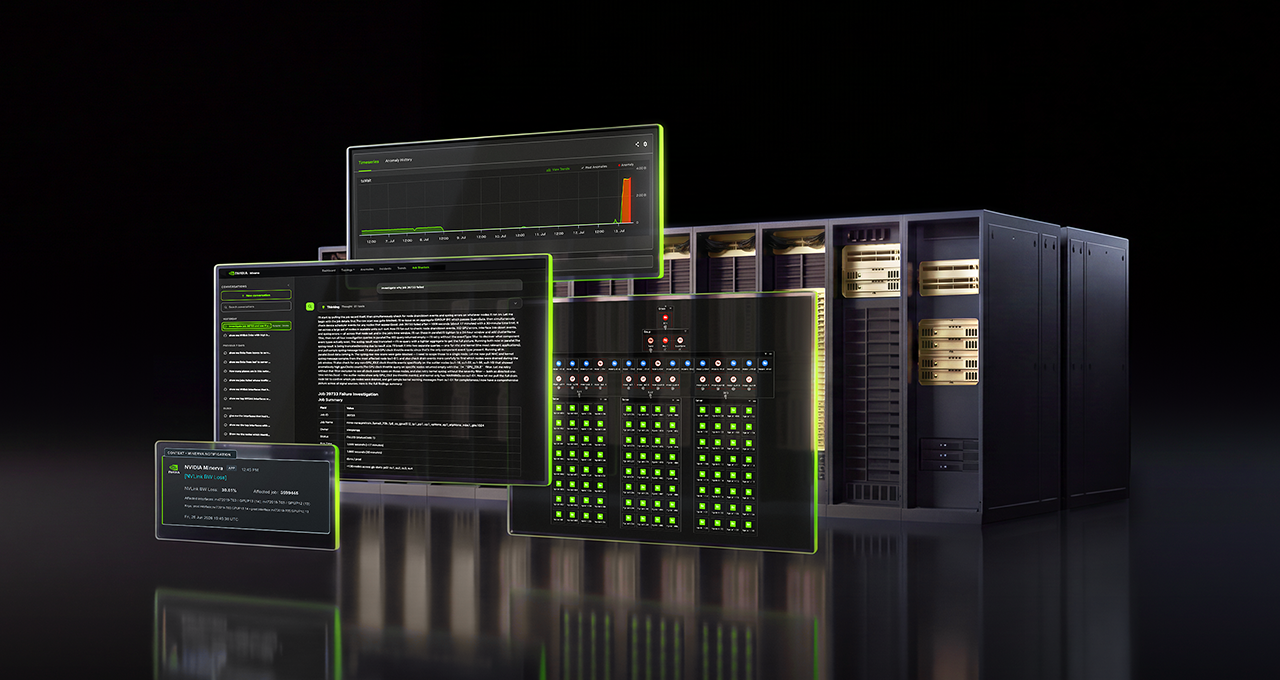
NVIDIA has launched Minerva, an AIOps platform aimed at AI factories. According to the company's blog, it pulls together telemetry from infrastructure and AI workloads, then applies purpose-built AI models to turn that data into timely, actionable insight.
NVIDIA's framing of the problem is blunt: AI factories are among the most complex operations in the world, and problems have to be caught earlier to keep them productive.
The AI factory is NVIDIA's term for accelerated-computing data centers that continuously produce models and inference capacity. High power density and tight hardware-software coupling mean a fault in one layer can leave expensive accelerators idle.
Minerva's premise is to extend observability from conventional IT monitoring into the workload layer: not just machines, networking and power, but the state of training and inference jobs themselves. Only with both views can a team tell whether a slowdown is hardware or workload.
The purpose-built models are the notable part. Using models on telemetry suggests the platform aims beyond dashboards and alerts, toward root-cause judgment and recommended action.
For customers, the value will hinge on integration cost: compatibility with existing monitoring, how many collectors must be deployed, and overlap with AIOps tools already in place. The blog summary does not address these questions.
NVIDIA's business has long been built on selling more compute, and higher utilization makes customers more willing to expand. Minerva is therefore less a standalone software bet than a support for the hardware story.
What to watch: which customers Minerva targets, how it is priced, and how it combines with NVIDIA's existing enterprise software stack. Those details decide whether it becomes standard equipment in AI data centers or just another option.
Why it matters
Minerva pushes observability into the AI workload layer, where it directly affects utilization of expensive accelerators, and gives NVIDIA a software complement to its hardware story.
Nearby Updates
All10/22, 23:03
Spotify's earnings call pitch: be the music service AI agents choose
Spotify reported 788 million monthly active users and close to 5 billion euros in quarterly revenue, and used the earnings call to argue that agents will expand rather than erode its business. Co-CEO Gustav Söderström said Spotify aims to be the media service people reach through any assistant, noting it was the first music service to integrate with Meta's Muse and also works with ChatGPT and Claude.
10/22, 23:47
Reco integrates with Cyera to rank AI agent risk by data sensitivity
Reco has integrated with Cyera to prioritize AI agent risk across sensitive data and applications. The announcement gives no availability date or pricing, so adoption will depend on how well it fits existing security workflows.
10/23, 00:00
Uber rolls ChatGPT Work out to all 30,000 employees
Uber has expanded ChatGPT Work from a small internal pilot to a company-wide deployment covering roughly 30,000 employees. TechCrunch reports that the ride-hailing giant is putting the enterprise agent into everyday workflows rather than keeping it in an experimental programme.
10/22, 21:53
Claude Duet app is Anthropic’s bet on agents
Claude Duet app is Anthropic’s bet on agents. Claude Duet is available through waitlist for Pro and Max plan users.