Realtime AI News
Google adds 'Polar Peaks' to AI Quests, teaching AI literacy through brain mapping
Google announced a new AI Quests lesson called Polar Peaks, built around the challenge of mapping the human brain as a way to teach AI literacy. The update is a modest but telling expansion of Google's education lineup, which keeps folding AI concepts into real subject matter rather than treating them as a standalone technical course.
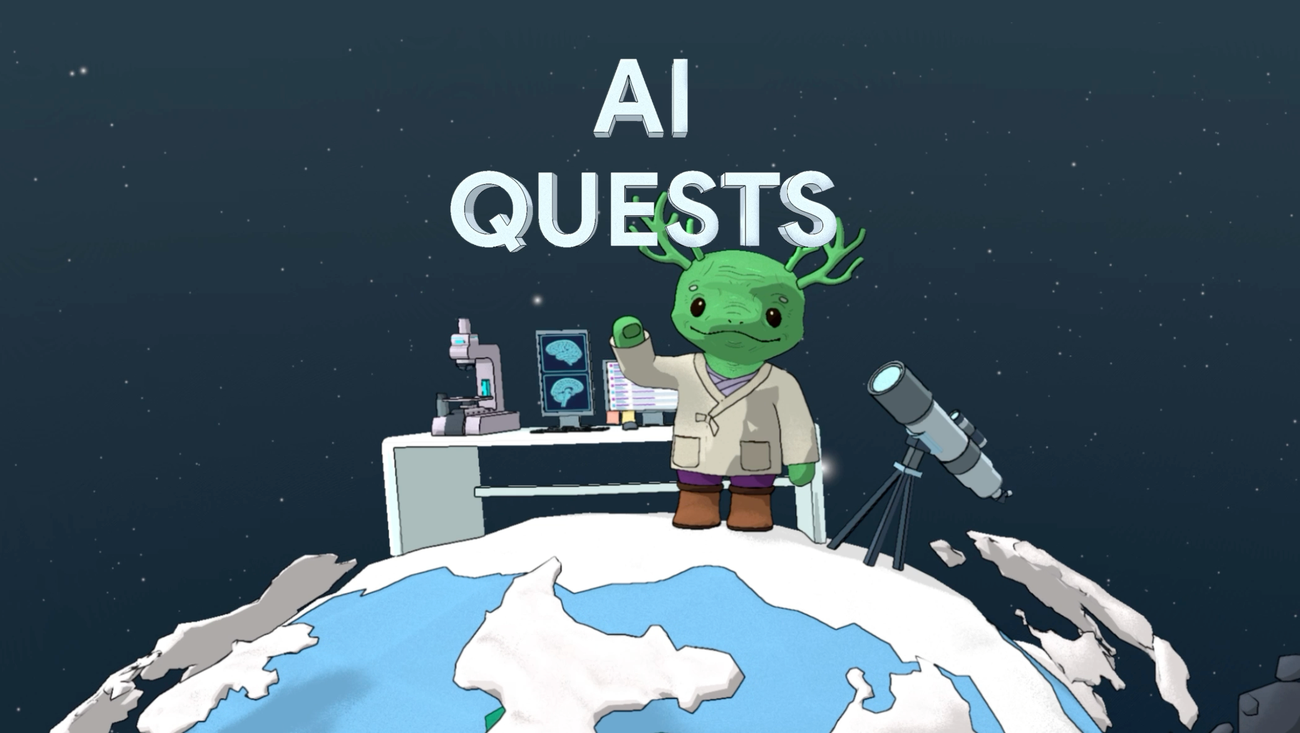
Google announced in an October 26 blog post that AI Quests, its education-focused AI literacy program, has a new lesson called Polar Peaks, framed around the neuroscience problem of mapping the human brain.
The company's own description is a single line: the lesson teaches AI literacy through a neuroscience scenario. Google did not disclose the lesson's length, the age group it targets, or the specific interactive format.
What is clear is where it sits. Polar Peaks is an addition to an existing product line rather than a standalone release, and that placement says as much about the strategy as the content does.
AI literacy efforts have been drifting away from standalone technical courses toward embedding AI concepts inside ordinary subjects. A lesson built on brain mapping asks learners to think about what AI can and cannot do while they work through a real scientific question, which is a lower barrier than starting with model internals.
Education is one of the least contested places for AI to land. For Google, shipping playful exploration tasks serves two purposes at once: it builds usage for its education products, and it positions the company as the one teaching people to understand AI at a moment when AI in classrooms draws growing scrutiny.
The harder question is whether lessons like this reach daily classroom practice rather than staying a blog update. Adoption by teachers, evidence that the material actually teaches something, and whether Google extends the series into more subjects are the metrics that will matter.
Sources
Why it matters
For the education technology sector, it reinforces a shift from standalone AI courses toward AI concepts embedded in existing subjects, while giving Google a low-cost way to stay visible in classrooms during the generative AI era.
Nearby Updates
All10/27, 00:46
SpaceX Locks In Roughly $40B in GPU Financing From Apollo
SpaceX disclosed in a regulatory filing that it has locked in a binding commitment for roughly $40 billion in financing from Apollo to pay for AI chips and data center equipment. The company called it the largest committed GPU financing ever.
10/27, 00:49
Anthropic's IPO Filing Shows a Cross-Selling Playbook Built to Keep Enterprises Locked In
Anthropic's S-1 filing shows that more than half of its $100,000-plus customers now use both the Claude Platform and a first-party app. TechCrunch compares the cross-selling playbook to Amazon's, arguing it is making enterprise customers stickier.
10/27, 00:55
Cathedral, a startup founded by ex-DOGE staffers, says its AI agents broke into Anthropic in under 12 hours
Cathedral, an AI startup founded by former Department of Government Efficiency staffers, says its agents breached Anthropic's internal systems in under 12 hours and reached employee details and internal messages. Anthropic has confirmed that access occurred, though the public reporting so far leaves the technical details and full scope of the incident unclear.
10/26, 23:01
Starling says its AI agent cuts AML alert investigations from 30 minutes to 17 seconds
Starling says an AI agent has cut the time needed to investigate anti-money-laundering alerts from 30 minutes to 17 seconds, AML Intelligence reported. The bank has not disclosed the model behind the agent, the sample size, or whether a human review step remains.