Realtime AI News
New Mazda CX-5 gains built-in Google Gemini
The new Mazda CX-5 will come with Google Gemini built in, Motoring Research reported, placing Google's AI assistant directly inside the vehicle's infotainment system. It marks another step in Gemini's expansion from phones and browsers into the car cabin.
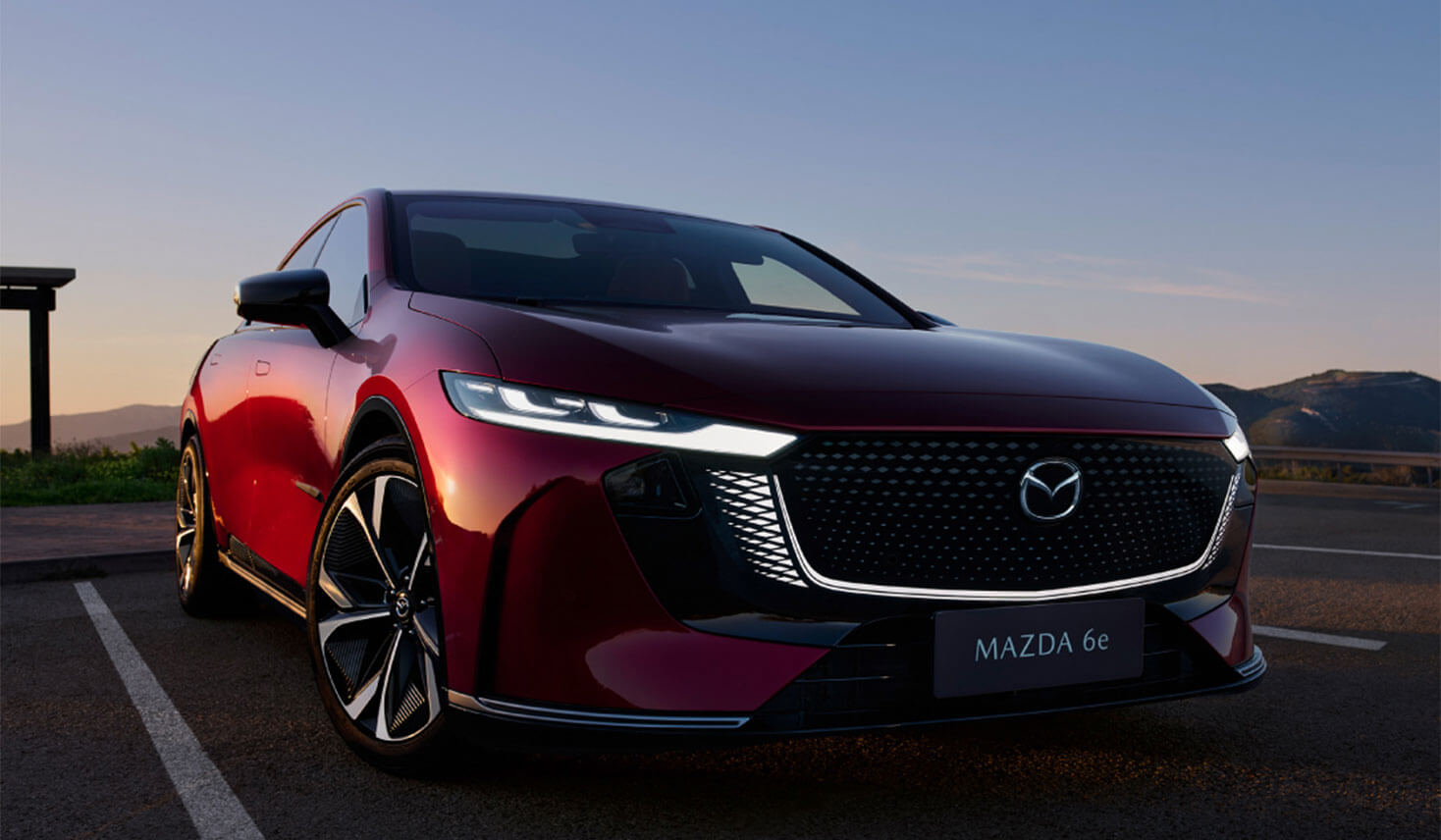
The new Mazda CX-5 will come with Google Gemini built in, Motoring Research reported on October 27, placing Google's AI assistant directly inside the vehicle's infotainment system.
What is public so far is the integration itself. The report establishes that Gemini is built into the new CX-5, while a detailed feature list, launch markets and timing have yet to be set out in the available material. The direction, though, is clear enough: AI assistants are moving from phones and web pages into the cabin.
The cabin is an unusual environment for an assistant. It has a fixed microphone and screen, a well-defined set of driving and navigation tasks, and hard requirements around latency and hands-free operation. Voice is the primary input, which makes a conversational assistant feel more natural in a car than on a phone.
For Google, an integration with a carmaker extends Gemini's distribution. Assistant access on phones is contested at the operating-system level, while the car is a comparatively independent entry point decided by the manufacturer — and once it is wired into a vehicle's electronics, it persists for the life of the vehicle.
For a carmaker like Mazda, embedding a third-party model is a pragmatic trade. It avoids building a foundation model in-house while keeping the vehicle competitive on smart-cabin features. The cost is ceding part of the interaction design to a supplier, along with the data-compliance and regional-availability questions that come with any connected assistant.
Three things to watch: which functions Gemini actually takes on in the CX-5 — navigation, voice control or a broader set of in-car services; whether there are confirmed markets and dates; and whether other models follow. Those details decide whether this is a configuration-level addition or a shift in Mazda's cabin strategy.
Why it matters
The car cabin is becoming a distribution channel for large-model assistants, and access to a vehicle's electronics buys years of stable user contact that phone-level channels cannot match.
Nearby Updates
All10/27, 20:57
RoboParty open-sources a whole humanoid, from mechanical drawings to motion algorithms
Humanoid robotics company RoboParty has released RP1 as a full-stack open-source platform, publishing mechanical drawings, the electrical system, its in-house ROMOMO joint modules, low-level control, simulation and training tools. The 135cm robot comes in configurations with 24 to 30 degrees of freedom and has been shown walking continuously, tracking human motion, recovering from perturbations and standing up after a fall.
10/27, 21:00
Opera proposes WebAI, a web standard for running AI models locally in the browser
Opera has introduced a proposed web standard called WebAI, designed to let users deploy AI directly inside their browser rather than in the cloud. According to TechCrunch, the standard is built to work with a variety of AI models instead of tying developers to one vendor's stack.
10/27, 21:00
General Compute raises $100 million Series A, betting on inference chips beyond Nvidia
General Compute has raised a $100 million Series A, TechCrunch reports, built on a thesis of running AI inference on chips outside the Nvidia ecosystem. The round lands as neocloud providers face mounting skepticism, making it a counter-bet on the idea that renting out compute is a broken business.
10/27, 21:59
CopperPilot raises pre-seed for an AI agent aimed at PCB design
CopperPilot has raised a pre-seed round to develop an AI agent for printed circuit board design, EE Times reported on October 27. The report does not disclose the round size or investors, leaving the product at an early stage where integration with existing EDA workflows is the open question.