Realtime AI News
OpenAI cuts its new funding target from $30B to $20B
OpenAI has cut the target for its latest funding round, with the Financial Times reporting a drop to $20 billion and a first close expected to come in lower still. The company had previously been reported to be raising $30 billion at a $1.4 trillion valuation ahead of a planned IPO.
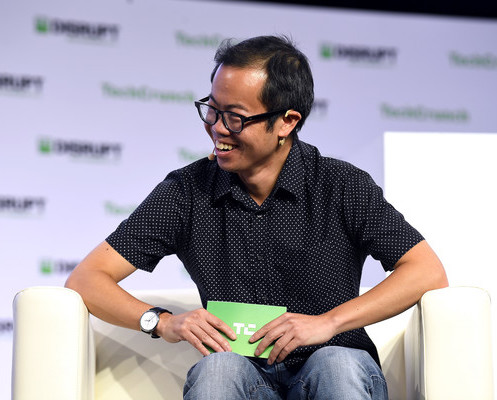
OpenAI has lowered the funding target for its latest round, according to multiple news reports cited by TechCrunch on October 31, a sign that even the most visible company in AI is not immune to a cooling market.
Earlier reporting said OpenAI was raising $30 billion at a $1.4 trillion valuation, a figure later revised to $1.25 trillion, with the money meant to fund expansion ahead of a planned IPO.
The Financial Times reported on Friday that the target has since been cut to $20 billion, and that the first close is expected to come in below even that number. In practice, the cash actually wired at the first close may be well short of the headline goal.
The round is being led by a group of investors from the United Arab Emirates, and a later retail offering aimed at wealthy individuals could bring the total to the $20 billion mark. Other reporting put commitments secured so far at about $11 billion, with some large investors described as tepid.
TechCrunch said it has reached out to OpenAI for comment. No official confirmation of the figures has appeared, so the numbers remain press accounts rather than a company announcement.
Part of the difficulty is timing. Wall Street has grown wary of heavy AI infrastructure spending, triggering a broad selloff in tech stocks, and Anthropic's planned IPO could draw capital away from OpenAI's own raise.
Two things are worth watching: whether $20 billion becomes the new baseline or is an intermediate step, and how the UAE-led structure and the retail tranche are finally split. A lower first close would also say something about the pace of OpenAI's compute commitments.
Sources
Why it matters
A smaller round constrains how fast OpenAI can commit to compute deals and sets a valuation marker that rivals will be measured against. It also reframes the AI boom narrative from unlimited appetite to negotiated terms.
Nearby Updates
All10/31, 23:36
AiSOC Launches on GitHub as an Open Source SOC Built Around AI Agents
A project called AiSOC has been published on GitHub as an open source security operations center driven by AI agents, according to a report by Pasquale Pillitteri. The release puts agent-based alert handling inside a codebase that security teams can host, read and audit themselves.
11/01, 00:50
Microsoft releases Mage-VL-Cowork, a 4B computer-use agent at 66% on OSWorld
Microsoft has released Mage-VL-Cowork, a 4-billion-parameter computer-use agent that scores 66% on OSWorld-Verified, described as the best result at that model scale. The company also published weights, code, and a technical report, with the model card listing an Apache 2.0 license.
10/31, 23:25
ModelBest and OpenBMB open-source MiniCPM-OCR series with 1.3B parser and 2B quality-check model
ModelBest and OpenBMB released and open-sourced the MiniCPM-OCR series on October 31, comprising the 1.3B-parameter MiniCPM-OCR 1.0 parser and the 2B MiniCPM-OCR Jev, a result-decision model that scores OCR output for errors. The models ship with DSpark decoding acceleration, support vLLM, SGLang, llama.cpp and Ollama, and are published on GitHub, Hugging Face and ModelScope.
11/01, 01:01
Sam Altman Calls Local AI Inference ‘Quite Terrible’ Amid Global DRAM Shortage
OpenAI CEO Sam Altman said in a podcast interview that running AI inference locally is “quite terrible” from a global resource-allocation standpoint, because scarce DRAM would sit idle in personal computers. With memory supplies tight, his argument puts cloud inference and the growing on-device AI push on a collision course.