Realtime AI News
NVIDIA Deepens Korean Startup Bets With Point2 Investment, Plans for Motif, RLWRLD and Upstage
NVIDIA and South Korea's science ministry hosted an AI startup forum at COEX in Seoul on November 9, meeting more than 20 Korean companies across foundation models, physical AI, AI infrastructure and AI chips. NVIDIA announced an investment in interconnect startup Point2 and said more investments are planned in Motif Technologies, RLWRLD and Upstage, without disclosing amounts or a timeline.
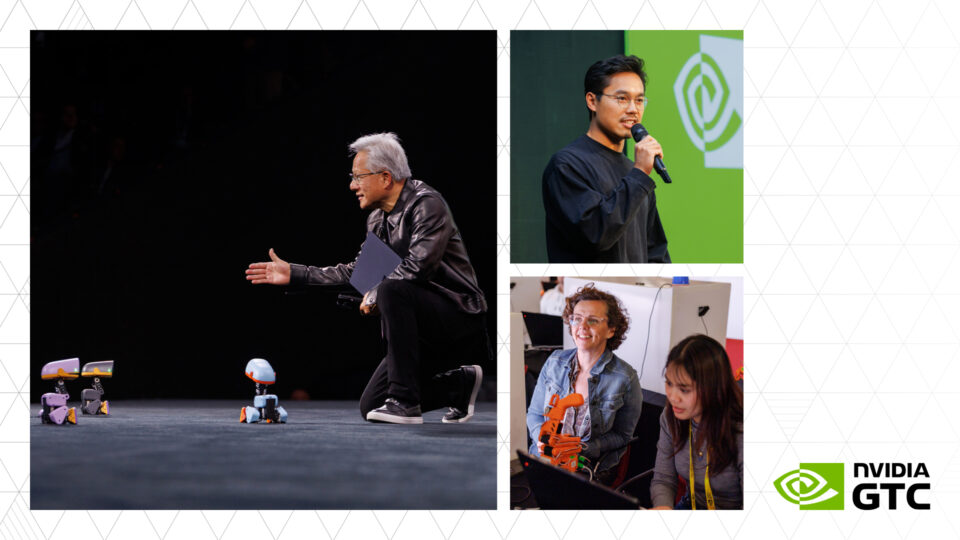
NVIDIA and South Korea's Ministry of Science and ICT (MSIT) co-hosted the MSIT-NVIDIA AI Startup Partnership Forum at COEX in Seoul on November 9, bringing together more than 20 Korean startups working across foundation models, physical AI, AI infrastructure and AI semiconductors.
Vice Minister Ryu Je-myung joined NVIDIA leaders at the event. On the sidelines, NVIDIA announced an investment in Point2 Technology and said additional investments are planned in Motif Technologies, RLWRLD and Upstage. The company did not disclose check sizes, ownership stakes or a timeline for closing the deals.
Point2 builds scalable radio-frequency interconnects that move data between chips and racks inside AI factories, positioning its technology as an alternative to conventional copper and optical links for scaling AI clusters. NVIDIA frames the reach, performance and efficiency of that approach as necessary for next-generation AI infrastructure.
The other three companies sit at different layers of the stack. Seoul-based Motif Technologies develops foundation models for AI agents and released Motif-3 with open weights; RLWRLD, with teams in San Francisco, Seoul and Tokyo, builds robotics foundation models for humanoid and industrial robots that need five-finger dexterity - inserting components, threading nuts onto bolts and kitting parts from moving conveyors.
Upstage is the enterprise AI company behind the Solar language models and document AI tools that help businesses extract information from complex documents and build everyday AI applications. NVIDIA argues that together the four cover the full AI stack, from infrastructure to models to robotics applications.
The investments build on existing groundwork. NVIDIA says more than 1,000 Korea-based startups are members of its Inception program, which offers preferred pricing, technical expertise and investor introductions.
The open question is execution. In the same week, NVIDIA also published deployment recipes that put several of these model builders onto its inference stack, suggesting the Korean ecosystem is being wired into NVIDIA hardware and software at several levels at once. Whether the planned investments materialize, at what size, and how tightly these startups are integrated into NVIDIA's platform are the signals to watch.
Why it matters
NVIDIA's Korea strategy is shifting from selling silicon to capital and ecosystem ties, with sovereign AI and physical AI as the proving grounds.
Nearby Updates
All11/09, 16:34
Qwen Office 2.0 Puts AI Agents Inside Team Group Chats
Qwen Office launched version 2.0 on November 9, led by a Collaboration feature the company calls the industry's first to support multiple people and agents in one shared workspace. The release also adds human-AI co-creation, a material space, automated tasks and three-device sync, all now generally available.
11/09, 16:40
Palo Alto Networks in Reported $500M Talks to Buy Agent-Security Startup Clutch
Palo Alto Networks is in talks to acquire AI-agent security startup Clutch Security for about $500 million, according to AI Insider. The report describes ongoing negotiations rather than a signed deal, and neither company has confirmed the terms.
11/09, 16:44
Tencent Hunyuan Hy4 Tested With WorkBuddy, Pitched on Agent Delivery
QbitAI has published a hands-on test of Tencent Hunyuan's new open-source model Hy4, placing it in the top tier of open models. The test paired Hy4 with WorkBuddy to judge multimodal agent delivery on real tasks rather than single-turn benchmark scores.
11/09, 17:00
He let OpenAI's Dot coordinate an office move. It sent the movers about 300 emails.
A first-person account published by Business Insider describes how Robert Farlow, founder of the San Francisco AI startup Plato, handed office-move coordination to OpenAI's Dot agent and watched it send roughly 300 emails across movers, insurers and building managers in a few days. Farlow shut the agent down and now reviews every AI-drafted message before it goes out.