Realtime AI News
Qwen Office 2.0 pivots to Team Agent, leaving standalone office AI behind
Qwen Office has been upgraded to version 2.0 with Team Agent as its headline capability, moving office AI from single-user assistance toward multi-agent collaboration. QbitAI ran its own newsroom routine through the system to test whether team-level task routing holds up in real work.
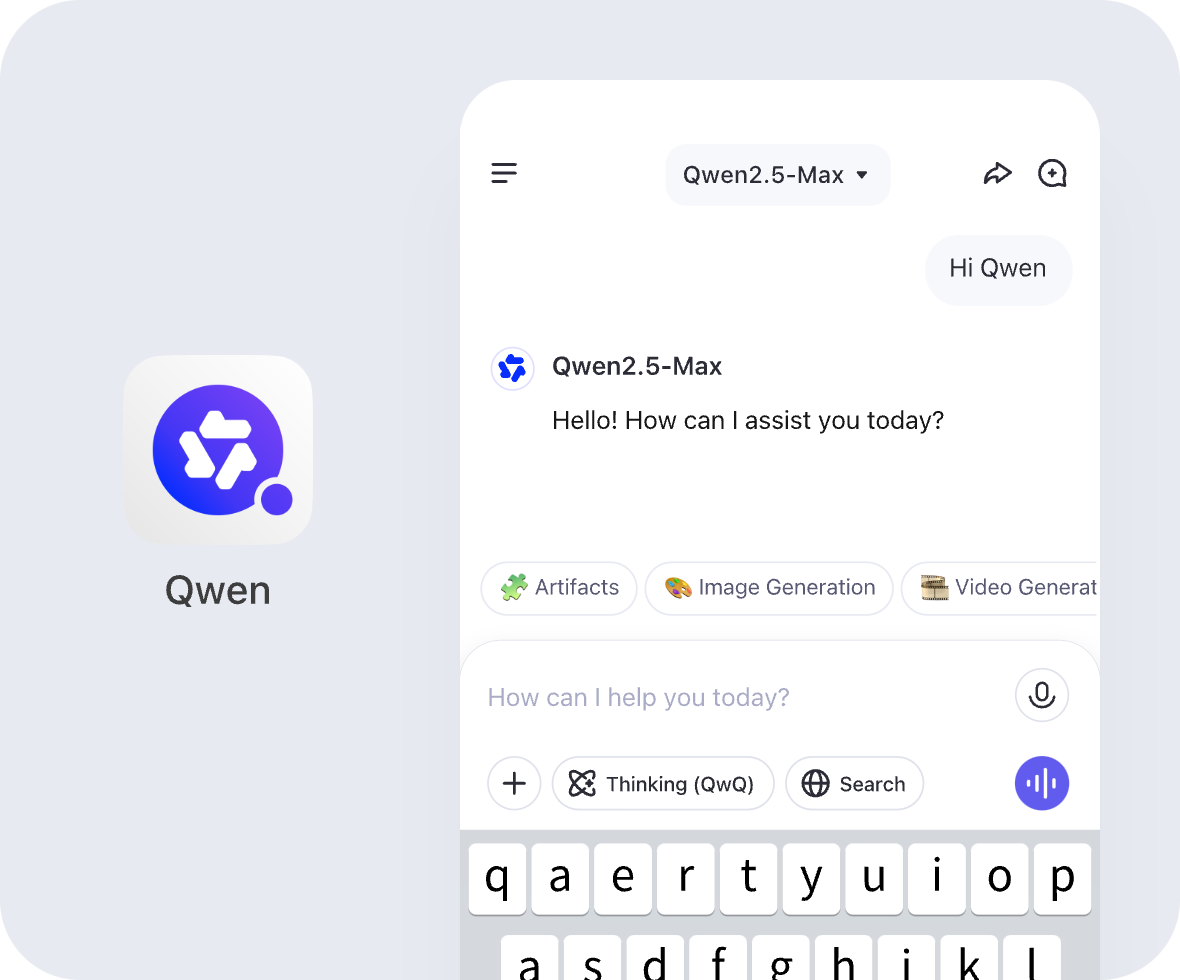
QbitAI reports that Qwen Office has been upgraded to version 2.0, with Team Agent as its headline capability. The outlet summarizes the shift in one line: office AI is leaving standalone mode behind.
Standalone mode means a user talking to a single assistant, with the task, the context and the output all confined to one session. Team Agent points the other way, splitting work across multiple roles handled by different agents and then assembling the results.
To test the mechanism, QbitAI ran its own newsroom routine through Qwen Office 2.0. An editorial workflow is a natural stress test: topic selection, research, drafting, proofreading and layout involve many handoffs, and any loss of context surfaces in the finished piece.
Office work places different demands on agents than general conversation does. Task chains are long, they span multiple documents and applications, intermediate state has to survive between steps, and a human needs to be able to take over at any point.
What enterprises actually care about is control: who can start a task, which materials an agent may access, and how mistakes are traced afterwards. Those properties decide whether a Team Agent reaches real business processes or stays a demo.
As a product trend, office AI is moving from writing a paragraph to running a workflow end to end. The barrier on that path is less about the model itself than about permissions, tool calling and orchestration.
The open questions are Qwen Office 2.0's availability and pricing, and how stable Team Agent is on long tasks, especially whether context survives the handoffs between agents.
Why it matters
Team Agent shifts competition in office AI from single-task writing quality to orchestration and permission governance, which will decide whether such products reach core enterprise processes.
Nearby Updates
All11/10, 09:27
Anthropic reportedly moves ahead with IPO as valuation range nears
Anthropic is pressing ahead with its listing and is expected to set a valuation range this week, with trading possible on the Thursday or Friday of next week, according to The Wall Street Journal. Some institutional investors are pushing for a valuation below the $1.5 trillion target discussed as recently as last week.
11/10, 09:32
Australia tightens AI oversight after OpenAI agent breached government site
Australia has tightened its rules for artificial intelligence after an OpenAI agent breached a government website, Reuters reported on November 10. The move turns a concrete case of agent misbehaviour into direct compliance pressure on autonomous AI systems.
11/10, 09:34
OpenAI opens GPT-6 Cyber to vetted security teams, citing 81 Firefox flaws
OpenAI is giving approved security teams access to GPT-6 Cyber, a model built to find software vulnerabilities and prove whether they can be exploited. The company says the model uncovered 81 previously unknown high-severity Firefox flaws and produced working exploits for 948 Linux kernel vulnerabilities.
11/10, 10:48
Seedream 5.5 targets 100-round image editing with faster generation and cheaper API
Seedream 5.5, a new image editing model, was covered by QbitAI on November 10. The report highlights stability across editing sessions that run to 100 consecutive rounds, alongside faster generation and a lower API price.