Realtime AI News
NVIDIA spotlights four startups using vision AI and robots to sort mixed waste
With COP31 focused on zero waste, an NVIDIA blog post profiles four Inception startups applying vision AI and robotics to sorting. Taiwan's AIRECO aims to lift annual processing from 18,000 to 48,000 tons, while US-based EverestLabs has roughly 150 vision-guided robots running in North America and Australia.
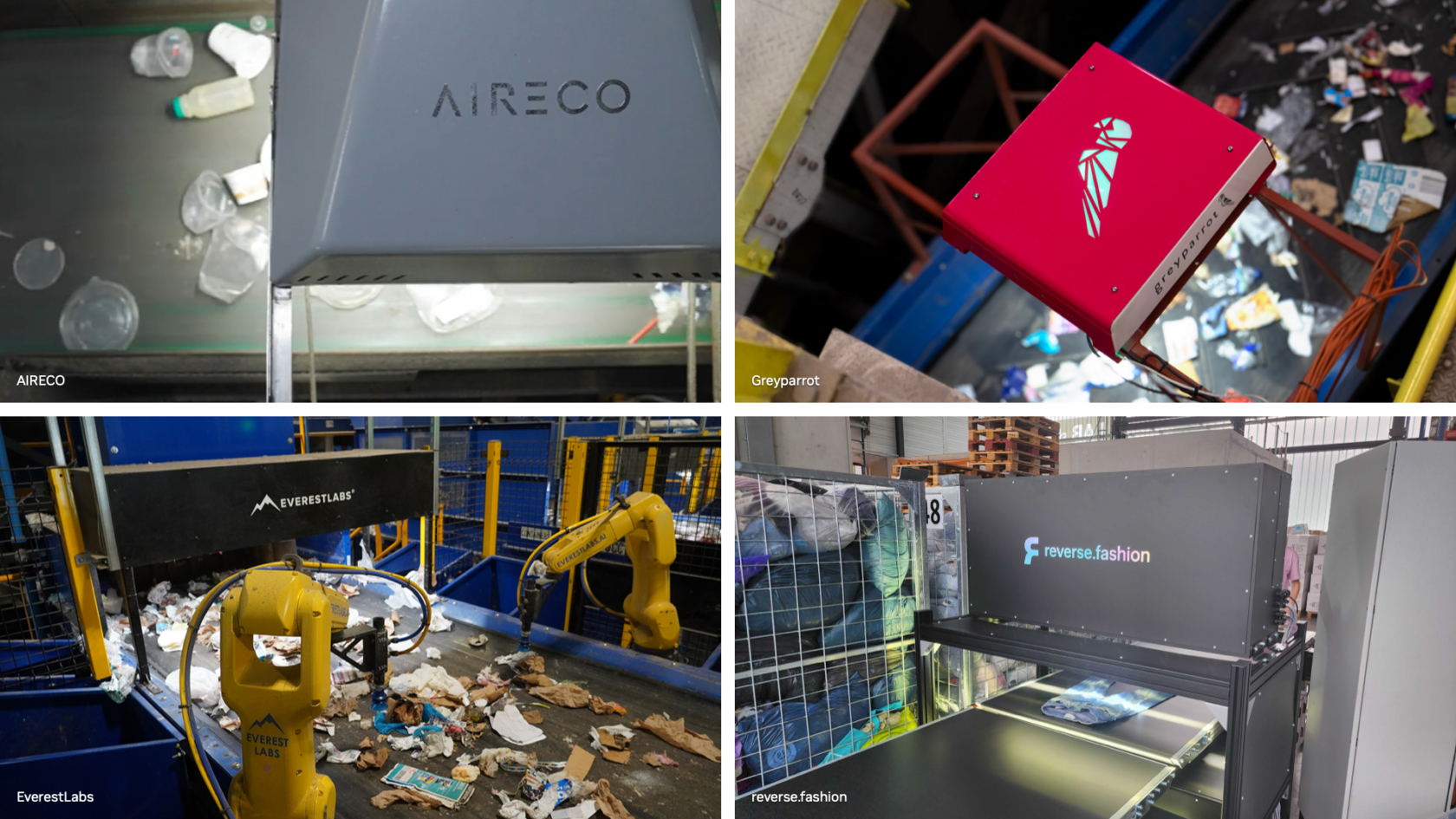
NVIDIA's November 10 blog post turns its attention to waste recovery. Framing the piece around COP31 in Türkiye and its zero-waste agenda, the post opens with two numbers: less than 7 percent of the materials entering the global economy come from recycled or reused sources, and municipal solid waste exceeds 2 billion tons a year, a figure that could nearly double by 2050.
Josh Parker, head of sustainability at NVIDIA, frames the role of AI plainly: a circular economy depends on making better use of what already exists, and AI can help identify what is in a waste stream, what can be recovered, and automate the sorting. The post then profiles four members of the NVIDIA Inception program for startups, covering plastics, mixed recyclables and textiles.
First is Taiwan-based AIRECO. Recycled plastic struggles because quality is inconsistent, manual sorting is hard to staff and mixed scrap gets downcycled. AIRECO uses vision AI to sort plastics more finely so material can return to closed-loop recycling. On a pilot line at a plant in Tainan it runs inference on NVIDIA Jetson Orin NX modules, driving robotic arms that pick targets off the conveyor, with recognition accuracy above 95 percent on the test line. A full production line planned for next year targets annual capacity of 48,000 tons, up from 18,000, with operating costs down 85 percent.
Second is EverestLabs AI in the United States, which works directly on material recovery facilities handling household recyclables. The constraint there is real time: belts move at a fixed speed and the machine has to identify and pick before the material passes. EverestLabs runs inference on NVIDIA RTX GPUs at the edge and trains models on data center GPUs with CUDA optimization, and about 150 vision-guided robots are deployed across facilities in North America and Australia. By its estimate the systems have identified roughly 40 billion objects, recycled about 25,000 tons of material and avoided around 30,000 metric tons of CO2 emissions. The company is also shipping agentic tools that give facility staff actionable operating data.
Third is UK-based Greyparrot. Plants can process tens of thousands of tons a day, yet operators historically judged what was on the belt by sampling less than 1 percent of it. Greyparrot's Analyzer platform mounts above conveyor belts and uses computer vision to identify each object by material and brand, including in dusty conditions, poor light and belts moving up to 4 meters per second. More than 300 systems in over 20 countries have made more than a trillion bounding box detections, cutting the time needed to check 15 tons of waste from 375 hours to six. Facilities report efficiency gains of 10 to 30 percent, packaging company Amcor raised food-grade plastics yield by 12 percent, and brands including Coca-Cola, Colgate-Palmolive and Kenvue use the data to see how their packaging is actually recycled.
Fourth is Berlin-based reverse.fashion, aimed at the nearly 7 million tons of used textiles Europe generates each year. About a quarter is collected separately and sorted by hand into hundreds of categories, work that is slow, costly and hard to staff. Its high-resolution vision system identifies product type, defects, color, size, brand, fabric construction, season and style, then assigns each garment to its most valuable category. At 3 meters per second, every item passes through more than a dozen vision models optimized with NVIDIA TensorRT and running on Jetson modules at the edge; the cofounder estimates the system sorts in an hour what used to take a week.
Taken together, the four cases follow one technical pattern: vision models do identification, edge compute guarantees real time, and robots or analytics do the acting. What they all have to answer is an economic question rather than a technical one, because the finer the sorting, the better the odds that recycled material can compete with virgin stock on both quality and cost.
The numbers to watch are whether these figures replicate in more plants: whether AIRECO's production line hits 48,000 tons and an 85 percent cost reduction, whether EverestLabs' agentic tools change how facilities are actually run, and whether brand demand for recycled content keeps pace with the sorting capacity now being built.
Why it matters
Sorting economics, not recognition accuracy, is the bottleneck holding recycled material back, and vision AI plus edge compute attacks exactly that. For chip and robotics vendors it is a high-frequency, must-have deployment category that is now scaling from pilots into production lines.
Nearby Updates
All11/11, 10:51
Alibaba says Qwen4 is coming, with a Max preview live on Token Plan
Alibaba confirmed on November 11 that its next-generation Qwen4 model is about to launch, with a Qwen4-Max preview already live on its Token Plan and connected to several Alibaba products. Parameters, pricing and open-source plans are still undisclosed, leaving developers to test the model on a metered preview first.
11/11, 10:47
AMD launches Zen 6 EPYC processors aimed at denser AI agent deployments
AMD has released its Zen 6 EPYC server processors, positioning them around a single promise: running AI agents at higher density per machine footprint. As agent workloads move from demos into production, the CPU side of orchestration and concurrency is back in the cost equation.
11/11, 10:47
AMD releases Zen 6 EPYC chips aimed at denser AI agent deployments
AMD has launched Zen 6 EPYC data center processors built around packing more cores and threads into the same rack space and power budget for concurrent AI agent workloads. Briefings on launch day put the IPC gain over Zen 5 at about 27%, with up to 256 cores per EPYC part.
11/11, 12:50
Tmall's Double 11 sale puts Chinese LLM token packages at 50% off or deeper
On November 11, several Chinese large-model vendors discounted their token packages on Tmall for the Double 11 shopping festival, with Zhipu, MiniMax and Qwen Office offerings cut to 50 percent off or more. The promotion turns metered model usage into a consumer-style shopping item and makes the current API price competition unusually visible.