Realtime AI News
OpenAI Reportedly Disbands Standalone Robotics Team, Folding Researchers Into Core Work
According to The Rundown AI, OpenAI has dissolved its stand-alone robotics team and moved its researchers into core research and related groups instead of keeping a dedicated embodied-AI unit. Coverage frames the move as a bet that general-purpose models can increasingly run robots without a dedicated robotics department.
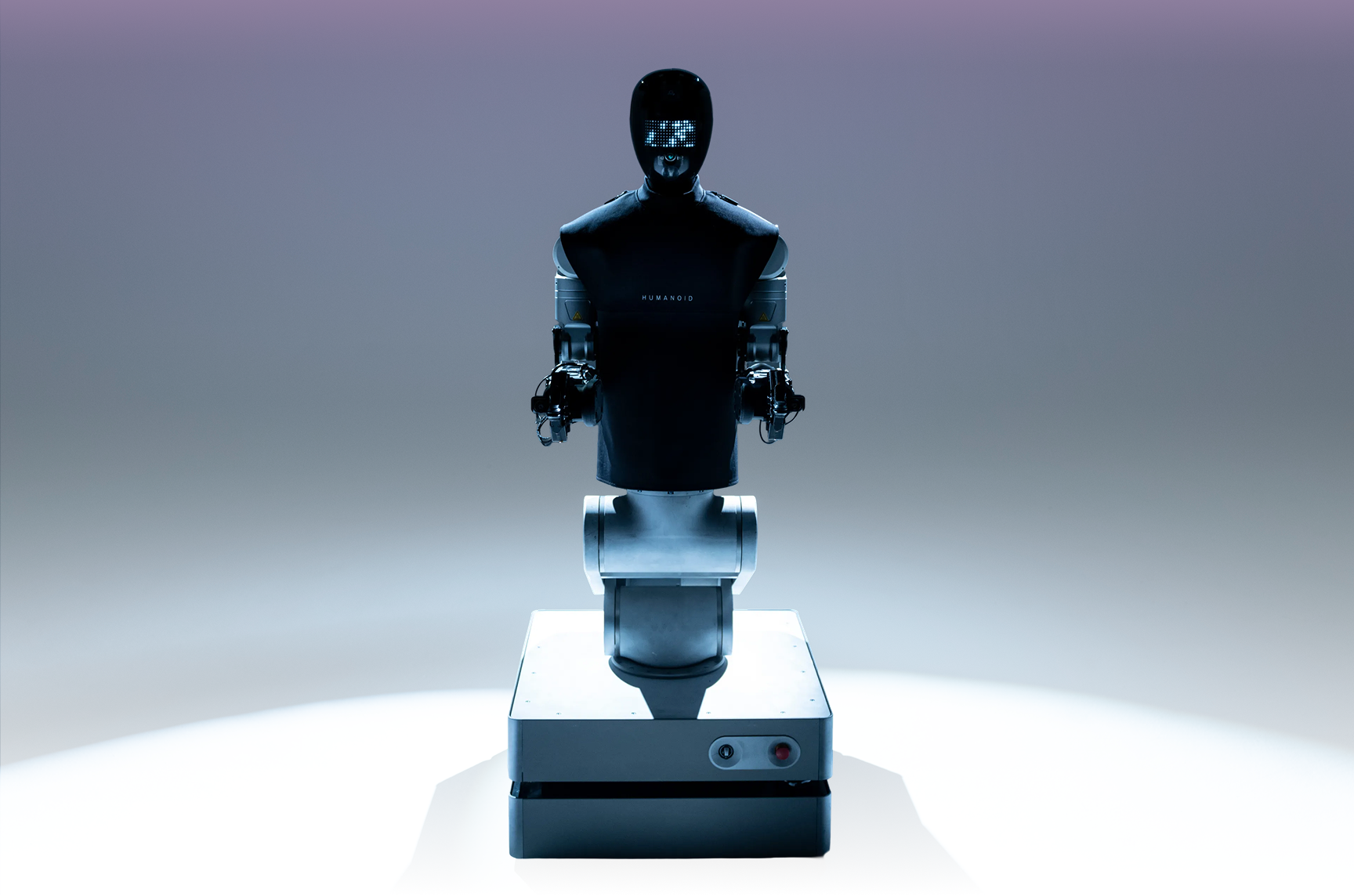
OpenAI has reorganized again. According to The Rundown AI on November 16, the company has disbanded its stand-alone robotics team, moving its researchers into core research and related applied groups rather than keeping a dedicated unit for embodied AI.
The reported structure is a reversal of the arrangement OpenAI had built around robotics: instead of one team owning the hardware-facing work, robotics research is now distributed across the teams responsible for foundation models and their applications. Robotics shifts from a business direction with its own budget and roadmap into one more application surface for model capability.
The change fits a broader pattern at OpenAI, which has consistently concentrated resources on general-purpose models rather than vertical hardware programs. Coverage of the move attributes it to the fact that general models are starting to run robots, reducing the case for a separate organization built around a single hardware form factor.
For the robotics industry the signal is slightly counterintuitive. Over the past two years embodied AI has been treated as the next large market for large models, with companies standing up dedicated robotics teams and hiring for hardware and reinforcement learning. OpenAI's decision to de-departmentalize robotics suggests it is betting on generalization of model capability rather than specialization around a body.
The organizational consequences are immediate. Disbanding a standalone team typically reshuffles project priorities, reporting lines and performance targets; researchers folded into core groups are more likely to work on training and capability evaluation than on robot hardware design, locomotion and iteration.
The reports do not specify how many people were affected, the exact timeline, or whether OpenAI will keep participating in robotics through partnerships or investments. Useful signals to watch include whether OpenAI shows more robotic demonstrations in model launches, where the former robotics leads land, and whether the pace of robotics-related hiring at the company changes.
Why it matters
If general models can drive robots without a dedicated unit, OpenAI's edge shifts toward model capability rather than hardware, leaving robotics startups to see the company as a supplier of intelligence rather than a direct competitor.
Nearby Updates
All11/16, 22:40
Report: OpenAI explored a $5B-plus deal for Goodfire at 4x its last valuation
OpenAI explored acquiring the startup Goodfire for at least $5 billion, according to a November 16 report from FourWeekMBA, roughly four times the company's last valuation. The report describes explored talks rather than a signed agreement, and neither OpenAI nor Goodfire has publicly confirmed the discussions.
11/16, 22:37
Uber's Legal AI Agent Cuts Contract Review Time 20% With Rules and RAG
InfoQ reports that Uber's legal AI agent reduced contract redlining time by about 20% by pairing a deterministic rules layer with retrieval-augmented generation. The combination keeps the agent's suggestions anchored in the company's own clauses and legal standards rather than free-form model output.
11/16, 23:02
US Tightens AI Chip Export Controls to Cover Remote Access to Overseas Compute
The Commerce Department is rolling out an interim final rule requiring licenses to send AI chips and servers to data centers anywhere in the world if that compute could reach companies in China or other restricted countries. It sets a 12 million TPP threshold, roughly 750 Nvidia H100 or H200 chips, and rescinds the Biden-era AI Diffusion Rule.
11/16, 20:30
Freshworks alums raise $53M to take on Salesforce and HubSpot with AI-native CRM
Dreamteam, a San Francisco startup founded by former Freshworks executives, has raised $53 million in seed and Series A funding led by Together Fund and Accel to challenge Salesforce and HubSpot with an AI-native CRM. Its Company Brain and built-in AI agents capture customer context automatically, and the company says it has signed more than 100 customers across 13 countries in three months of selling.