Realtime AI News
Nvidia Launches Nemotron for Science, Rubin HPC GPU and Expanded Vera CPU at SC26
Nvidia used its SC26 special address to launch Nemotron for Science, agent tooling that can plan experiments, run code and verify results on researchers' own systems, alongside a Rubin HPC GPU and an expanded Vera CPU platform. The company is pitching scientific research as the next home for AI agents.
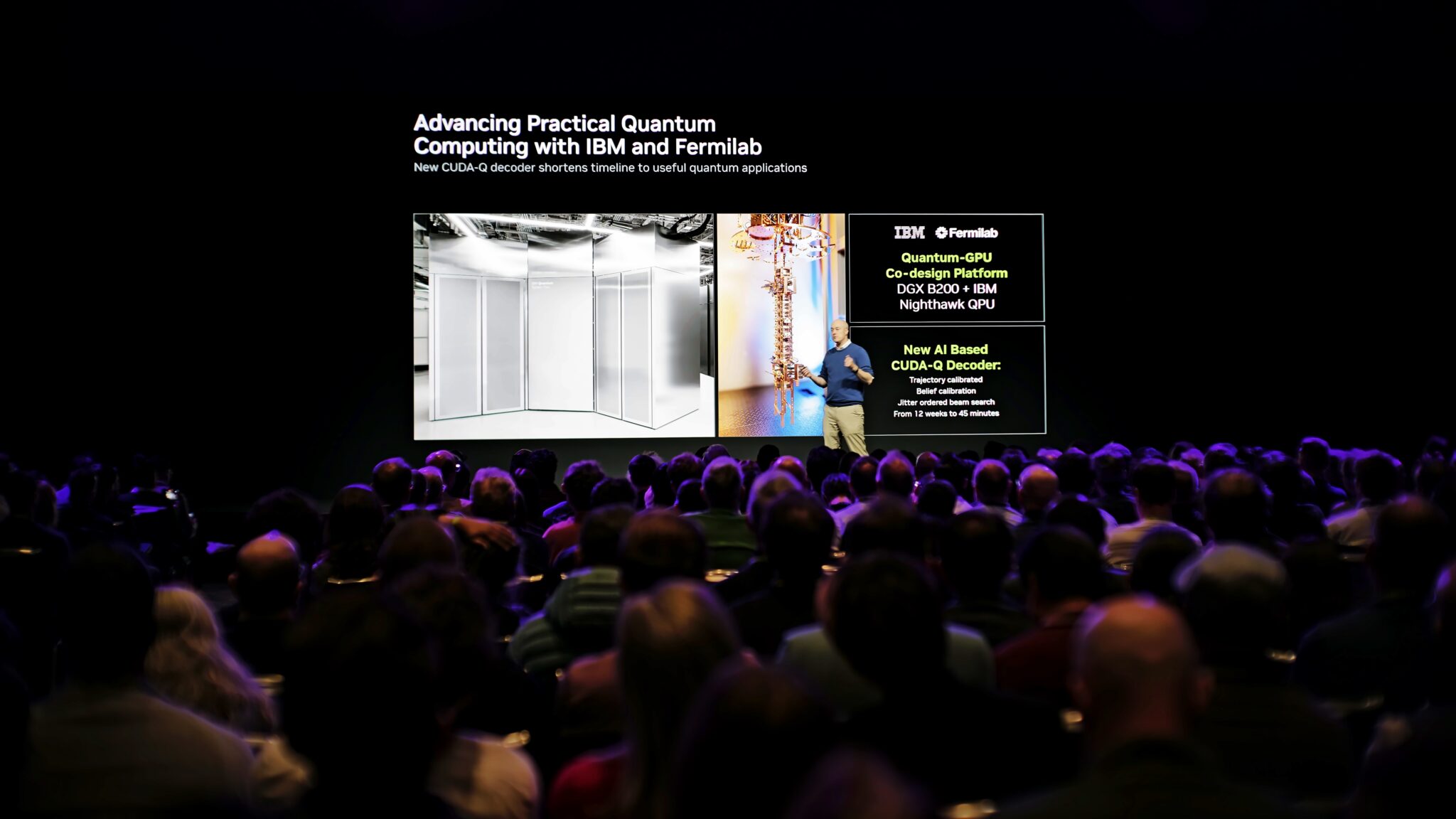
Nvidia opened its week at SC26 with a special address from Ian Buck in Chicago on Monday, framing the moment as science entering “the age of agents.”
The headline item was Nemotron for Science, which Nvidia describes as agent tooling and software for researchers — capable of planning experiments, running code and checking results on researchers' own systems.
Buck also announced the Rubin HPC GPU and an expanded Vera CPU platform, both aimed at the high-performance computing workloads that dominate scientific computing.
The venue choice is telling. SC is the year's main gathering for supercomputing, and Nvidia used it — rather than its own GTC — to launch science-facing agent software.
The emphasis on running on researchers' own systems speaks to a real constraint in institutional science: data residency and reproducibility. Tooling has to fit local clusters and governance rules rather than pulling experimental data into a public cloud.
For Nvidia, the bundle is an attempt to stretch GPU demand from training into scientific inference and the agent loop itself. Agents that plan, execute and verify burn compute in repeated cycles rather than in a single forward pass.
Nvidia's blog post did not include specifications, availability dates or customer names for the Rubin HPC GPU or the expanded Vera platform, nor did it say how broadly Nemotron for Science will be released. Those details will decide whether this is a demo or a deployable product.
What to watch: whether Nvidia publishes benchmark data and partner deployments during SC26, and whether research institutions can wire these agents into existing cluster and data-governance stacks without moving their data.
Why it matters
Nvidia is positioning scientific computing as a landing zone for both agent software and HPC hardware, opening a demand path beyond training. If institutions adopt it locally, the tooling could reshape how research software is bought and integrated.
Nearby Updates
All11/17, 22:04
AI Travel Agent Vayo Adds Booking, Moving From Itineraries to Transactions
PhocusWire reports that AI travel agent Vayo has added booking to its capabilities, letting users complete a full trip reservation inside a conversation rather than only receiving suggestions. The update pushes consumer travel AI from planning into the transaction itself, where accuracy and conversion rates decide whether it works.
11/17, 22:05
Nvidia Forms Board National Security Committee to Oversee Export Controls
Nvidia has created a standing board committee with direct oversight of national security policy, export control compliance and global trade risk, meeting at least quarterly. Announced hours before the company's third-quarter earnings call, it is interim CEO Colette Kress's first major action, taken amid congressional scrutiny of Jensen Huang and U.S. chip export policy.
11/17, 21:31
BlackLine partners with OpenAI to integrate AI models into its software
BlackLine has partnered with OpenAI to integrate AI models into its software, according to a report from Investing.com. The deal adds another enterprise vendor to the list of companies embedding third-party models into existing workflows, though the scope and timing remain undisclosed.
11/17, 21:30
Cato Networks launches AgentSense to block harmful AI agent actions before execution
Cato Networks has unveiled AgentSense, a product designed to stop harmful AI agent actions before they are carried out. The launch shifts agent security from filtering model output toward policing the actions autonomous agents attempt to take, though technical and availability details were not disclosed.