Realtime AI News
Google brings the Gemini app to lower-memory Android phones
Google says the Gemini app is now available on eligible Android (Go edition) devices after the team re-architected it to run on hardware with less memory. Users on those phones can hold spoken conversations with Gemini Live in more than 45 languages, point the camera at notes or forms to learn and translate on the spot, and create custom images with Nano Banana.
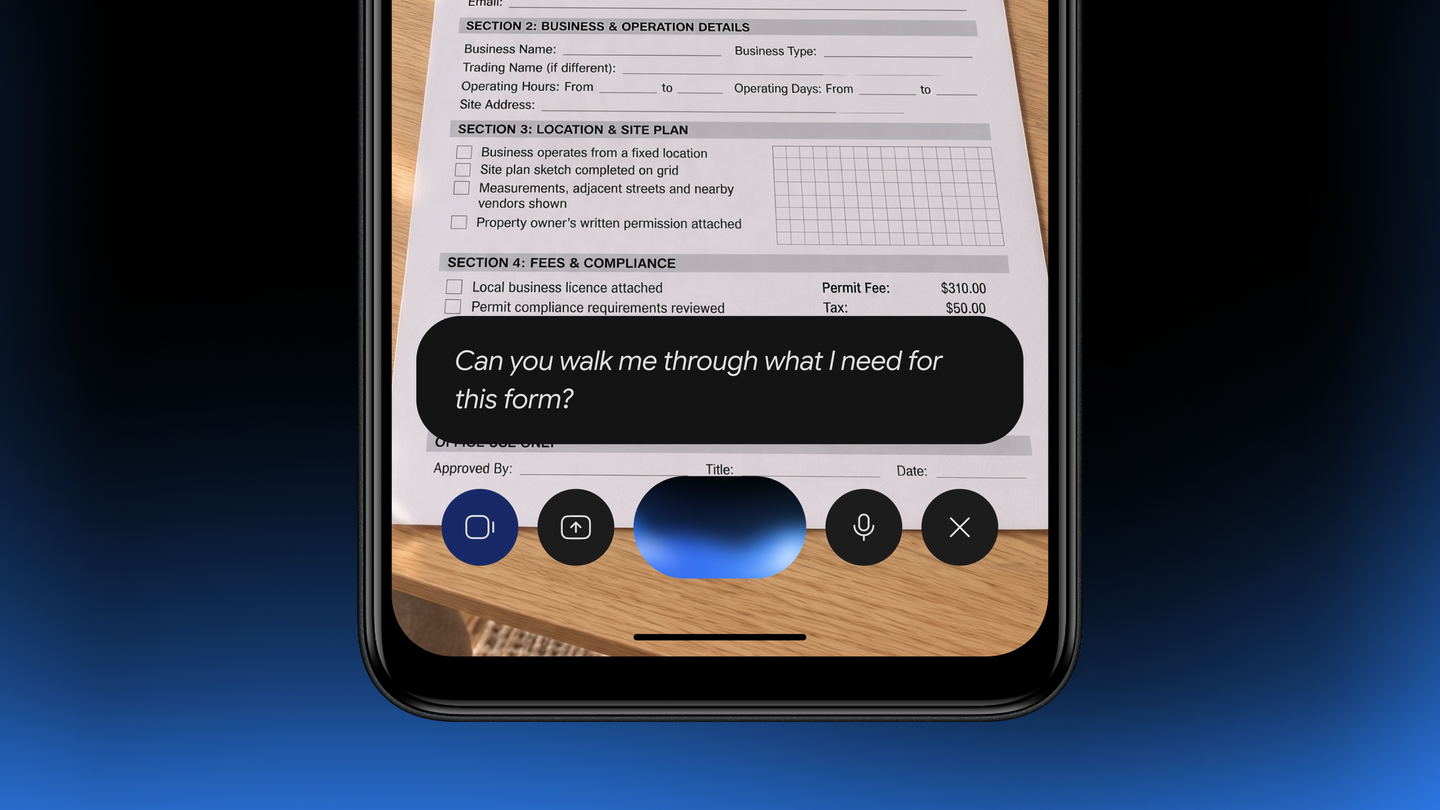
Google said on November 18 that the Gemini app is now available on eligible Android (Go edition) devices. In a post by Angus Logan, a builder on the Gemini app team, the company framed the move around scale: for hundreds of millions of people a lower-memory Android phone is the everyday connection to the internet, education and business, yet those devices previously offered only basic voice commands.
To make that work, Google said it re-architected the app so the core Gemini experience runs smoothly on hardware with less memory. That is a client-side engineering change rather than a new web entry point, and it is the part that decides how far down the price ladder an assistant can reach.
The features that survive the cut are the ones Google is pushing hardest. Gemini Live lets users talk through a task instead of typing a long prompt, in more than 45 languages; the blog cites practising for an interview out loud as an example. The camera is the second surface, turning notes or forms into something the phone can read, translate and explain on the spot.
Image generation is included too, with Nano Banana producing custom visuals. Google's example is a flyer for a weekend bakery sale, a small errand that shows the pitch: generation is being sold as an everyday phone feature rather than a separate tool.
There are three ways to get it. Users can download the app from Google Play, press and hold the power button on supported phones, or buy a device that ships with it. Google named Transsion as a partner whose upcoming devices will come preloaded, a detail that matters more for distribution in emerging markets than the download link does.
The strategic read is that assistant competition has shifted from benchmark leadership to reach. Extending Gemini to Go edition hardware widens the addressable base well beyond flagship buyers, and it fits Google's long-standing habit of distributing through the platform rather than selling the assistant on its own.
What is still missing is the fine print. Google did not publish a device list or a memory threshold, so eligible remains defined by Google Play listings and manufacturer announcements. The things to watch are how quickly Transsion's preloaded models ship and whether Live and image generation hold their latency and language coverage on budget hardware.
If the experience on cheap phones comes close to the flagship version, rivals' assistants will have less room to differentiate at the entry level. If key features are visibly limited, the headline number will describe distribution rather than capability.
Sources
Why it matters
The release turns the entry-level Android segment into a direct battleground for AI assistants, and it pushes rivals to match Google's feature set on the cheapest hardware rather than only on flagships.
Nearby Updates
All11/19, 00:59
Altman warns against a future where AI, not humans, calls the shots
Sam Altman and Greg Brockman have pushed back against a future in which AI rather than humans makes the decisions, as Silicon Valley's debate over an AI takeover heats up. Both conceded that keeping advanced models under human control is genuinely difficult.
11/19, 01:05
Team Turing launches Pie, a proactive AI agent for college students
Team Turing has launched Pie, an AI agent aimed at college students that is designed to surface tasks before the user asks. The product's selling point is proactivity rather than conversation, with campus life as its first target market.
11/19, 01:32
Citi tells customers using third-party AI agents: you're on your own, even if you get hacked
Citibank changed its online user agreement this week to make customers responsible for anything that goes wrong when they give third-party AI tools access to their accounts, including losses after a credential leak or hack. JPMorgan and Bank of America adopted similar policies last month, PNC followed the same day, and Citizens emailed customers a comparable warning.
11/19, 00:14
Altman says it is hard to imagine the AI industry without Jensen Huang
OpenAI CEO Sam Altman said it is hard to imagine the AI industry without Jensen Huang, less than a week after Huang stepped down as Nvidia's chief executive. TechCrunch reports that the departure came amid several scandals.