Realtime AI News
NVIDIA and Microsoft Extend Accelerated Computing From Azure to Industrial Systems and Windows PCs
At Microsoft Ignite, NVIDIA and Microsoft said they are expanding their full-stack collaboration from Azure into industrial systems and Windows PCs. The companies are also widening access to Azure virtual machines powered by NVIDIA Vera Rubin NVL72 systems and moving those systems toward broader customer availability.
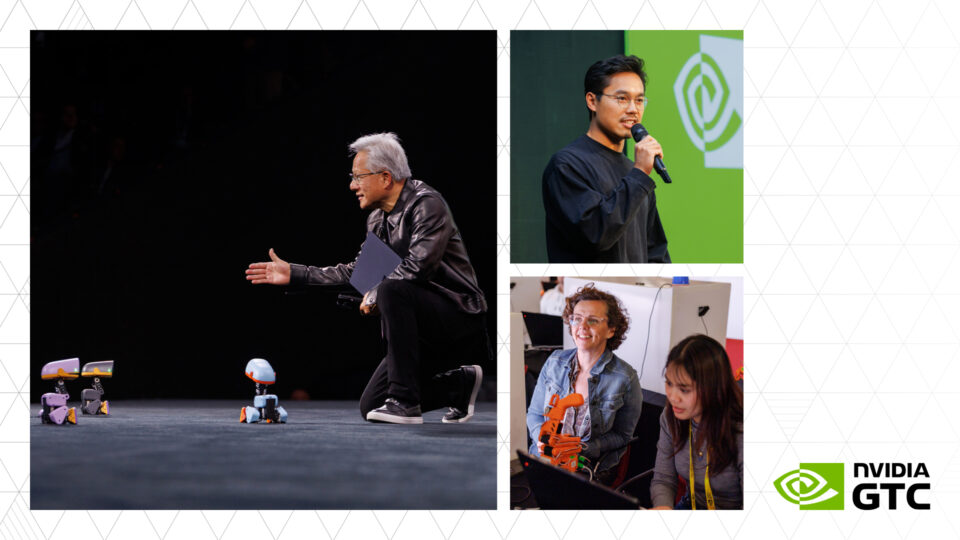
At this year's Microsoft Ignite, NVIDIA and Microsoft said they are extending their full-stack collaboration, carrying accelerated computing from Azure into industrial systems and Windows PCs. The two companies frame the expansion as a way to help organizations build, customize and deploy intelligent applications.
On the cloud side, the companies are widening access to Azure virtual machines powered by NVIDIA Vera Rubin NVL72 systems, while also moving those systems toward broader customer availability. Vera Rubin NVL72 is described as next-generation infrastructure for AI workloads, a rack-scale design that until recently appeared mostly in roadmaps and previews.
For Microsoft, the move keeps Azure's AI capacity aligned with NVIDIA's newest platform. For NVIDIA, it pushes the hardware entry point beyond hyperscale data centers and closer to industry customers, which is where the industrial-systems part of the announcement comes in.
Windows PCs are the less usual item on the list. Bringing accelerated computing to personal computers points to local model inference, edge workloads and on-device intelligent applications as the next contested layer, rather than treating AI purely as a cloud business.
It is worth noting what the announcement does not contain: no prices, no region list, no performance figures. Enterprises evaluating the offering will still need Azure's specific instance types, quotas and billing details, and those details usually decide whether a platform is practical.
Seen from the industry side, the NVIDIA-Microsoft relationship is shifting from straight infrastructure supply toward a stack that spans cloud, edge and endpoint. For companies deploying AI in their own operations, which layer they standardize on will shape migration costs later.
What to watch next is the customer list and regional availability, and how the Windows PC side opens up to developers. If usable local models really run on the endpoint, the shape of AI deployment could change again.
Sources
Why it matters
The partnership moves AI compute from the data center toward industry systems and endpoints, so platform choices now shape both cloud spend and on-device deployment. Instance types, regional availability and developer tooling are the details that will decide how real this becomes.
Nearby Updates
All11/20, 04:18
TechCrunch Timeline Traces Jensen Huang's Resignation From Nvidia
TechCrunch published a timeline on November 19 saying Nvidia chief executive Jensen Huang has resigned following an affair, and that the episode could carry national security ramifications. The piece stitches the reported developments together as the U.S. and China race to build advanced AI infrastructure.
11/20, 04:44
Google Prices Gemini 4 Models Separately for Reasoning and Speed
Google has set different prices across its Gemini 4 models, splitting billing between reasoning capability and speed, according to tokenpost. The pricing structure, rather than a single per-model rate, is the signal here for developers planning their workloads.
11/20, 04:49
Ex-Google engineer may face new insider trading charge over Gemini 3.0 release-date bets
A former Google engineer may face a fresh insider trading charge tied to bets on when Gemini 3.0 would launch, according to Cryptonews.net. The case turns on unpublished product timing being treated as tradable information.
11/20, 03:10
Anthropic's IPO Could Deliver $156 Billion to Charity
At a share price of $95, Anthropic's public benefit foundation, employee donations and the company's matching contribution add up to $156 billion, TechCrunch reported. The figure ties an AI listing to a philanthropic commitment at a scale the industry has not seen.