Realtime AI News
Signal Restricts Mobile Screenshots as It Confronts the 'Existential Threat' of AI Surveillance
Signal is limiting users' ability to take screenshots in both its Android and iOS apps, according to TechCrunch. The privacy-focused messenger is framing the change against the rise of AI-driven surveillance, which the report describes as an existential threat to encrypted communication.
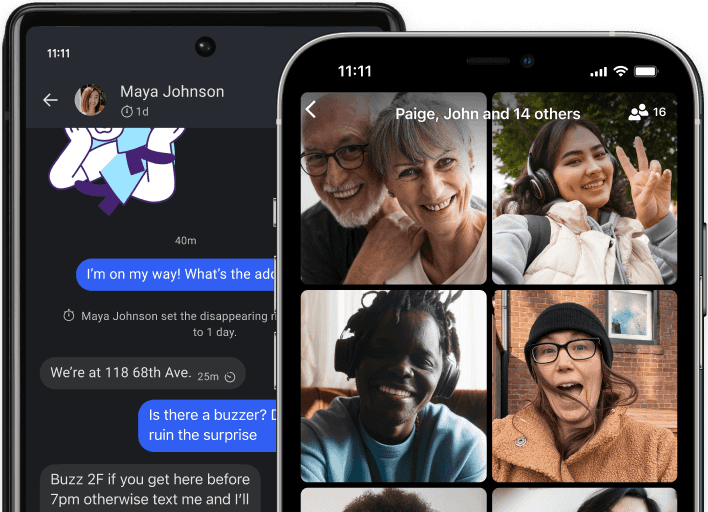
Signal, the encrypted messaging app known for its privacy-first design, is limiting users' ability to take screenshots in both its Android and iOS apps. TechCrunch reported the change on November 21, framing it as a response to the pressures that AI-driven surveillance places on private communication.
The report ties the restriction to what it calls the "existential threat" of AI surveillance. The concern is not abstract: as AI systems get better at extracting and reusing information from images, a screenshot can move a conversation out of an end-to-end encrypted channel and into a surface that is far easier to analyze at scale.
What the public description does not yet establish is the scope of the restriction. TechCrunch's summary says Signal is limiting screenshot capability rather than eliminating it outright, and details such as exceptions, platform differences, or the exact implementation have not been spelled out in the available material.
The move is symbolically significant for a privacy app. End-to-end encryption protects messages in transit and at rest, but a screenshot happens on the client, outside that protected path. Constraining that step extends the boundary of privacy design from transmission and storage into how content is displayed and retained on the device.
For the broader industry, Signal's decision illustrates a shared problem for privacy tools in the AI era: stronger models make unstructured content, including images and on-screen text, easier to harvest automatically, so encryption alone no longer covers every risk surface. Pushing limits into the user-interaction layer is one response, but it invites trade-offs around usability and user control.
What to watch next is how Signal documents the change through its own channels, whether Android and iOS behave the same way, and how its user community reacts to the loss of a familiar capability. For an app built on user trust, any change to everyday habits needs a clear explanation of the security benefit versus the cost in convenience.
Why it matters
By moving privacy limits onto the client side, Signal sets a precedent for encrypted apps trying to keep AI from turning screenshots into a new data-extraction channel.
Nearby Updates
All11/22, 05:06
Fabrex unveils Rex, an AI agent aimed at unifying the additive manufacturing workflow
Fabrex has launched Rex, an AI agent it says unifies the additive manufacturing workflow behind a single interface instead of adding one more tool to the stack. The value will hinge on whether shops trust it with a real build queue and whether its recommendations hold up when a part fails.
11/22, 02:32
Report: Apple is building an AI agent to operate apps and browse the web for you
Apple is developing an AI agent meant to operate apps and browse the web on a user's behalf, according to a November 21 K24 Digital report. The story gives no launch date, device list or deployment details, leaving permission design and third-party access as the open questions.
11/22, 02:29
Thinking Machines' Inkling 2 Mini puts a looped transformer on your laptop
Thinking Machines has drawn attention with Inkling 2 Mini, a looped transformer model that runs locally on laptops, VentureBeat reported on November 21. Parameter counts, benchmark scores and licensing are not disclosed, so whether weights or quantized builds will be released remains unclear.
11/22, 01:40
Singapore moves to test stablecoin payments made by AI agents
Singapore wants to test stablecoin payments initiated by AI agents, according to CryptoSlate, with trials running through the Monetary Authority of Singapore's Agentic Money Sandbox. MAS is also developing a “know your agent” protocol so institutions can verify an agent's identity, mandate and reliability before it moves money.