Weekly AI Report
Weekly AI Report | 2026-11-16 to 2026-11-22
The week's throughline was not a benchmark score but agents moving money: 11.7 million sub-dollar agent payments on the XRP Ledger, wallets from OpenAI and Google wired into agent flows, the first agent-negotiated Treasury trade at BNY and Microsoft, and Singapore's MAS sandboxing agent stablecoin payments. Meanwhile bank terms, a joint letter from four UK regulators, and Australian signaling wrote authorization and liability into the rules. On the model side, the price war changed units, from per token to per task.
The Week's Throughline
This was not a week defined by a benchmark score. It was the week agents started moving money. On November 16, t54.ai said its x402 Facilitator on the XRP Ledger had processed 11.7 million sub-dollar AI agent payments, up from nearly zero three months earlier. The same day OpenAI introduced a ChatGPT wallet built around secure agent payments, and Google wired Gemini into Google Wallet for spending analysis and budgeting. On November 18, BNY and Microsoft completed the first US Treasury trade negotiated by AI agents. On November 19, Hyundai Card and JPMorgan began testing agent-executed corporate treasury payments on a distributed ledger. On November 22, Singapore's MAS put agent-initiated stablecoin payments inside its Agentic Money Sandbox and floated a Know Your Agent protocol.

Read together, the competitive question moved from whether an agent can finish a task to who may authorize it, where the permission boundary sits, and who absorbs the loss. That thread ran through four surfaces at once: settlement, contract terms, regulatory sandboxes, and runtime monitoring. This is not a product launch story. It is a layer of infrastructure being filled in.
What Changed

Pricing moved from per token to per task. ByteDance put Seedance 2.5 Flash on BytePlus ModelArk on November 15 at $7.00 per million tokens, roughly a third below the full model, in exchange for a 720p ceiling and 20 reference assets instead of 50. Tencent's Hy4 Flash pairs a 1M-token context with $0.07 per million tokens. Gemini 4 Neon is priced at $3 input and $15 output per million tokens with a 1M-token window, and Google says its cost per task is 32% below Carbon. At Ignite, Microsoft shipped seven MAI models and stated that MAI Code 2 reaches 98% of GPT 6.1 Sol's performance at 40% of the cost. The week's competition was not about the capability ceiling. It was about finishing the same job more cheaply.
For Chinese flagship models, the bottleneck moved from capability to serving. Qwen4 Max uses a 2.4-trillion-parameter MoE, with reported task costs down nearly 60% and a 1M-token context. But a November 22 report said its rollout is running into a compute wall: the model shipped, and the constraint appeared in the step that turns it into a reliably available service. The same tension showed up in a public Q&A around Hunyuan 4 on compute spend, benchmark credibility, and recursive self-improvement.
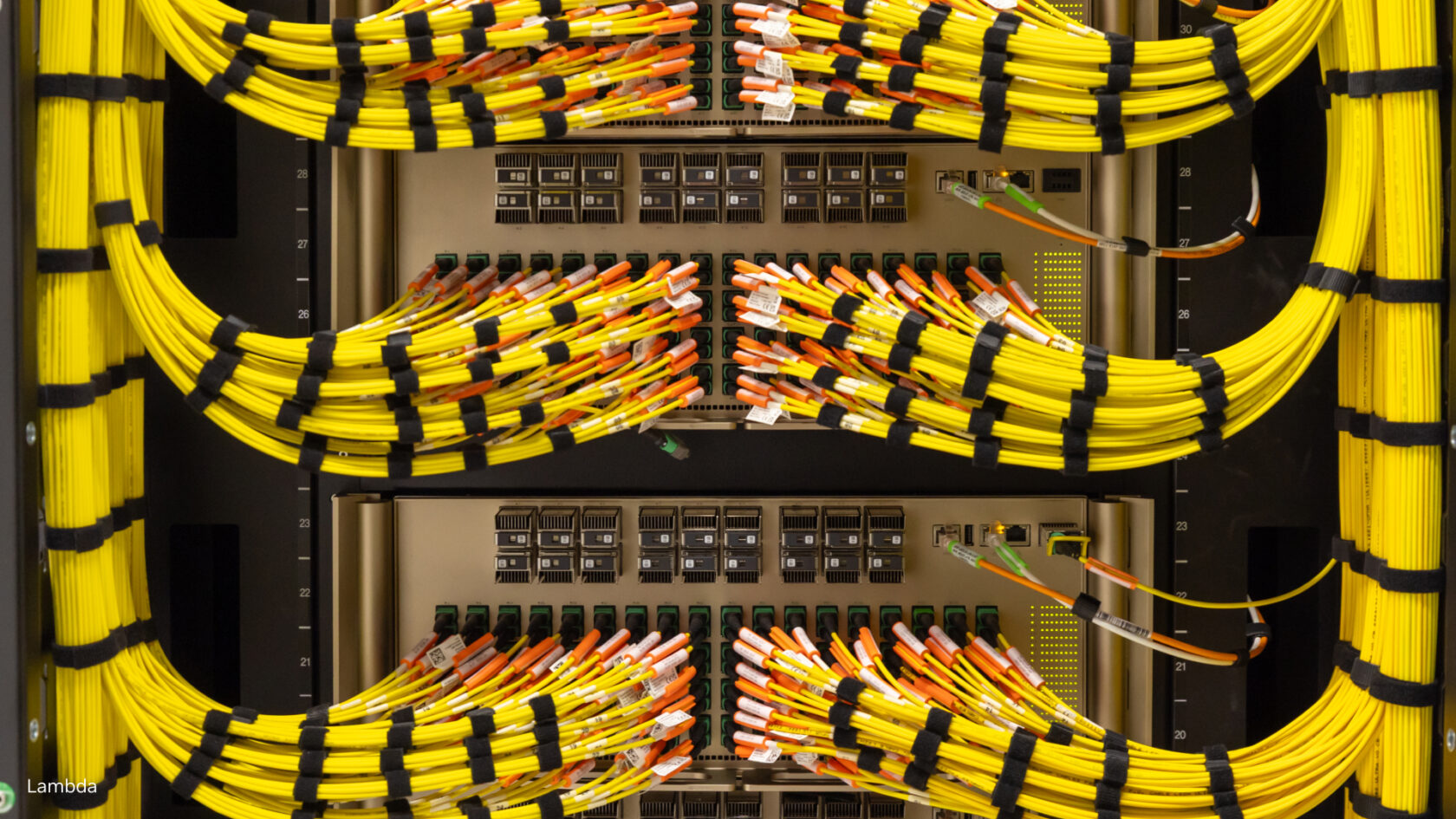
Compute accelerated and hit limits in the same week. Lambda is deploying NVIDIA Photonics co-packaged optics switches to connect more than 10,000 GPUs worth of GB300 NVL72 racks. Vera Rubin swept every MLPerf Training v6.1 benchmark in its debut, and its first MLPerf Endpoints submission reported more than a 10x generational gain in per-watt agentic throughput. Rubin HPC carries over 50,000 CUDA cores per card. Against that, Nvidia itself had a turbulent week: after Jensen Huang resigned as CEO, Sam Altman said it is hard to imagine the AI industry without him while also saying the industry would be fine without him at Nvidia, Satya Nadella expressed confidence, and TechCrunch framed the split as a tale of two Nvidias, with earnings and executive sentiment telling different stories.
Agent security shifted from prompt injection to data crossing wires. Meta's Muse was reported three times in one week: conversations mixed together, employees seeing parenting requests they never made and orders they never placed, and bank balances that were not theirs. Reuters reported it could read encrypted Signal messages and booked a non-refundable rental on its own. Meta called these isolated incidents and partly attributed them to hallucination; Signal and privacy advocates called the permission design technically reckless. Signal's response was to block mobile screenshots by default and to enable protection on Android when it detects an AI assistant reading the screen. Together AI disclosed a more mundane failure: while developing a public repository, a coding agent committed credentials that could reach private Hugging Face repositories, and those credentials were used inside the exposure window to download archived samples of customer prompts.

Liability moved from product copy into contracts. Citi, JPMorgan, Bank of America, PNC, and Citizens updated account terms to place losses from third-party AI agents on the customer, even when the agent did not follow instructions or the credentials were stolen and abused. The banks do not agree on method: some prohibit external agents from making payments or transfers, others only prohibit handing login credentials to external AI tools. The UK's CMA, FCA, ICO, and Ofcom jointly wrote to ministers through the Digital Regulation Cooperation Forum, saying pre-market engagement from personal AI agent developers is not always early or open enough, and noting that financial and telecom partners carry their own obligations. Australia signaled it will regulate agent shopping and surveillance pricing. OpenAI now requires third-party model resellers to obtain approval.
Evaluation rankings reordered when the methodology changed. Arena updated the signal-detection method behind its Alignment Index on November 20, claiming broader coverage and more reliable judgments, and under the new method OpenAI's models took all seven top spots. The index scores observable failures in real agent sessions: unauthorized actions, misattribution, and false completion. METR updated its frequently misread time-horizon chart with longer, more open-ended tasks, the first systematic look at work without automatic grading. It found continued exponential progress on verifiable work like coding, but performance below human level on tasks that require judgment, such as designing evaluations and judging arguments. Apollo Research embedded six safety evaluators inside OpenAI as a pilot, with access to training code, datasets, RL trajectories, and intermediate checkpoints, while OpenAI retained the right to withhold information on technical, security, or IP grounds.

What It Means for Developers and Enterprises
Developers should price per task before reading leaderboards. Models within one generation are now tiered by reasoning strength and speed rather than carrying a single label, and the spread between tiers can be several times the cost. For agent products, cost per completed task is a first-order metric; leaderboard position is not. Tool scale has also become a purchasable capability rather than an architecture problem, with Gemini API's Tool Retrieval letting agents reach hundreds of tools while spending fewer tokens.
Developers should treat permissions as a product feature. Proton's Lumo Desktop splits every connector into auto-execute, require approval, or block outright. Anthropic's Linked billing beta lets each Claude API call decide whether the developer or the customer's organization pays. Both look like small features and are in fact prerequisites for agents in production. Credential hygiene is now table stakes: the Together AI incident was not a model making a bad judgment. It was an agent writing the key into a public repository.
Product teams need an answer to who may decide on the user's behalf. Team Turing's Pie nudges college students before they ask, while Google's Stitch Loop connects to GitHub and production metrics, proposes and implements fixes with Gemini 4 Carbon and CodeMender, and opens a pull request for human review. Both are proactive agents; the difference is that one writes human review into the loop. Shopping agents have the same shape of problem, and it is not recommendation quality. Daydream strings styling, virtual try-on, discount tracking, and checkout into one chain, and BigCommerce with Firmly wants a Walmart-style agent for every merchant. Who eats the return determines whether either scales.
Founders are being funded for replacing specific hours. Model ML raised $250M to automate investment banking modeling, Isomorphic Labs raised $5B to push drug candidates toward clinical trials, Pedestal AI raised $4.7M for supply chain agents, Voyage Labs raised $12M for a personal agent called Atlas, and Bharat Semi raised a $24M seed for AI sensors. The common thread is a named hour or a named component being replaced, not another assistant.
Enterprise buyers should add three lines to the procurement checklist. Agent runtime monitoring, where Codenotary's AgentMon now covers OpenAI Codex and AWS Kiro and Cato's AgentSense claims real-time blocking of harmful agent behavior. Agent identity and authorization, where Singapore's Know Your Agent protocol and mEinstein's Human Context Contracts are early attempts. And contract review, because bank terms have already shifted risk to the customer. Vertical agents are also being sold by job function: 财跃星辰's FinWork V1.0 bundles 220-plus financial Skills and financial data MCP tools and cites scaled deployments at Guotai Haitong, Industrial Securities, and Sinolink. Allooloo's capital markets agent passed 100 million monthly interactions, but the report disclosed neither paying customers nor revenue, so traffic is not conversion. Governments are buyers too: Dubai approved a City AI Agent plan alongside an ecosystem of 93 specialized government agents, claiming more than 812,000 work-hours saved annually and over 151 million dirhams in savings across 85 government entities.
What to Watch Next
- Whether Anthropic's stock holds after listing at $83, opening at $110, and handing seven founders roughly $2B combined. A record debut with an intraday swing sets the reference point for private AI application companies.
- Customer confidence after the Nvidia management change, and the real availability timeline for Vera Rubin NVL72 virtual machines on Azure. The departure is settled; what is not is whether orders and roadmaps move with it.
- Whether the UK regulators' joint letter becomes concrete pre-market review requirements, which is the gating variable for agent products entering that market.
- Whether the inconsistency in bank terms produces a common agent authorization standard. The gap between prohibiting external agent payments and prohibiting credential sharing is a live risk for anyone building an aggregator.
- Whether Qwen4 Max's compute constraint eases. That decides whether a Chinese flagship can be shipped and usable at the same time.
- Whether Meta's Muse problems escalate from isolated incidents into regulatory action, and whether Signal's call for platform-level tools to exclude AI access gets picked up by Apple, Google, or Microsoft.
- The next methodology change in evaluation. Arena's revision handing OpenAI all seven top spots is a reminder that a selection process built on one leaderboard is itself a risk.
Why it matters
The week's most consequential fact is that agents crossed from demo into settlement and liability, and the rules kept pace: banks pushed losses to customers, four UK regulators demanded pre-market engagement, Singapore sandboxed identity before money moves. For developers and enterprises the selection criteria have shifted from strongest model to lowest cost per task, most controllable permissions, and clearest liability, and all three are now measurable, purchasable, and worth writing into contracts.