English translation
I Tested Qwen3.7-Max Against Claude Opus 4.8 and DeepSeek-V4. The Result Surprised Me.
AI Field Note Decision Snapshot
Turn the test result into evidence quality, workflow, model/API, and buying-risk checks.
Use this snapshot to decide whether the field note supports a tool shortlist, a benchmark follow-up, an API comparison, or a security review before spending budget.
Evidence quality
Separate what was tested directly from what still needs vendor docs, benchmark data, pricing checks, or source verification.
Workflow transfer
Decide whether the field note applies to coding, search, research, support, content, document review, or internal automation.
Model and API implication
Map the result to model quality, latency, context window, multimodal fit, tool calling, or API reliability questions.
Buying risk
Check pricing, privacy, integration effort, data retention, security controls, and re-test triggers before turning evidence into spend.
Hi, I am Guozhen.
Recently, two new models were released: Qwen3.7-Max and Claude Opus 4.8.
On the benchmark list I was watching, Claude Opus 4.8 ranked first.
Qwen3.7-Max ranked second, with only Opus 4.8 ahead of it.
But how do they perform in real production tasks? I spent the last two days testing them. Here is what I found.
1. The new model context
This is the Code Arena WebDev leaderboard. Opus 4.8 and Qwen3.7-Max are the top two:
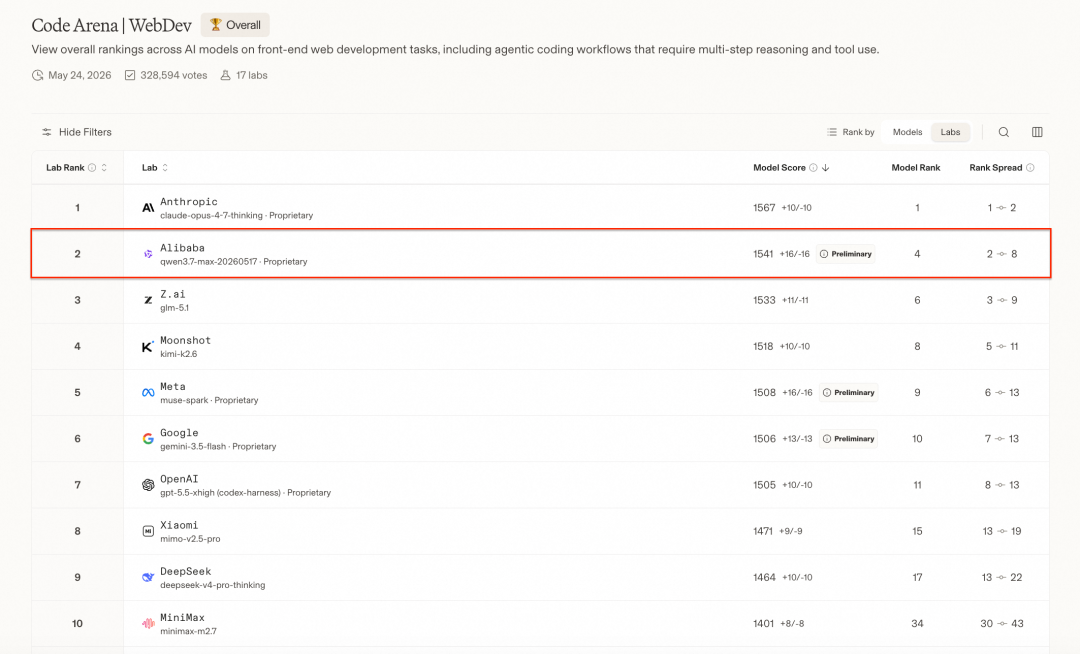
This leaderboard evaluates how AI models perform on page implementation, complex interaction, multi-step coding, tool use, and related web-development tasks.
One thing worth noticing: Zhipu, Kimi, Xiaomi, DeepSeek, and MiniMax all appear on the list. Chinese large models are clearly becoming more competitive.
I consider this leaderboard useful because it is close to real development work.
So I went straight into a hands-on test.
2. Side-by-side test
The test idea was simple: use a typical small-to-mid-size agent task and evaluate a capability many people care about.
Then I used Gemini-3.5-Flash and GPT-5.5 as judges. Their scores were used to make the evaluation more objective.
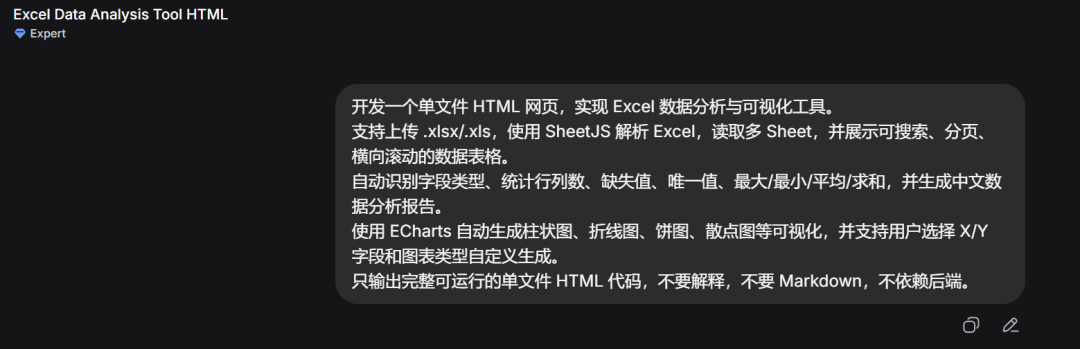
The agent task prompt was:
Develop a single-file HTML page that implements an Excel data analysis and visualization tool.
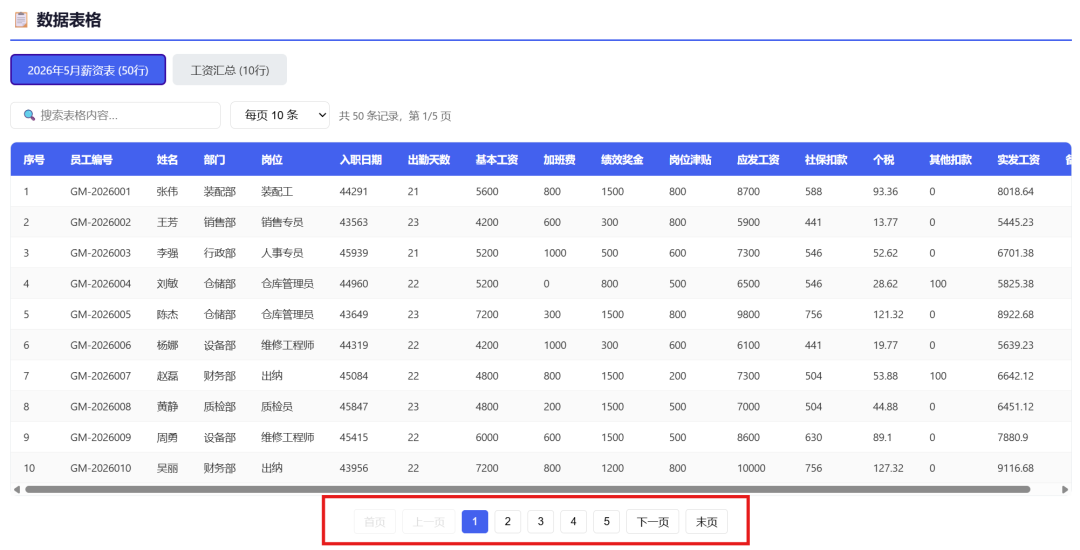
Support uploading .xlsx/.xls files. Use SheetJS to parse Excel files, read multiple sheets, and display searchable, paginated, horizontally scrollable data tables.
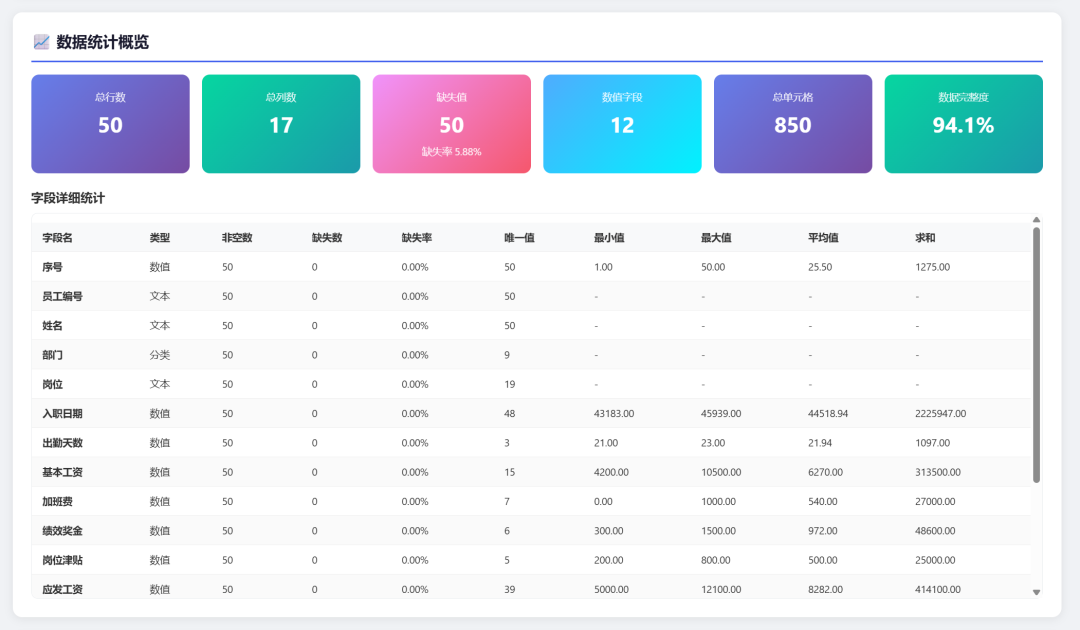
Automatically identify field types, count rows and columns, calculate missing values, unique values, max/min/average/sum, and generate a Chinese data-analysis report.
Use ECharts to automatically generate bar charts, line charts, pie charts, scatter charts, and other visualizations. Also allow users to choose X/Y fields and chart types to generate custom charts.
Only output complete runnable single-file HTML code. Do not explain. Do not use Markdown. Do not depend on a backend.
First, I sent it to Qwen3.7-Max:
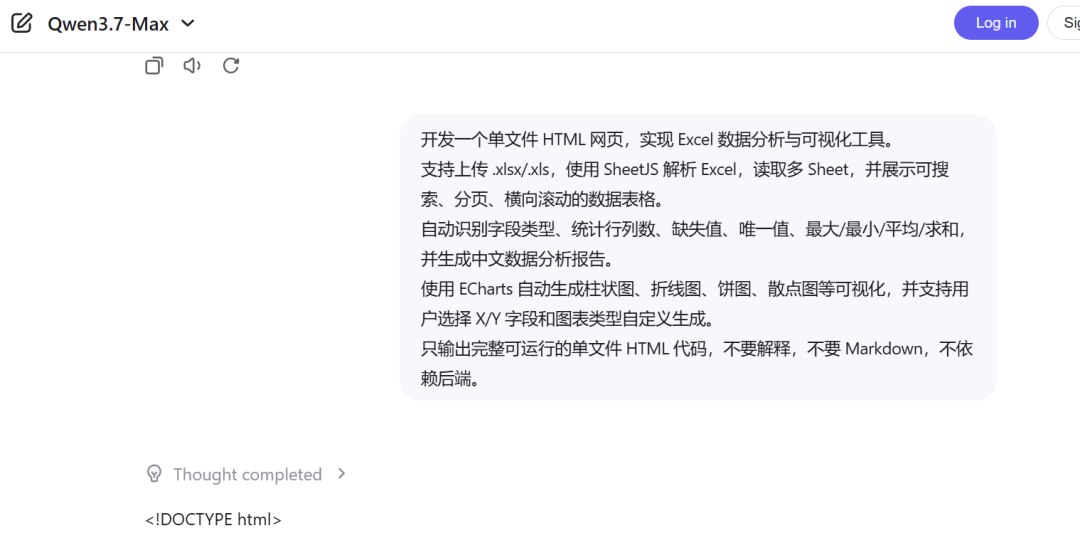
I saved the output as an HTML file and opened it:

After importing an Excel file, it displayed the data with automatic pagination:
Here is the data-statistics preview:
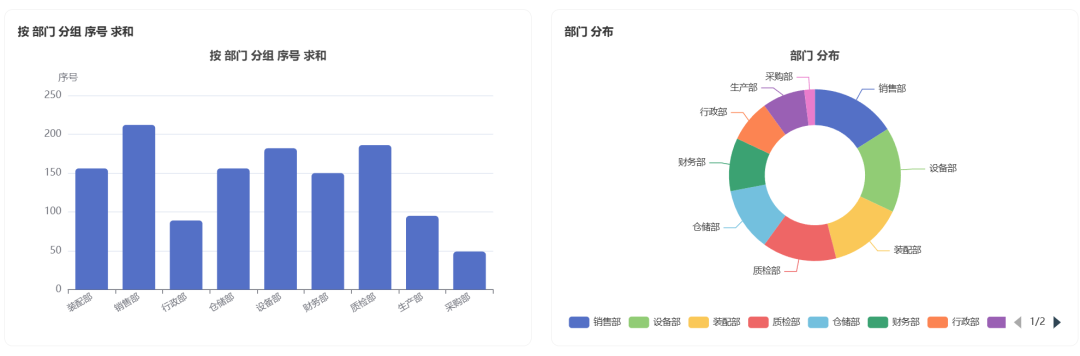
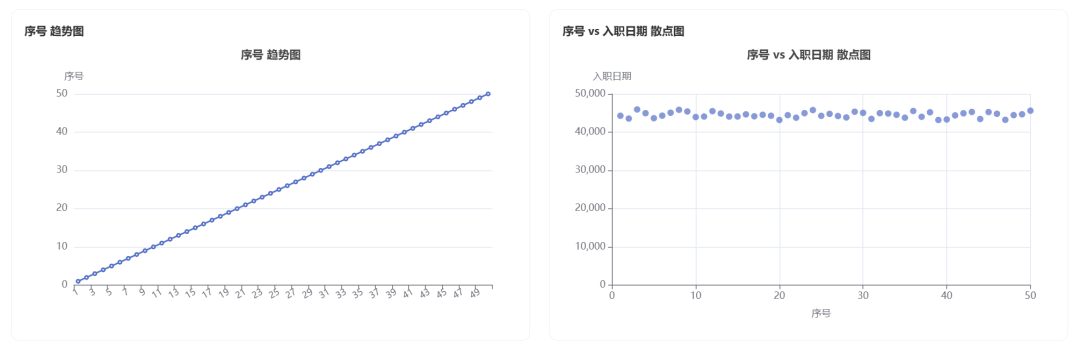
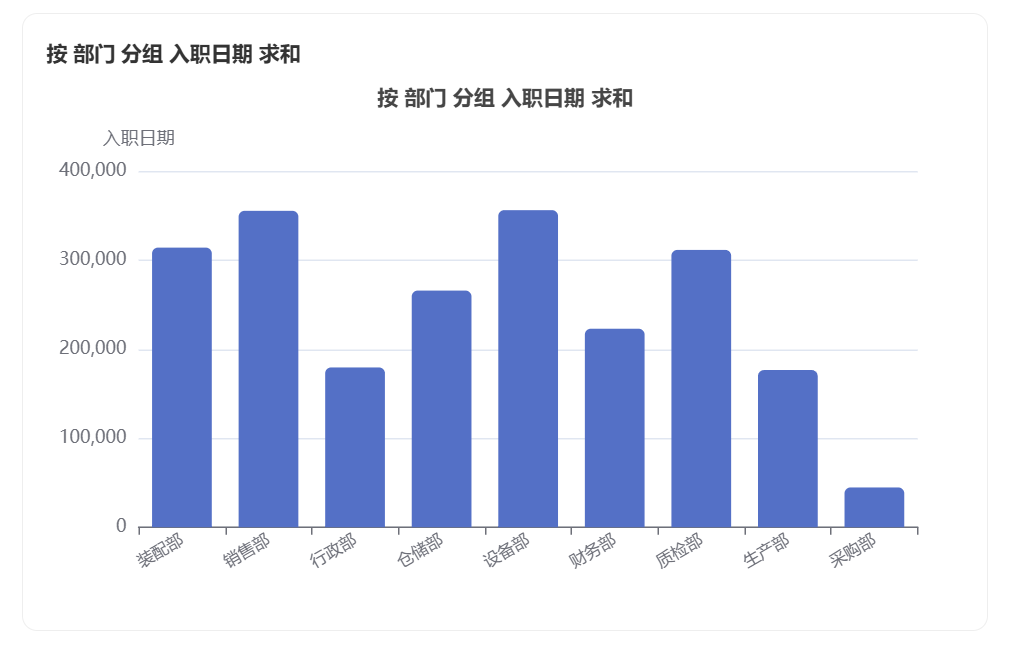
Generated charts:
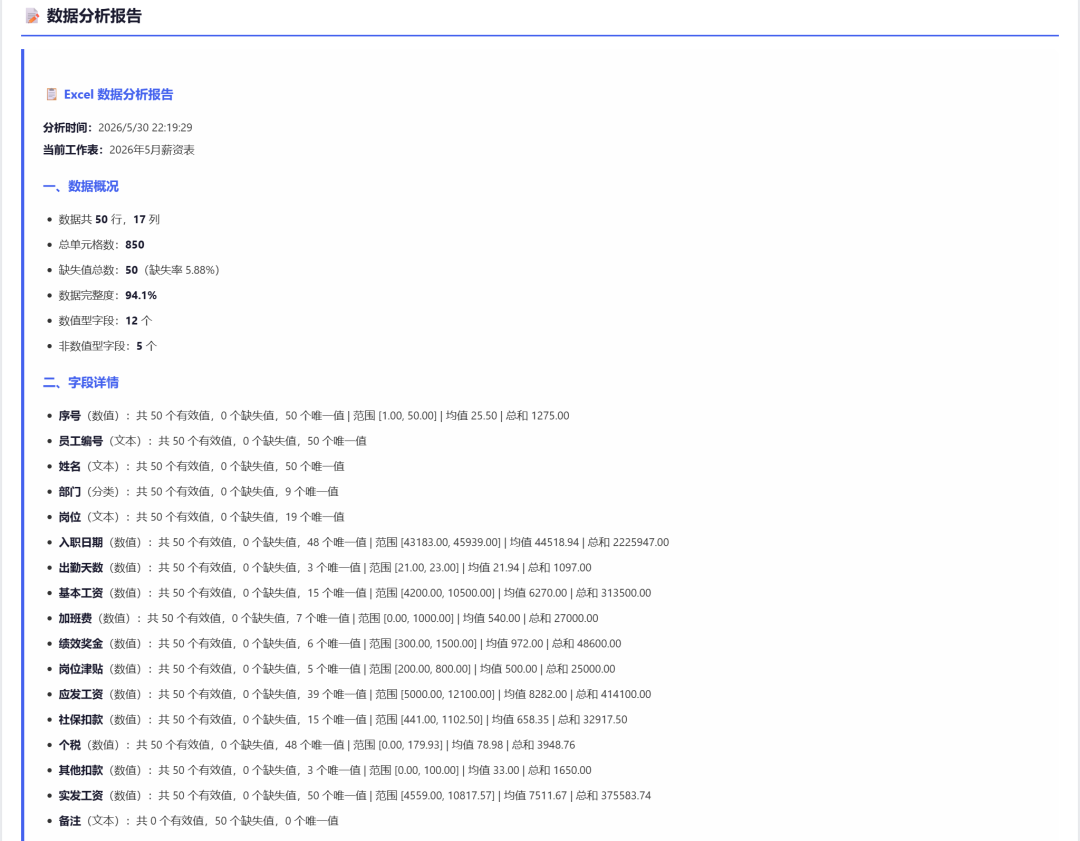
Part of the data report:
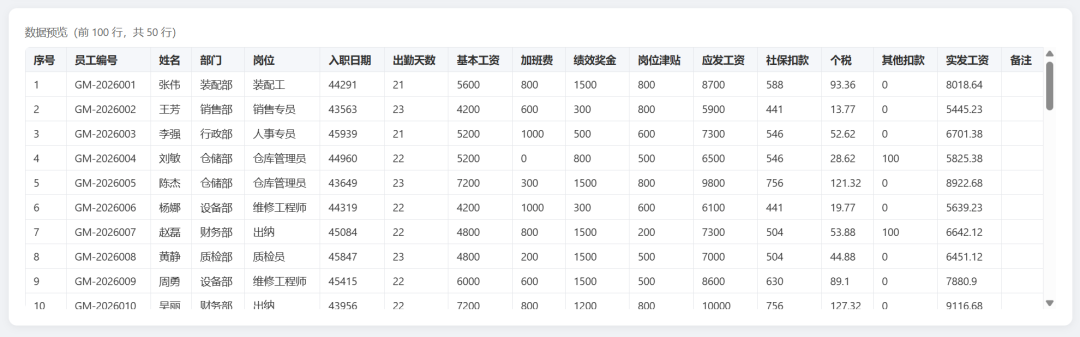
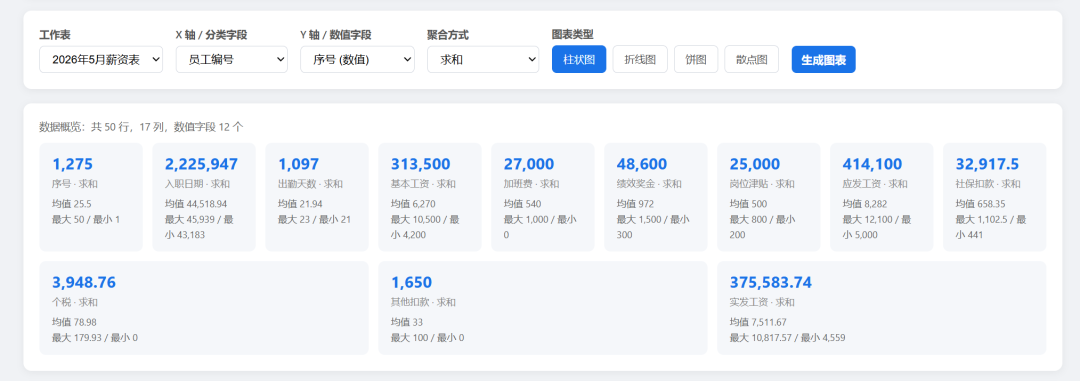
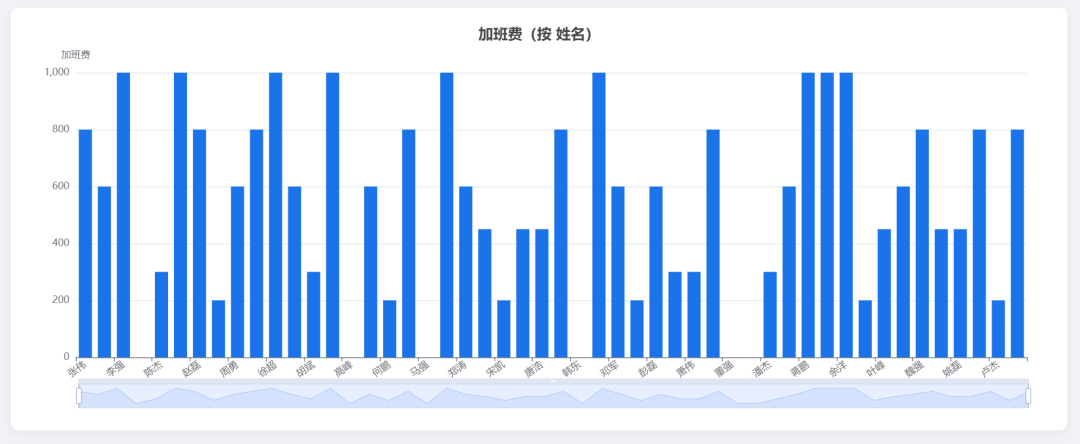
Then I sent the same task to Opus 4.8 and opened the generated HTML file:

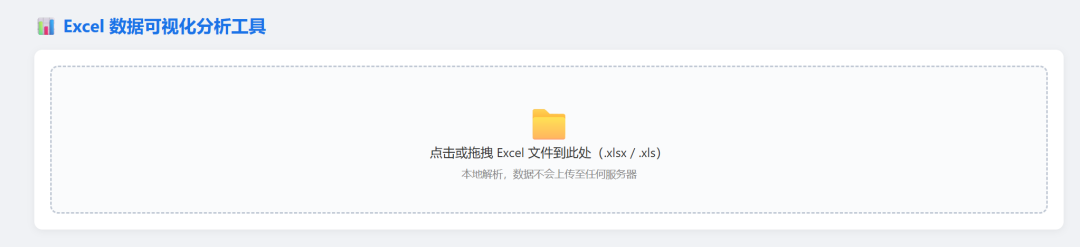
Data preview:
Data overview:
Bar chart:
Line chart:
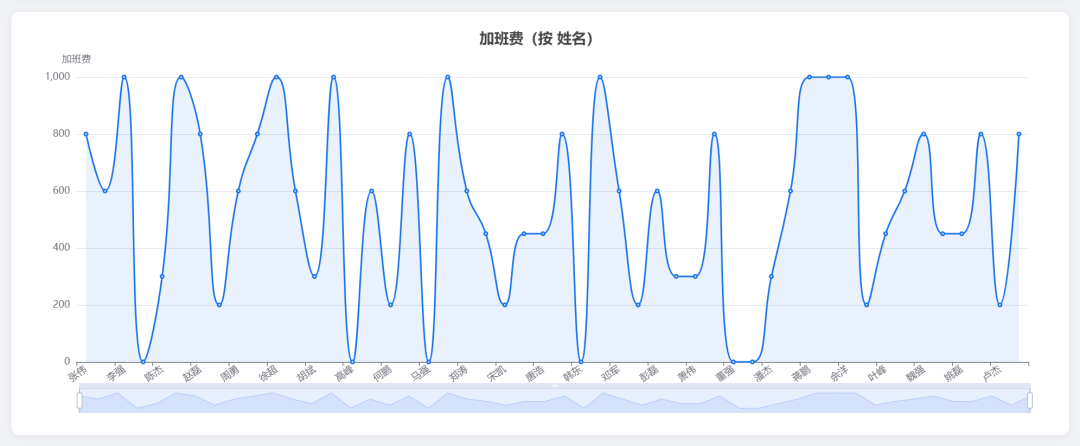
Pie chart:
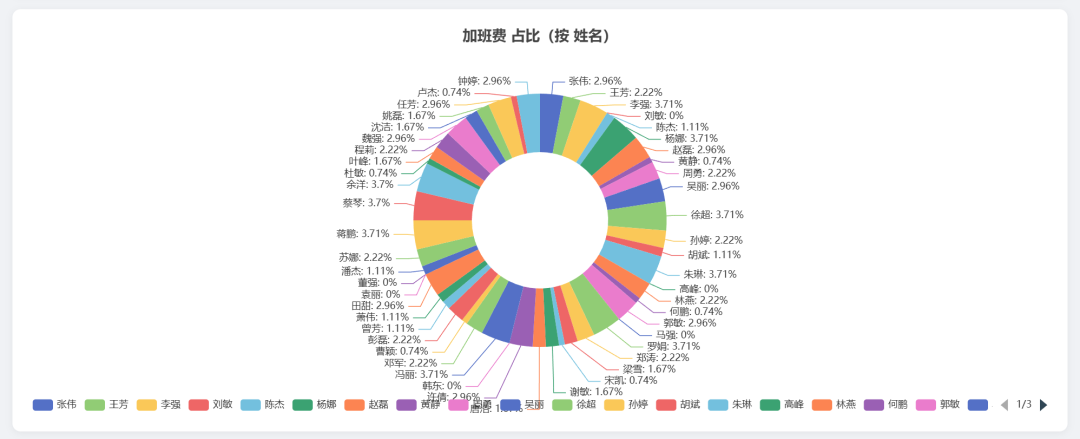
I also sent the same task to DeepSeek-V4-Pro:
After opening the HTML file, the page looked like this:
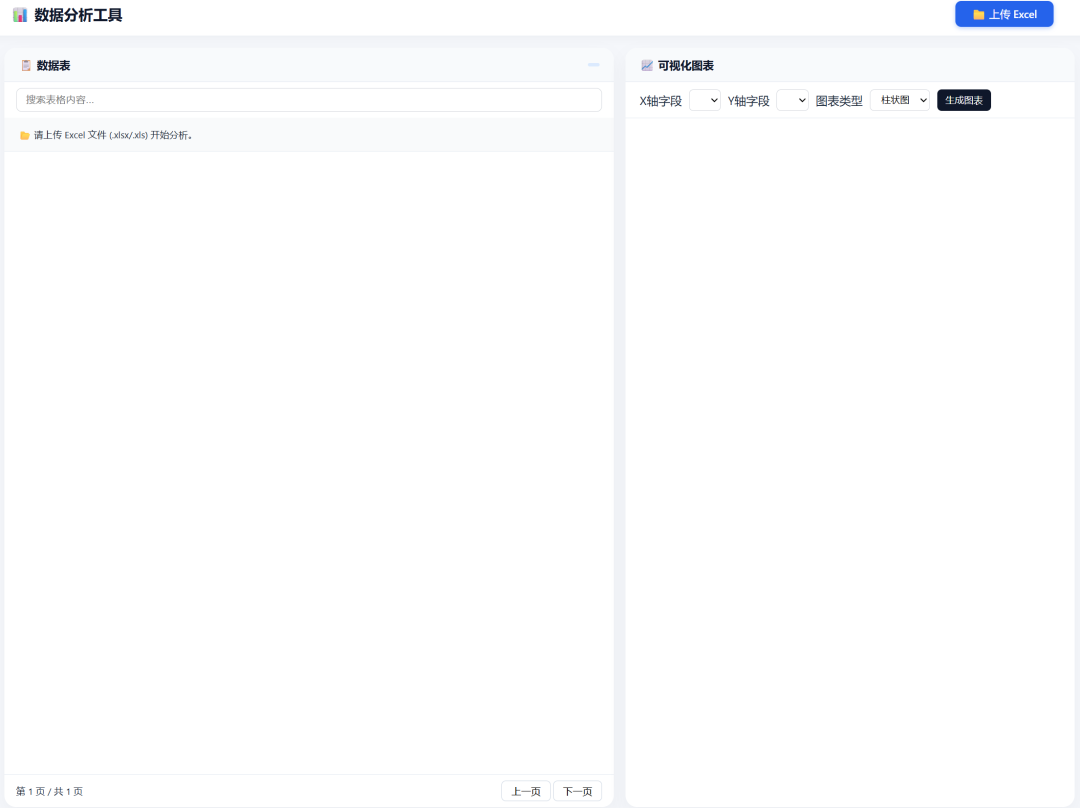
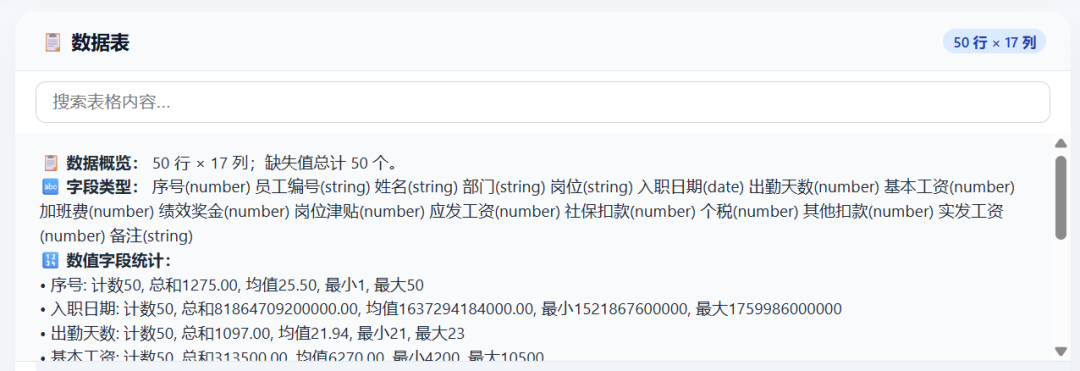
After loading the Excel file, it showed data preview, field types, and statistics:
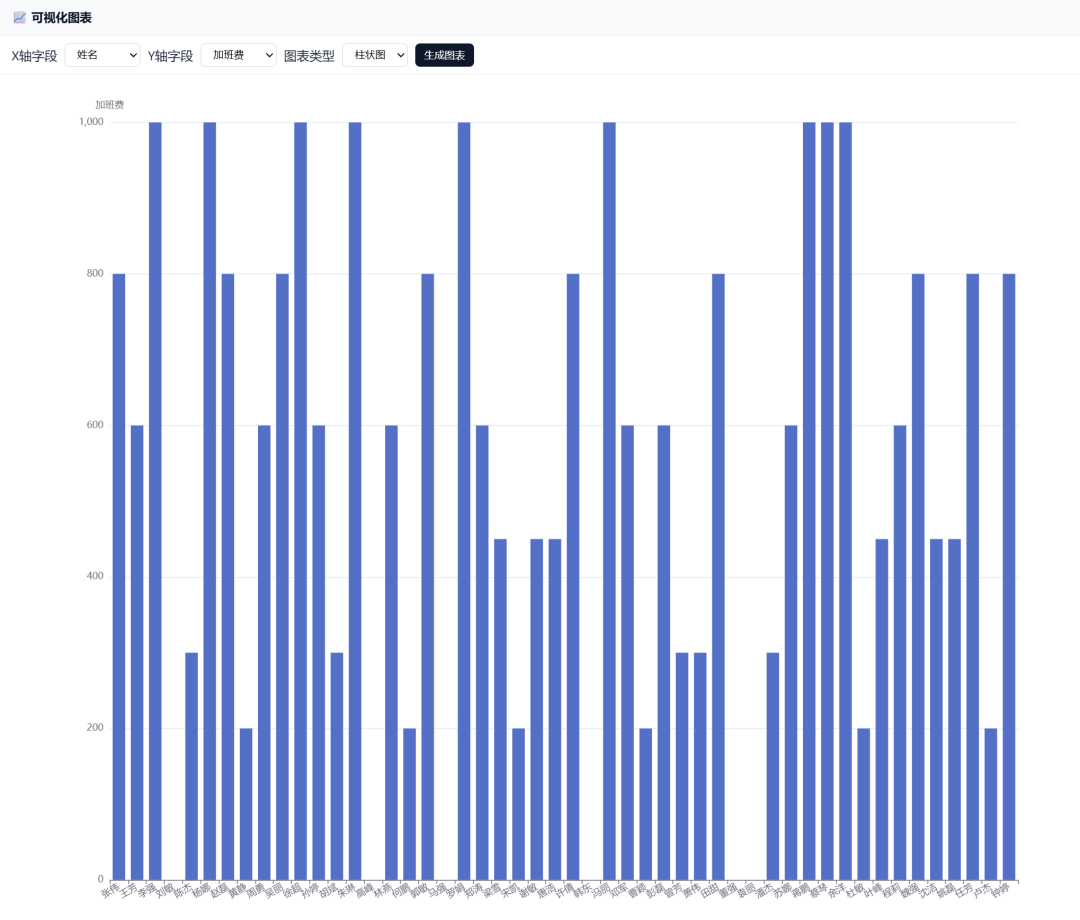
Bar chart:
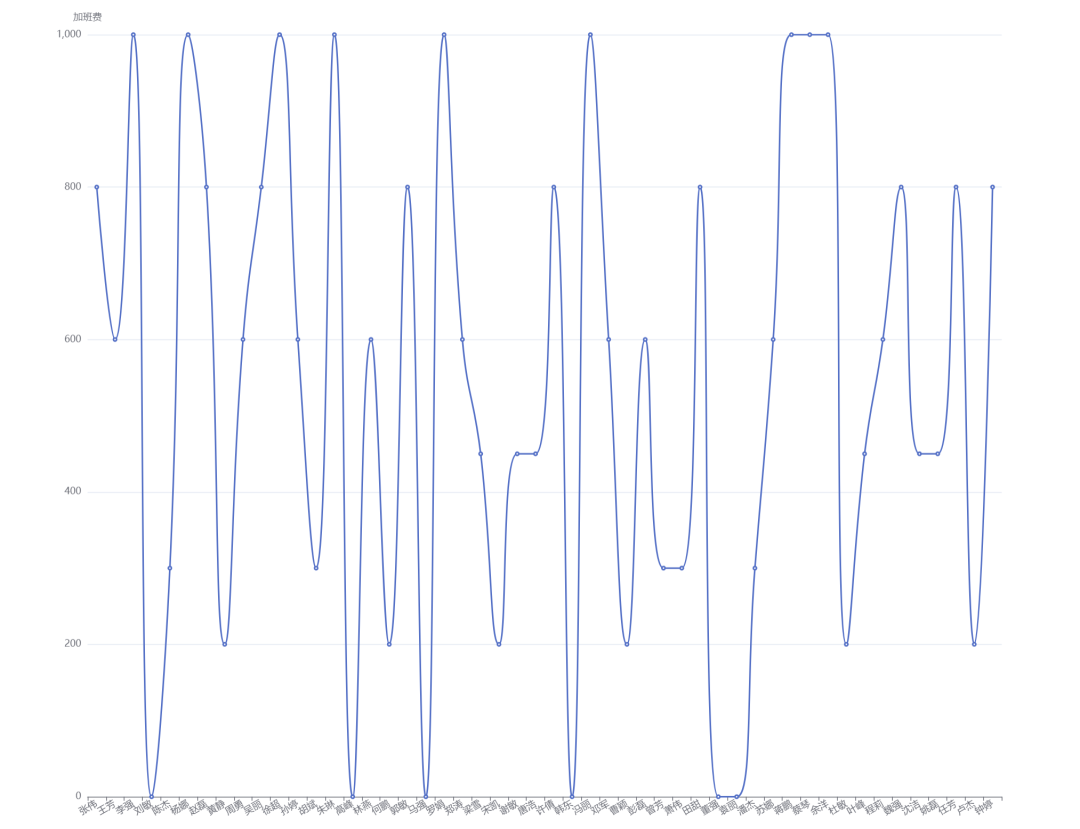
Line chart:
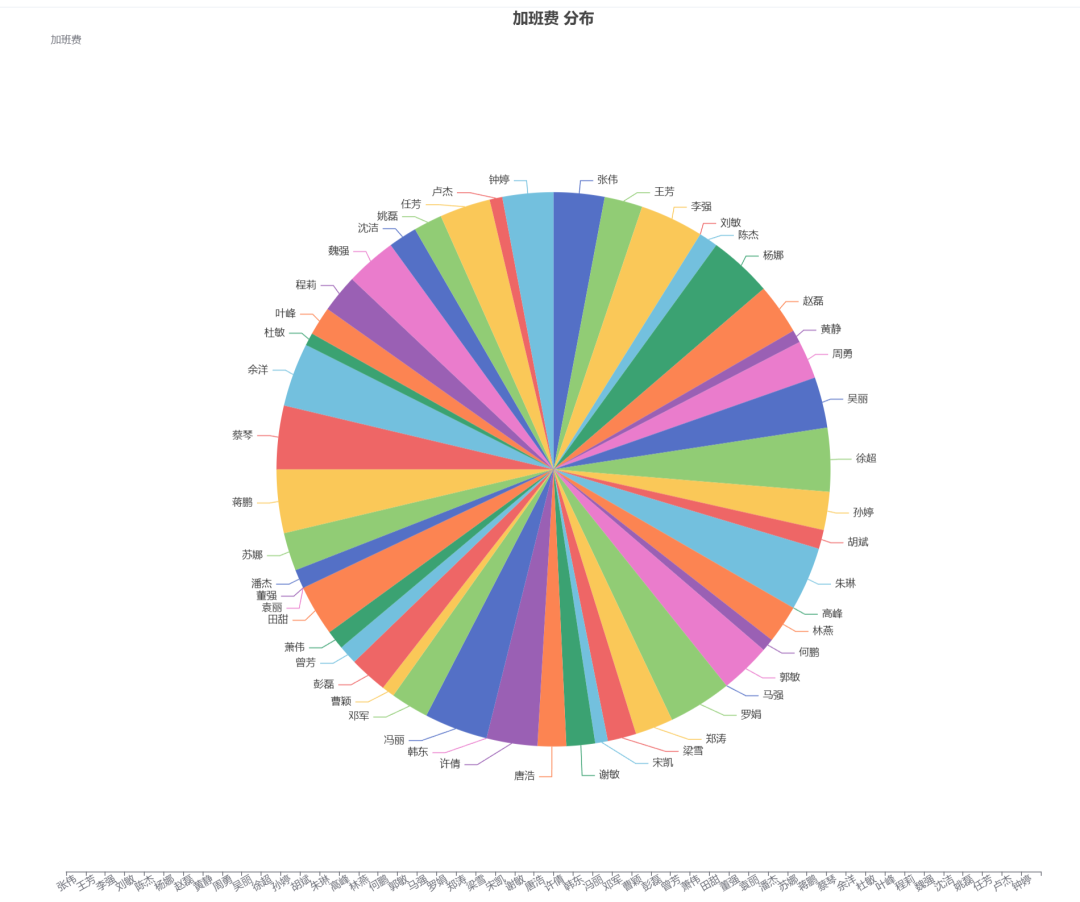
Pie chart:
3. Judge scores
To make the evaluation less subjective, I first asked Gemini-3.5-Flash to judge the three outputs:
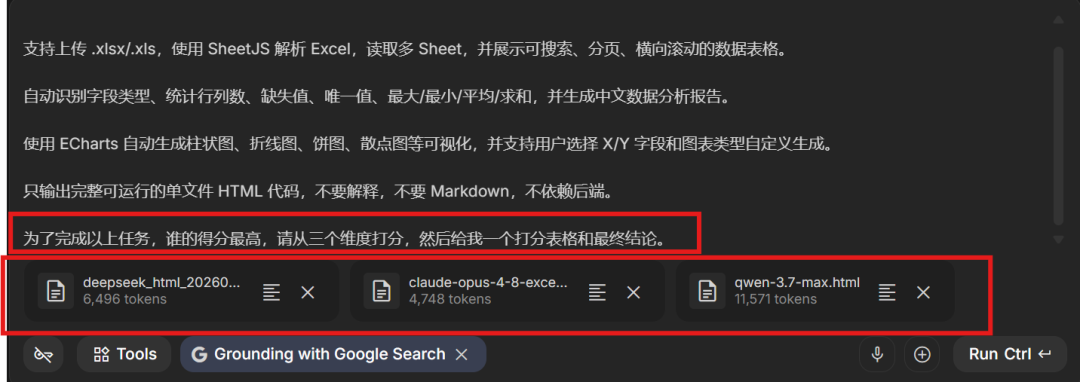
These were the three scoring dimensions used by Gemini-3.5-Flash:
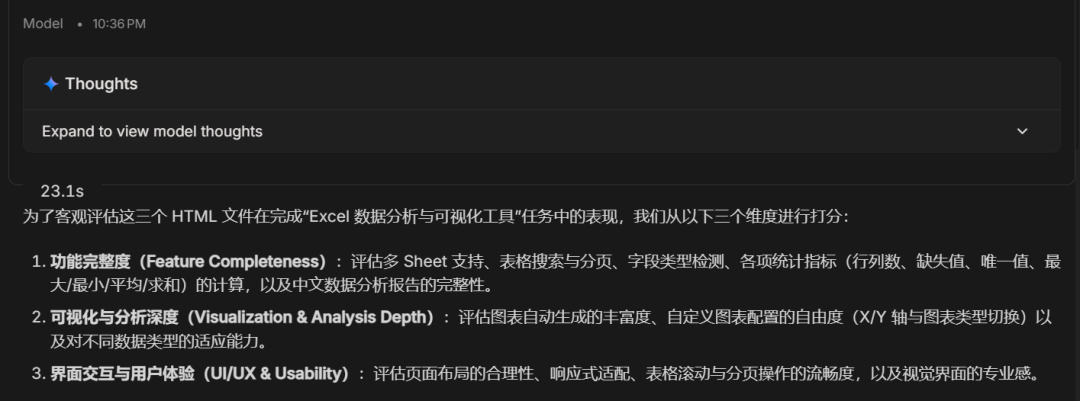
Final score:
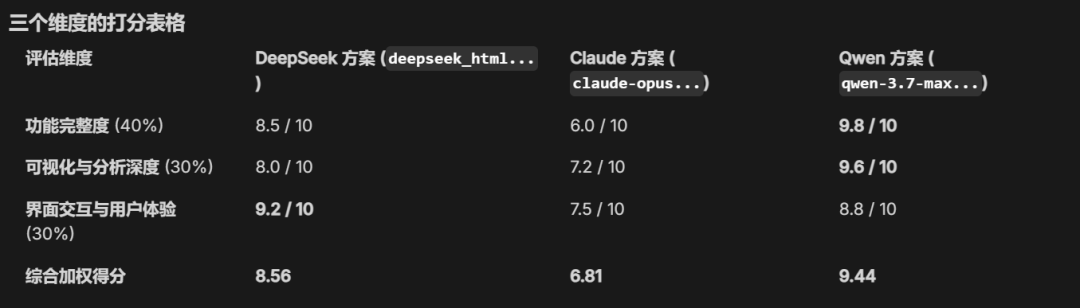
Claude Opus 4.8 scored only 6.8 and ranked last.
Qwen3.7-Max ranked first with a score of 9.44.
That surprised me. Based on the ranking at the beginning, Opus 4.8 should have been the strongest. In this test, it even scored below DeepSeek-V4-Pro.
Why did this happen? I asked the judge to explain:
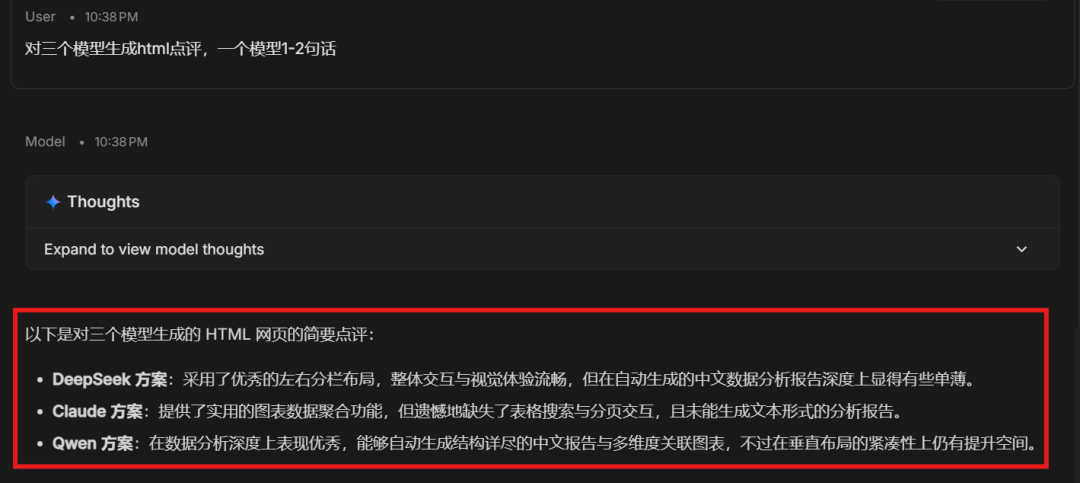
The DeepSeek solution used a strong two-column layout. The overall interaction and visual experience were smooth, but the automatically generated Chinese analysis report was somewhat shallow.
The Claude solution provided useful chart aggregation, but it missed table search and pagination, and it failed to generate a text-form analysis report.
The Qwen solution performed well on data-analysis depth. It generated a detailed Chinese report and multiple related charts, although the vertical layout still had room to become more compact.
In other words, Claude missed several important requirements and the completion level was weaker than expected.
This result was so unexpected that I wondered whether the judge itself was the problem. So I asked GPT-5.5 to judge the same outputs:
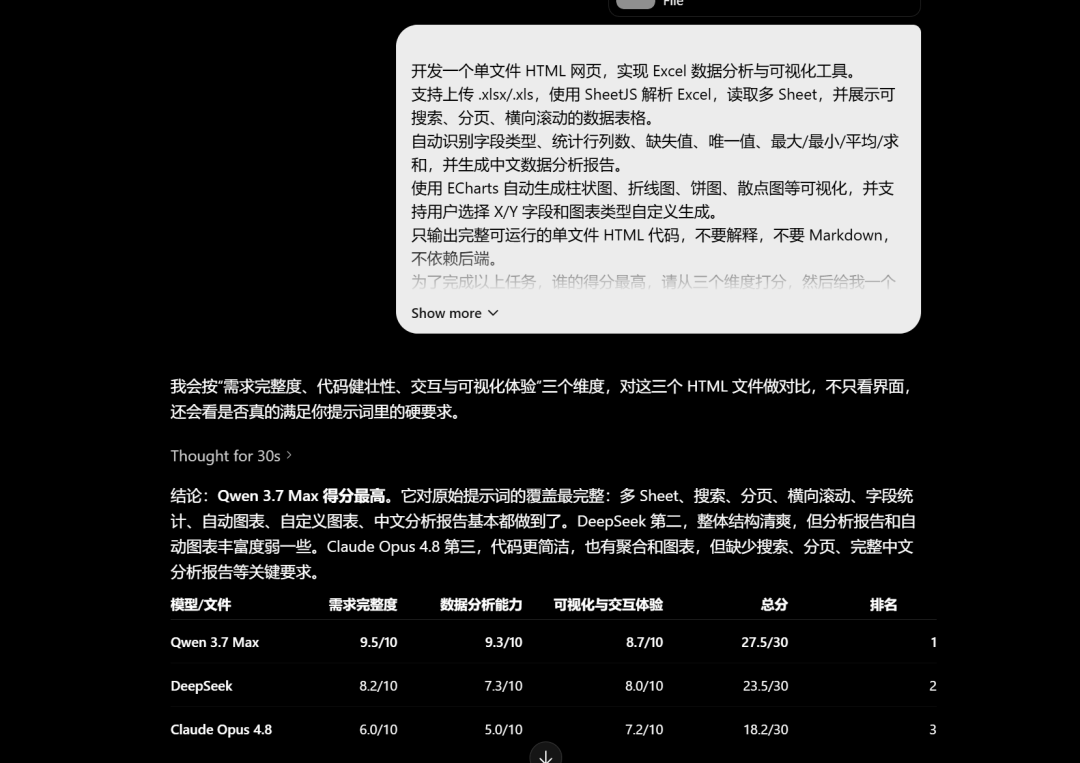
The ranking did not change: Qwen3.7-Max first, DeepSeek second, Claude Opus 4.8 third.
Here is GPT-5.5's detailed explanation:
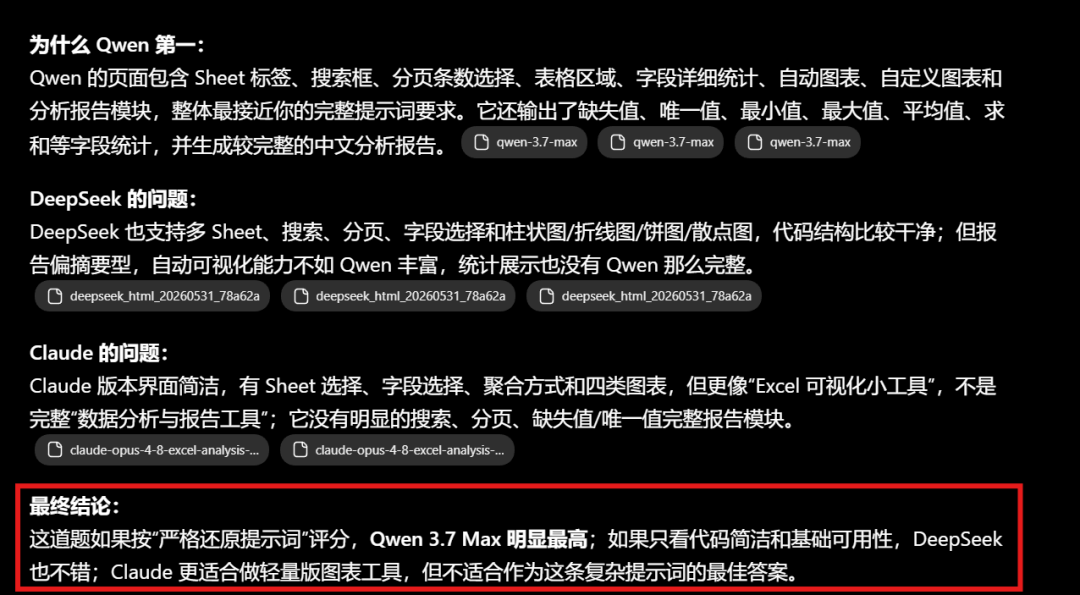
At this point, the conclusion is clear: for this agent task, Opus 4.8 performed poorly.
Summary
Whether a model is good cannot be judged only by ranking, and definitely not only by brand reputation. The real question is how it performs in actual production tasks.
GPT-5.5 also described this task as a typical small-to-mid-size agent task:
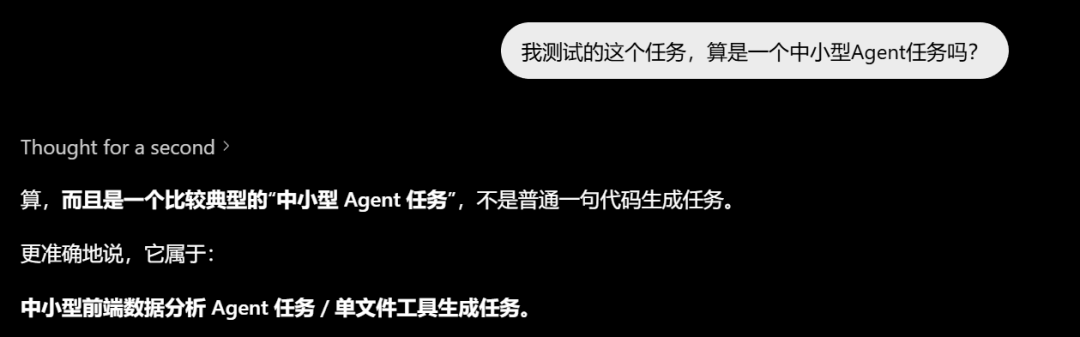
For this specific agent task, Qwen3.7-Max ranked first, DeepSeek-V4-Pro ranked second, and Claude Opus 4.8 ranked third.
That was not what I expected. Of course, this is only one test, but it is still representative enough to be useful. I will try more complex agent tasks later.
This English edition preserves the screenshots and workflow order from the original Chinese article.
Final verdict
For this agent task, Qwen3.7-Max performed better than expected. The result does not settle every model comparison, but it is a useful signal for builders testing Chinese frontier models.
From Field Note to Buying Decision
Use this AI field note to choose software, APIs, agents, search, and security tools.
AI Field Note FAQ
Use this field note as evidence before choosing AI tools
How should I use this AI field note?
Use it as hands-on evidence from a real AI workflow, then compare the related software category, model benchmark, API guide, security checklist, and tool alternatives before choosing a product.
Is this field note enough to choose an AI tool?
No. Treat the field note as practical context, then validate pricing, privacy, integration effort, reliability, benchmark fit, and team workflow before spending budget.
What should I read after I Tested Qwen3.7-Max Against Claude Opus 4.8 and DeepSeek-V4. The Result Surprised Me.?
Open AI Software Buyer Guides, AI Model Benchmarks, Best AI Coding Agents, Enterprise AI Search Tools, OpenAI vs Anthropic API, or LLM Security Tools depending on the decision you need to make.
When should teams re-test the result from this field note?
Re-test when the model, product plan, pricing, API behavior, prompt workflow, data policy, browser support, or deployment environment changes.
Continue