Realtime AI News
Bristol Myers Squibb Builds Life Science's Most Advanced AI Factory on NVIDIA Vera Rubin
Bristol Myers Squibb announced it is deploying its second NVIDIA DGX SuperPOD, built on the Vera Rubin architecture, calling it the "SuperDuperPOD." The pharmaceutical giant already operates one of the largest AI clusters in life sciences and is doubling down on AI-powered drug discovery.
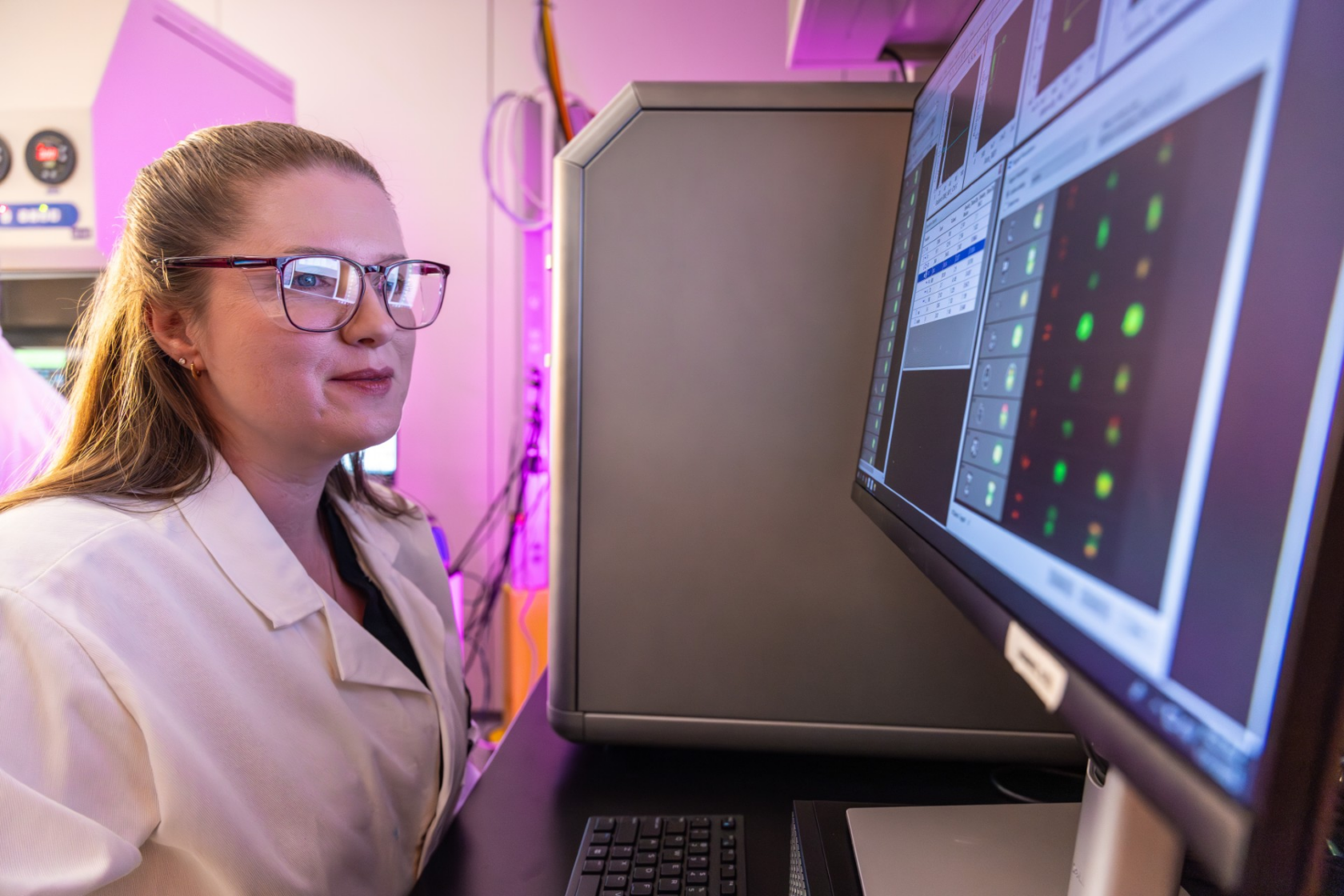
Bristol Myers Squibb (BMS) is taking its AI infrastructure to the next level. The pharmaceutical giant announced today that it is deploying its second NVIDIA DGX SuperPOD, this one built on the NVIDIA Vera Rubin architecture, aiming to create what it calls the most advanced AI factory in the life science industry.
Internally, BMS calls this massive cluster the "SuperDuperPOD." The company already operates one of the largest AI clusters in life sciences, having achieved tangible results in drug discovery with its first-generation system.
According to the NVIDIA Blog, BMS has already demonstrated that AI can accelerate drug discovery workflows, delivering quantifiable returns on hundreds of millions of dollars in R&D investment. The second SuperPOD deployment signals BMS is moving AI from experimental projects to core infrastructure across its entire R&D pipeline.
The new cluster, built on the Vera Rubin architecture, will dramatically expand BMS's computing capacity for molecular simulation, protein structure prediction, and clinical trial data analysis. The "AI factory" concept emphasizes an end-to-end industrial system that integrates AI model training, inference, and data pipelines — not just a single hardware upgrade.
For the broader biopharma industry, BMS's massive commitment sets a powerful precedent. When a company with an annual R&D budget exceeding ten billion dollars doubles down on AI infrastructure, it sends a clear signal that AI's value in drug discovery is no longer theoretical — it is becoming a competitive differentiator.
NVIDIA Vera Rubin represents NVIDIA's latest GPU architecture, purpose-built for AI training and inference workloads. BMS's decision to deploy at scale during this architecture's early lifecycle underscores the pharmaceutical industry's urgent demand for cutting-edge computing.
The key question going forward is whether BMS will open its AI factory platform to external partners, and whether this massive infrastructure investment will ultimately translate into faster drug approvals and higher clinical success rates.
Why it matters
BMS's SuperDuperPOD deployment marks a pivotal step in industrializing AI infrastructure for life sciences, setting a benchmark that will influence the pharma industry's AI race.
Nearby Updates
All07/20, 18:42
WAIC 2026 Concludes in Shanghai, FanShi Showcases Full-Stack AI Infrastructure
The four-day 2026 World AI Conference (WAIC 2026) wrapped up in Shanghai on July 20. AI infrastructure company FanShi unveiled its full-stack AI cloud service matrix centered around the「Token Factory」system, and was named among the first batch of Global Trustworthy Industrial AI Solutions.
07/20, 18:33
Kimi, Zhipu, MiniMax, StepFun All Partner with Infinigence as It Unveils Agentic Infra Strategy at WAIC 2026
At WAIC 2026, Chinese AI infrastructure startup Infinigence (无问芯穹) announced its full-stack Agentic Infra strategy, including a cross-cluster heterogeneous PD separation architecture and an AI-powered cluster operations agent system. Four of China's leading AI model companies — Kimi, Zhipu, MiniMax, and StepFun — have all formed deep partnerships with the company.
07/20, 18:03
US Public Health Agencies to Test OpenAI and Anthropic AI Tools Under New PULSE Program
Public health departments across the United States will trial generative AI tools from OpenAI and Anthropic through the PULSE program, spanning 10 state and local jurisdictions. OpenAI and Anthropic have donated 10 enterprise licenses supporting up to 2,000 practitioners across five public health use cases.
07/20, 19:57
Moore Threads Accelerates Three "AI Factories" to Face the Token Economy Era
Chinese GPU maker Moore Threads announced the accelerated deployment of three "AI factories," positioning itself for the token economy era. The move signals the company's strategic shift from a chip provider to an AI infrastructure operator.