Realtime AI News
Shengshu's new world model explores RSI to let robots self-evolve
Shengshu has introduced a new world model and paired it with RSI, the idea that a system keeps improving itself without a human setting every next step. The approach aims to solve both where robot training data comes from and who defines the next training goal, while raising fresh questions about verification.
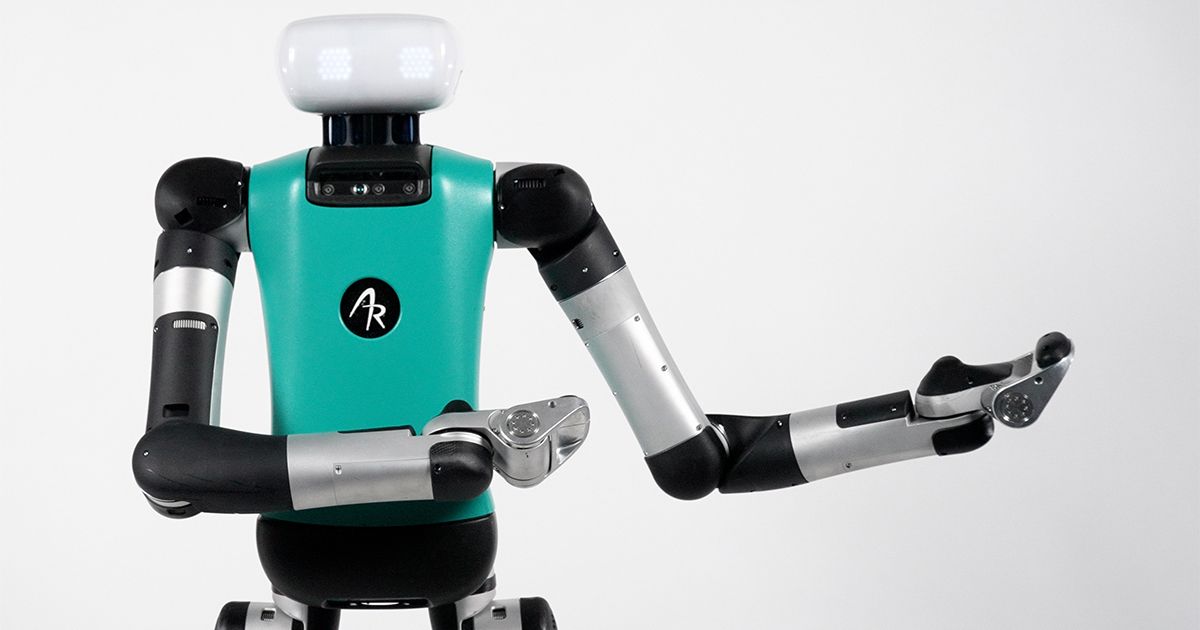
Shengshu has introduced a new world model and pointed it at RSI, the idea that a system keeps improving itself without a human intervening at every step — in short, letting robots begin to evolve on their own, according to Chinese tech outlet QbitAI.
A world model acts as a rehearsal space for robotics. It learns how the environment changes in response to actions, then generates large amounts of virtual experience inside the model, which is cheaper than trial and error on real hardware and can cover edge cases that are hard to stage in the physical world.
RSI pushes that logic one step further. If the world model answers where training data comes from, RSI addresses who sets the next training goal: the model generates its own tasks, evaluates its own results and locks in whatever proved useful, closing the loop.
That is also where the approach invites skepticism. A self-improvement loop without dependable external checks tends to reinforce its own preferences, and in robotics the gap between simulation and reality makes that risk sharper — metrics that climb steadily in a virtual environment do not always transfer to a physical machine.
So the next questions are about verifiability: whether Shengshu publishes how the model is evaluated and how tasks are designed, whether self-evolution reproduces on real hardware, and whether the method settles into general capability or only works on a narrow set of tasks.
Why it matters
If world models and self-improvement can genuinely close the loop, robot training will depend far less on scarce real-world data — but independent verification is what will decide whether this stays a concept or becomes engineering practice.
Nearby Updates
All09/14, 17:47
Ant Lingbo launches its first embodied large-model challenge
Ant Lingbo has launched its first embodied large-model challenge, built around its LingBot-VLA model and open to outside developers and university researchers. The company says the contest is meant to push LingBot-VLA deeper into the developer and academic communities and widen participation in embodied AI.
09/14, 18:00
Agency Guide: Claude Leads Agent Usage at 38%, Creative Work Just 3% of Agent Value
Digital Agency Network published a free Agentic Workflows Guide documenting how 10 member agencies deploy AI agents in live client work, with one agency collapsing a week-long market intelligence process into a single overnight run. The report also found Anthropic's Claude leading reported usage at 38%, while creative production accounted for just 3% of reported value.
09/14, 18:00
Airrived Launches Agentic Observability for Enterprise AI Agent Decisions
Airrived announced Agentic Observability on September 14, a capability it says gives enterprises real-time visibility and control over every AI agent decision. The Business Wire announcement treats governance of autonomous agents as a product category rather than a compliance afterthought.
09/14, 16:50
Ugreen teams up with Qwen on AI NAS devices for the home
Chinese consumer electronics brand Ugreen has partnered with Alibaba's Qwen on AI NAS devices aimed at the home, according to a Yicai Global report published on 14 September. The tie-up points to a broader push by Chinese model makers to put AI into consumer hardware rather than relying only on cloud APIs.