Realtime AI News
Meta's Muse hits No. 1 on the U.S. App Store as its personal AI agent gains early traction
Pulse 2.0 reports that Meta's personal AI agent Muse has reached No. 1 on the U.S. App Store, an early sign of consumer demand for agents that act on a user's behalf. The milestone arrives in the same window as Amazon blocking Muse from using Amazon.com.
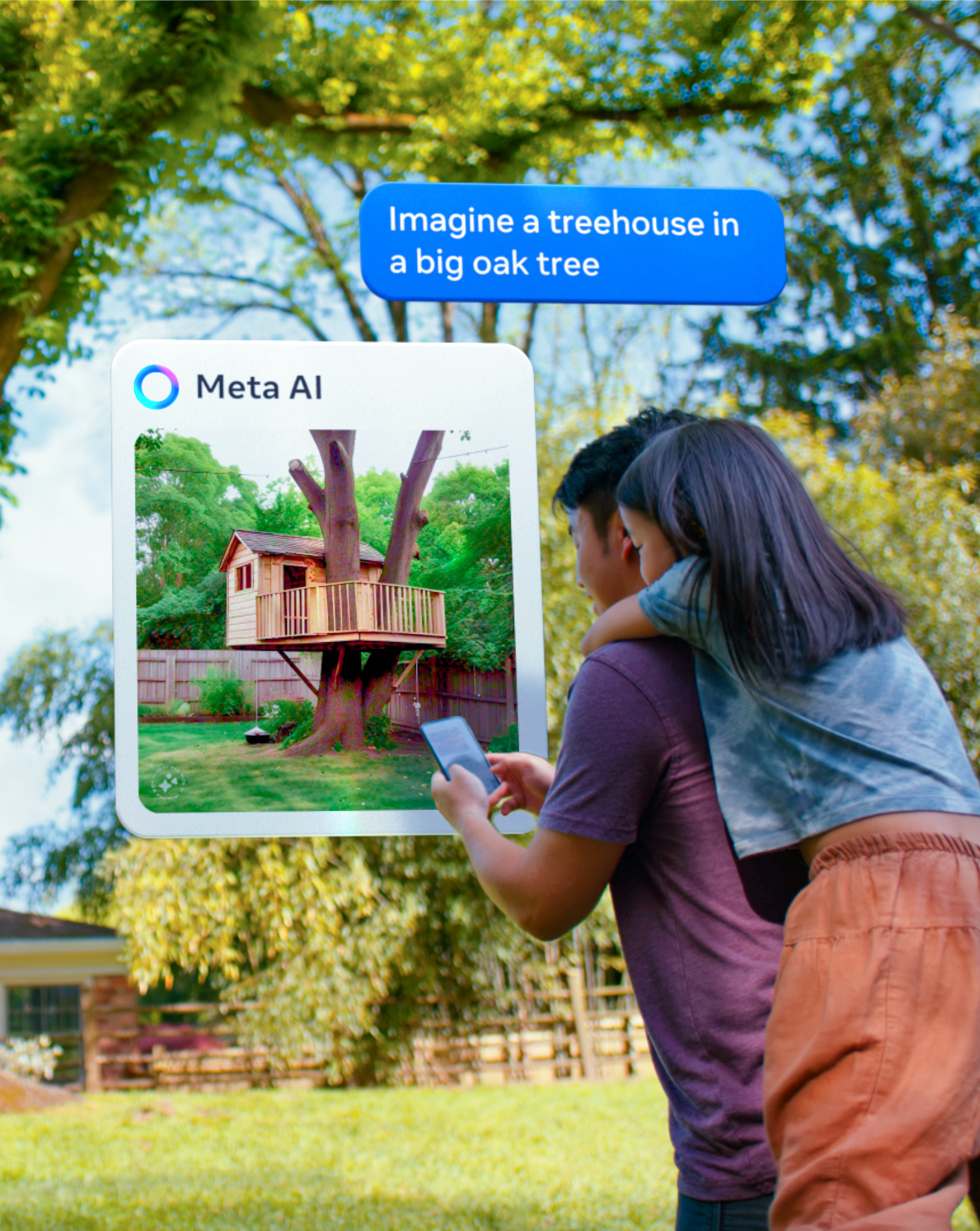
Meta's personal AI agent, Muse, has reached the top of the U.S. App Store, according to a report from Pulse 2.0. The outlet frames the ranking as evidence that the personal AI agent is gaining early traction with consumers.
Store rankings measure downloads and visibility, not retention or revenue. Still, for an agent product, a chart-topping run answers the distribution question first: users are willing to install Meta's agent on their phones.
What separates an agent from a chatbot is the expectation of action. A personal agent is supposed to carry out tasks rather than only produce answers, which is why its natural surface is the phone people already use for shopping, bookings and messaging.
Read together with the other news in the same window, the picture sharpens. Amazon has blocked Muse from using Amazon.com, cutting the agent off from one of the largest shopping destinations. Download momentum on the demand side and platform limits on the supply side are arriving almost simultaneously.
That is the shape of the agent market right now. The appetite is proven; the access is not. Topping a chart solves the attention problem, not the permission problem, and the second one decides how useful the product can actually be.
Three things are worth watching: whether Muse converts its ranking into lasting usage, how far Meta integrates the agent into its own social and advertising surfaces, and whether other large platforms impose similar limits on third-party agents.
If agent products end up competing on ecosystem access rather than feature lists, then a No. 1 ranking is only the opening move.
Why it matters
Muse's No. 1 ranking shows real consumer appetite for personal AI agents, while the Amazon block shows that turning that appetite into daily use depends on platforms allowing agents in.
Nearby Updates
All09/22, 02:00
NVIDIA Launches DSX Ready to Qualify Power and Cooling Products for AI Factories
NVIDIA has introduced DSX Ready, a qualification program for the power and cooling products used in AI factories, announced on the company's official blog. As AI infrastructure expands, power, cooling, water, site and grid constraints are becoming the limits on what builders can actually deploy.
09/22, 03:19
Meta's Muse is outpacing ChatGPT's early mobile launch
Meta's new AI agent Muse has drawn more downloads and daily active users in the United States and Canada than ChatGPT did over the same stretch after its mobile debut, according to estimates from Appfigures cited by TechCrunch. The comparison covers only the early post-launch window and rests on third-party estimates rather than Meta's own figures.
09/22, 01:52
Mastercard Enables Denmark's First AI Agent Payment
Mastercard has enabled Denmark's first AI agent payment, according to a report carried by Pluang, putting an agent-initiated transaction through regulated card acceptance. The significance is less the transaction than the fact that identity, consent and liability questions are now being tested in a live payment channel.
09/22, 04:15
OpenAI forms math advisory group as its AI resolves more than 100 open problems
OpenAI has formed a math advisory group, according to TechCrunch, following its claim that its AI systems have resolved more than 100 open mathematical problems. The group is positioned as advisory only, without leeway to slow down or redirect OpenAI's ongoing mathematical research.