Realtime AI News
WebArena author Shuyan Zhou joins Meta Superintelligence Labs to build an AI browser
Shuyan Zhou, the author of the WebArena benchmark for web agents, has joined Meta's Superintelligence Labs, where her core focus will be building an AI browser. She has said the research interest traces back to a simple goal: a device that can book flight tickets for her mother through conversation.
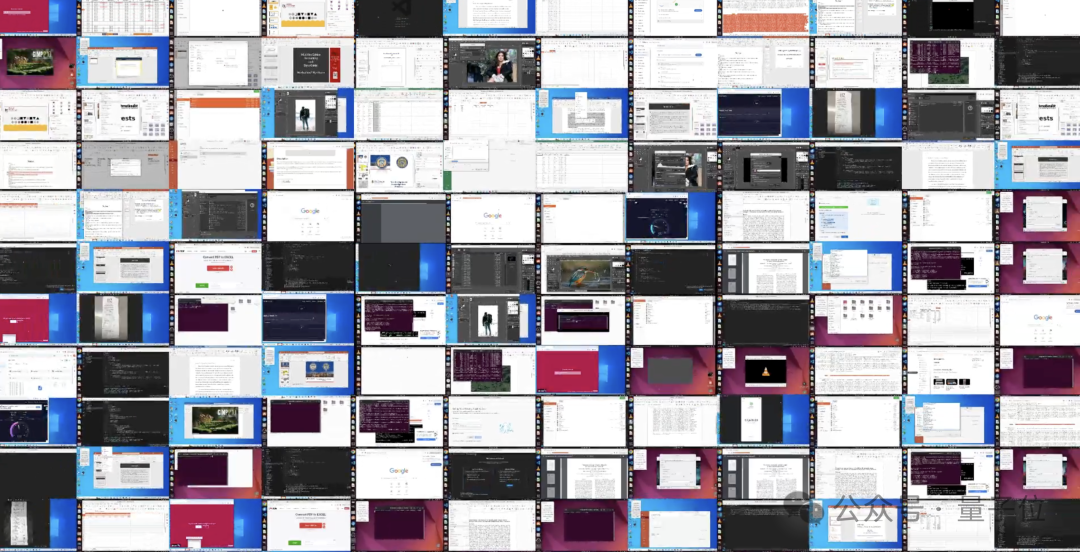
Shuyan Zhou, the author of WebArena, has announced that she is joining Meta's Superintelligence Labs and has named her core focus: building an AI browser, according to a September 22 report from the Chinese outlet QbitAI.
WebArena was a product of her PhD work. It evaluates agents in environments built to resemble the real web, where a model has to decide which page to open, where to click, what to type, and how to recover when a step fails — a different test from running agents on simplified pages or static datasets.
The motivation behind that work is personal. The report notes her goal of an AI browser driven by conversation that can complete real tasks such as buying tickets, turning 'say what you want' into 'the errand is already done.'
Across the industry, the browser is becoming a key entry point for personal agents: search, price comparison, checkout and form filling all happen on web pages. The teams that can reliably finish tasks in real web environments hold the front line of agent deployment.
That is also where the hard problems cluster. Real pages change, logins and permissions get in the way, tasks require long-horizon planning, and failures have to be detected and reversed — challenges that go well beyond language ability and into agent engineering.
Meta's Superintelligence Labs has been recruiting heavily in frontier models and agents, and the arrival of a researcher best known for web-agent evaluation suggests the direction is climbing in priority inside the company.
The question to watch is whether this research line moves out of papers and evaluation harnesses into Meta's existing product surfaces, and when ordinary users will actually feel the edge of an AI browser.
Why it matters
For Meta, hiring a core researcher in web agents signals that the personal-agent race is shifting from raw model capability to task completion rates in real environments. A working AI browser would also reshape how traffic is distributed across search, e-commerce and online services.
Nearby Updates
All09/22, 20:00
Parallel halves research time and cost with GPT-6 Astra
OpenAI published a customer story stating that Parallel's agents now research and synthesize labor-market data in half the time and at half the cost they spent with prior models after adopting GPT-6 Astra. The claim is relative: no baseline model, absolute cost figures, or benchmark scores are disclosed.
09/22, 20:00
NVIDIA Releases Isaac ROS 5.0 to Push Agentic, Open Source Robotics
NVIDIA has released Isaac ROS 5.0, a collection of GPU-accelerated packages built on ROS for developers who build robotics applications that perceive, reason and act in dynamic environments. The company says such work needs new physical AI models and tools, and the release keeps the stack open source.
09/22, 19:50
Xiaomi closes six-day livestreamed training run with over 20 million yuan spent and the open-source top spot
Xiaomi turned a six-day model training run into a public livestream that cost more than 20 million yuan, according to QbitAI, and finished with the top spot among open-source models. Hugging Face's CEO publicly called it 'great,' making the run an unusually transparent moment in the open-source race.
09/22, 20:23
Nscale's IPO will test Wall Street's appetite for concentrated AI bets once again
Nscale, a British AI data center developer, is heading to public markets with most of its revenue coming from Microsoft and Anthropic. The listing will test whether public investors are still willing to pay up for AI infrastructure bets concentrated on a very small number of customers.