Realtime AI News
NVIDIA Releases Isaac ROS 5.0 to Push Agentic, Open Source Robotics
NVIDIA has released Isaac ROS 5.0, a collection of GPU-accelerated packages built on ROS for developers who build robotics applications that perceive, reason and act in dynamic environments. The company says such work needs new physical AI models and tools, and the release keeps the stack open source.
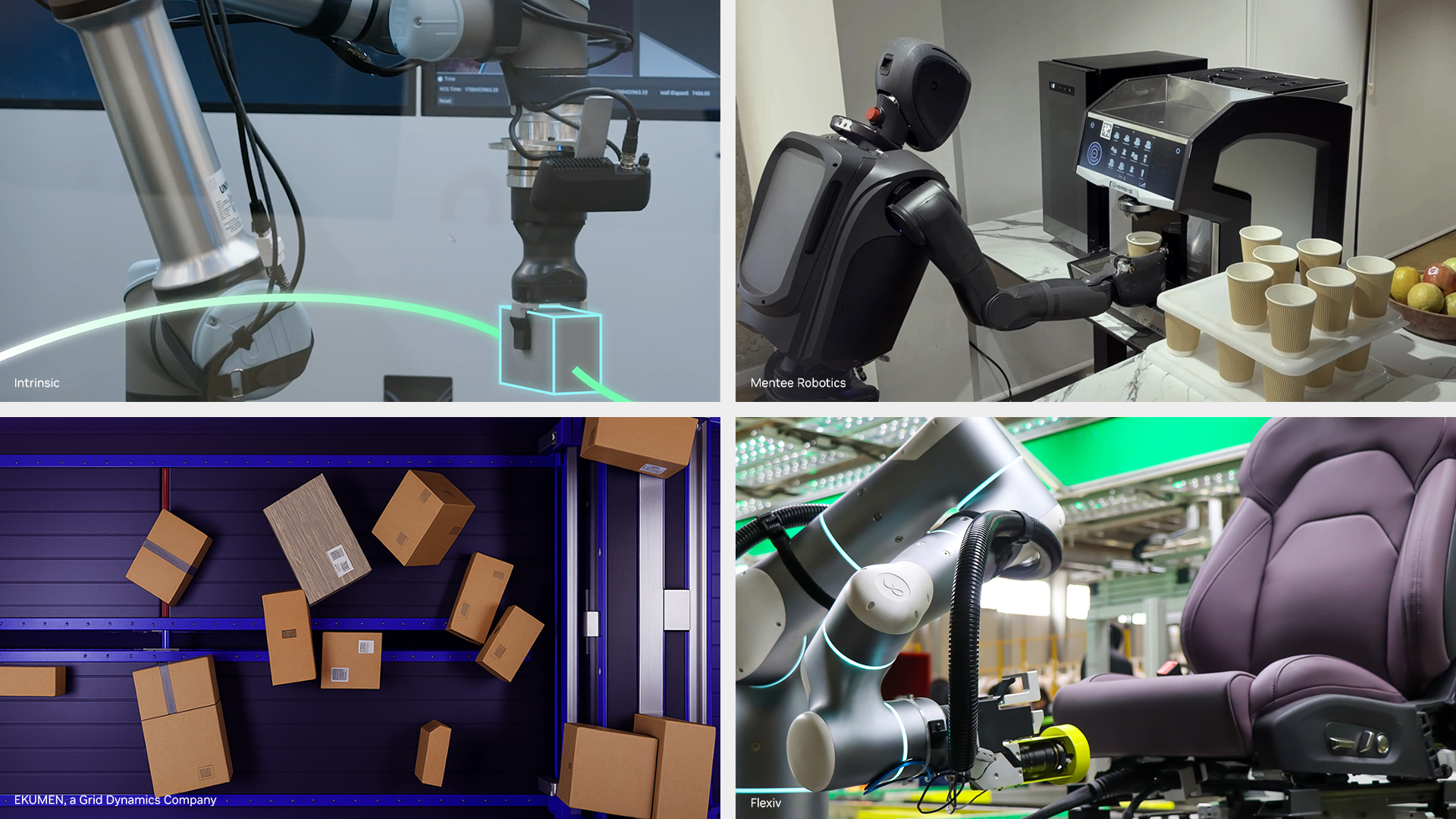
NVIDIA has released Isaac ROS 5.0, the newest version of its robotics software stack, according to a post on the company's official blog. The release is described as a collection of GPU-accelerated packages built on ROS, aimed at developers who build and deploy sophisticated robotics applications.
NVIDIA's stated motivation is that building robots which can perceive, reason and act in dynamic environments requires new physical AI models and tools. Isaac ROS 5.0 is positioned as that layer of tooling, and it shipped today.
The blog is careful to credit the foundation it builds on. ROS is an open framework from the Open Robotics project that helps people build robots; NVIDIA's contribution is a set of packages that add GPU acceleration on top of it, so developers do not have to assemble low-level perception and compute components themselves.
The word "agentic" in NVIDIA's framing matters. The company describes perception, reasoning and action as one continuous chain inside a robot, and Isaac ROS 5.0 is meant to deliver the pieces of that chain as reusable, open packages rather than one-off integrations.
Openness is part of the pitch. By keeping the stack open source and tied to ROS, NVIDIA stays inside an ecosystem it does not own, which is a practical way to reach robotics teams that already build on ROS.
The broader significance is a shift in how robotics software is packaged. Instead of combining an operating system, middleware, perception libraries and simulation tools by hand, developers increasingly get versioned, vendor-supported distributions. For NVIDIA, Isaac ROS extends its GPU advantage from training into the runtime side of robotics.
What to watch next is adoption. The blog post does not offer performance numbers, so the real test will be how quickly robotics teams move to 5.0 and what they report back to the community.
Why it matters
Isaac ROS 5.0 puts GPU-accelerated perception and reasoning into the ROS ecosystem as open packages, lowering the barrier to building agentic robotics applications. For NVIDIA, it is a move to reinforce its physical AI position beyond training hardware.
Nearby Updates
All09/22, 20:00
Parallel halves research time and cost with GPT-6 Astra
OpenAI published a customer story stating that Parallel's agents now research and synthesize labor-market data in half the time and at half the cost they spent with prior models after adopting GPT-6 Astra. The claim is relative: no baseline model, absolute cost figures, or benchmark scores are disclosed.
09/22, 19:58
WebArena author Shuyan Zhou joins Meta Superintelligence Labs to build an AI browser
Shuyan Zhou, the author of the WebArena benchmark for web agents, has joined Meta's Superintelligence Labs, where her core focus will be building an AI browser. She has said the research interest traces back to a simple goal: a device that can book flight tickets for her mother through conversation.
09/22, 19:50
Xiaomi closes six-day livestreamed training run with over 20 million yuan spent and the open-source top spot
Xiaomi turned a six-day model training run into a public livestream that cost more than 20 million yuan, according to QbitAI, and finished with the top spot among open-source models. Hugging Face's CEO publicly called it 'great,' making the run an unusually transparent moment in the open-source race.
09/22, 20:23
Nscale's IPO will test Wall Street's appetite for concentrated AI bets once again
Nscale, a British AI data center developer, is heading to public markets with most of its revenue coming from Microsoft and Anthropic. The listing will test whether public investors are still willing to pay up for AI infrastructure bets concentrated on a very small number of customers.