Realtime AI News
NVIDIA Opens Vera Rubin Architecture at OCP Summit to Scale AI Factories
At the Open Compute Project Global Summit in San Jose, NVIDIA contributed key Vera Rubin rack and compute tray designs to OCP through its open MGX architecture, part of a wave of announcements with Cisco, Google, Meta, Microsoft and Visionbay. The effort aims to turn AI-factory power, cooling and rack-level interconnect into shared, standards-based building blocks as these facilities scale from megawatts toward gigawatts.
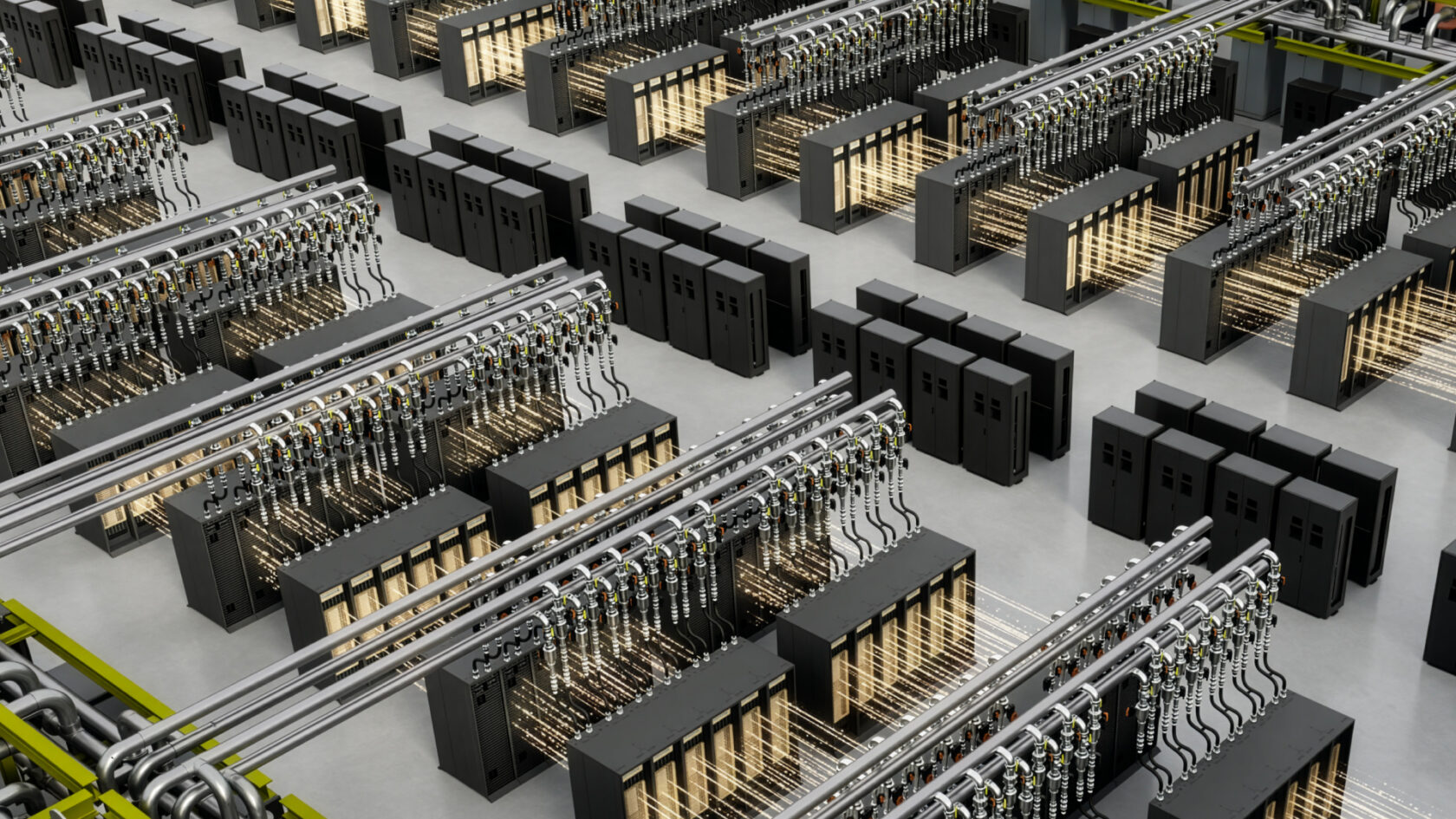
At the Open Compute Project (OCP) Global Summit at the San Jose McEnery Convention Center, NVIDIA announced new partnerships and contributions aimed at creating a common foundation for next-generation AI infrastructure. As AI factories grow from megawatts to gigawatts, the company argues that advanced computing alone is not enough and that open standards are what let the industry scale infrastructure faster, more efficiently and more reliably.
The centerpiece is NVIDIA's decision to contribute key Vera Rubin rack and compute tray designs to OCP through its open MGX architecture, giving system builders a common starting point for next-generation AI factory infrastructure. Together, the contributions span the AI factory itself, the utility grid that powers it and the rack-scale architecture at the heart of modern accelerated computing.
Alongside its own work, NVIDIA and partners made a handful of announcements: joint open standards for next-generation AI factories covering design specifications and grid resilience; new open source software components for the NVIDIA DSX AI Factory platform; and, with Meta, advances in open AI networking built on the NVIDIA Spectrum-X Ethernet SuperNIC and Spectrum-6.
The announcements also included an 800V DC AI factory design for the Vera Rubin era from Visionbay; an Ultra-Dense Small Form Factor Pluggable (USFP) standard from NVIDIA and Cisco, which they describe as the industry's first module for 400Gb/s-based networking fabrics; and Falcon Transport support on future NVIDIA ConnectX-10 SuperNICs and BlueField DPUs with Google.
In the updated MGX 1.2 specification, the open architecture for Vera Rubin AI factories expands further with rack-scale blind-mate liquid cooling, interoperable rack-scale interconnect infrastructure and a liquid-cooled 5,000A busbar designed for higher-power AI systems. It also adds native 19-inch equipment support and higher-density rack designs.
The architecture supports rack deployments up to 250kW and adds configurable I/O bays, fanless liquid-cooled compute trays and standardized power and cooling interfaces to improve modularity, simplify assembly, test and service, and speed up infrastructure buildout. Beyond the Vera Rubin NVL72 system for large-scale training and inference, NVIDIA also detailed a Vera CPU rack design aimed at tool calling, orchestration and sandboxed execution for agentic AI.
On the software side, NVIDIA expanded DSX OS, the open operating layer of its DSX AI factory platform, with open source components for configuring networks, validating clusters, managing racks and provisioning bare metal, so that an AI factory can be run as a single coordinated, repeatable system.
For the industry, the significance lies in standardizing the heavy, capital-intensive layers of AI factories, from liquid cooling to power and rack interconnect. If these designs are widely adopted, deployment and reuse costs should fall; whether the ecosystem genuinely adopts them, and whether interoperability between vendors holds up, is what the next few quarters will test.
Why it matters
Standardizing liquid cooling, power and rack interconnect could lower the cost of deploying and reusing AI factories and make equipment from different vendors more interoperable. The real test is whether the ecosystem adopts these designs and whether cross-vendor interoperability is delivered.
Nearby Updates
All10/12, 23:27
This AI Startup Says It Can Generate Permit-Ready Blueprints in Minutes
Blueprints AI, a bootstrapped startup based in Santa Monica, says its software turns a sketch, PDF or photo into code-compliant, permit-ready construction blueprints in minutes. At TechCrunch Disrupt this week it is unveiling a second-generation version that drafts architecture, structural, MEP and interior drawings at once and re-checks the whole project against local building codes whenever one element changes.
10/12, 23:31
Microsoft president says UK is best placed to drive global AI regulation
Microsoft President Brad Smith has called for urgent AI regulation, arguing that products like milk and washing machines face more oversight than the companies building artificial intelligence. He said the UK, rather than the US or the EU, is best positioned to lead on global safety rules.
10/12, 23:52
Tabby Launches Tabby 2.0 With 'Tabby Talk' AI Agent
Tabby has rolled out version 2.0 of its platform, headlined by a new AI agent called Tabby Talk that answers financial questions and completes bookkeeping tasks. The release pushes agentic automation deeper into everyday financial workflows.
10/12, 21:57
Microsoft's Maia 300 takes aim at Nvidia's AI inference role
tbreak.com reports that Microsoft's Maia 300 chip is positioned against Nvidia in the AI inference segment. The move fits a broader push by cloud providers to run more AI workloads on in-house silicon.