Realtime AI News
NVIDIA and Korea's MSIT Expand Sovereign AI Push From Chips to Agents
NVIDIA and South Korea's Ministry of Science and ICT are widening their sovereign AI collaboration to cover AI semiconductors, data center infrastructure, talent, startups, models, agents and security. The partnership also opens a path for Korean NPU and XPU companies to explore joining NVIDIA's NVLink Fusion ecosystem.
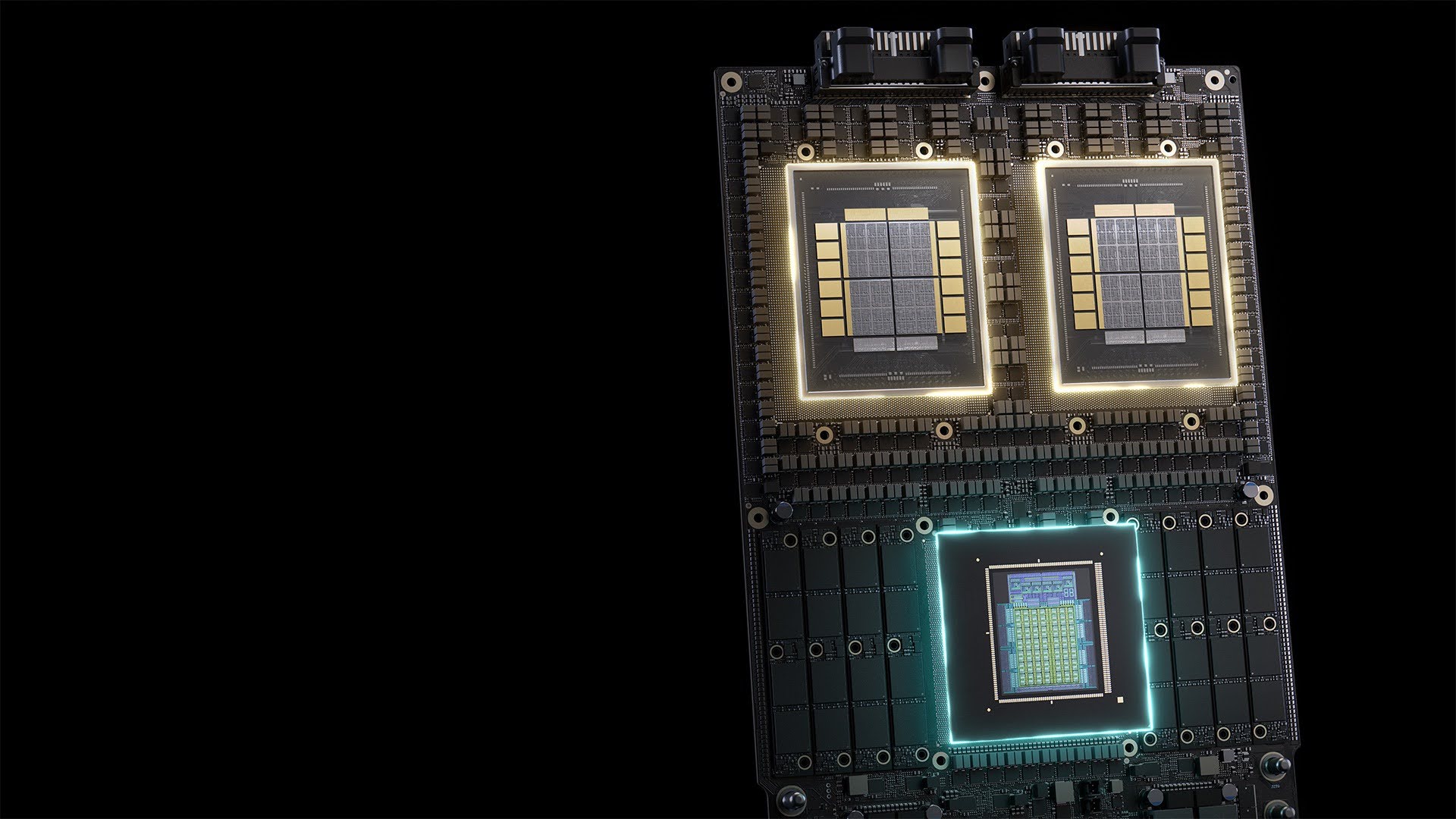
NVIDIA said in a blog post on Nov. 9 that it is expanding its collaboration with South Korea's Ministry of Science and ICT across the country's sovereign AI ecosystem. The scope described in the post runs from AI semiconductors and data center infrastructure through talent, startups, models, agents and security — not a single project but a full-stack agenda.
The chip layer is the most concrete piece. NVIDIA said the collaboration lays the groundwork for Korean NPU and XPU companies to explore participation in the NVLink Fusion ecosystem. For vendors building their own accelerators, access to a mainstream interconnect ecosystem is often what decides whether a chip can move from prototype to volume deployment.
That framing is the point of the sovereign AI label here: semiconductors, infrastructure, models, agents and security sit inside one agreement, which suggests an attempt to link domestic compute supply, model capability and application rollout into a single local chain.
Talent and startups are explicitly in scope. Hardware can be purchased and models can be obtained, but the engineering capacity to run systems and put agents into production has to be built locally, and bringing startups into the program keeps a pipeline open for the application layer.
For NVIDIA, this is a familiar pattern: anchor national programs on its interconnect and software stack so that local silicon, cloud and application partners build along its roadmap. For Korea, the trade-off is real — access to a mature toolchain, in exchange for deeper path dependency in critical infrastructure.
What is public so far stays at the framework level. The post gives no investment figure, timeline or first batch of named projects, so the next signals to watch are which Korean NPU and XPU vendors formally announce NVLink Fusion participation and whether MSIT attaches procurement or funding programs to the arrangement.
Why it matters
National-level deals like this embed NVIDIA's interconnect and software stack into Korea's AI infrastructure planning, expanding its ecosystem now while shaping whether local chipmakers stay inside the mainstream supply chain.
Nearby Updates
All11/09, 13:00
Hyundai and AIM Intelligence build secure agents on NVIDIA OpenShell
NVIDIA's blog argues that as AI agents take on more work, capable open models and security have to advance together. Hyundai Motor Group is exploring NVIDIA NemoClaw blueprints and the OpenShell runtime, while AIM Intelligence is integrating its Starfort platform with OpenShell.
11/09, 13:00
NVIDIA leans on Korea's manufacturing base to push physical AI into production
NVIDIA's blog outlines how South Korea's physical AI ecosystem is advancing, with local industry leaders applying accelerated computing, AI and simulation across semiconductor manufacturing, robotics and autonomous vehicles. Samsung's semiconductor engineering work is placed at the front of the story.
11/09, 13:02
NVIDIA, Rebellions and SK Telecom announce collaboration
NVIDIA, Korean chip designer Rebellions and telecom operator SK Telecom have announced a collaboration. The available summary stops at the headline, with no stated scope, technical detail, investment size or timeline.
11/09, 13:06
NVIDIA Dynamo Recipes target production use for Korea's leading open models
A short NVIDIA blog item says Dynamo Recipes can bring South Korea's leading open models into production. The point is the deployment path rather than a new model, and the source gives no model list or performance figures.