Realtime AI News
Zoho rebuilds Campaigns with simpler email and SMS, native WhatsApp and AI agent workflows
Zoho has rebuilt its Campaigns marketing platform, The Sun Malaysia reports, simplifying email and SMS sends while adding native WhatsApp support and AI agent workflows. The update moves a long email-centric product toward multi-channel outreach for small and mid-sized businesses.
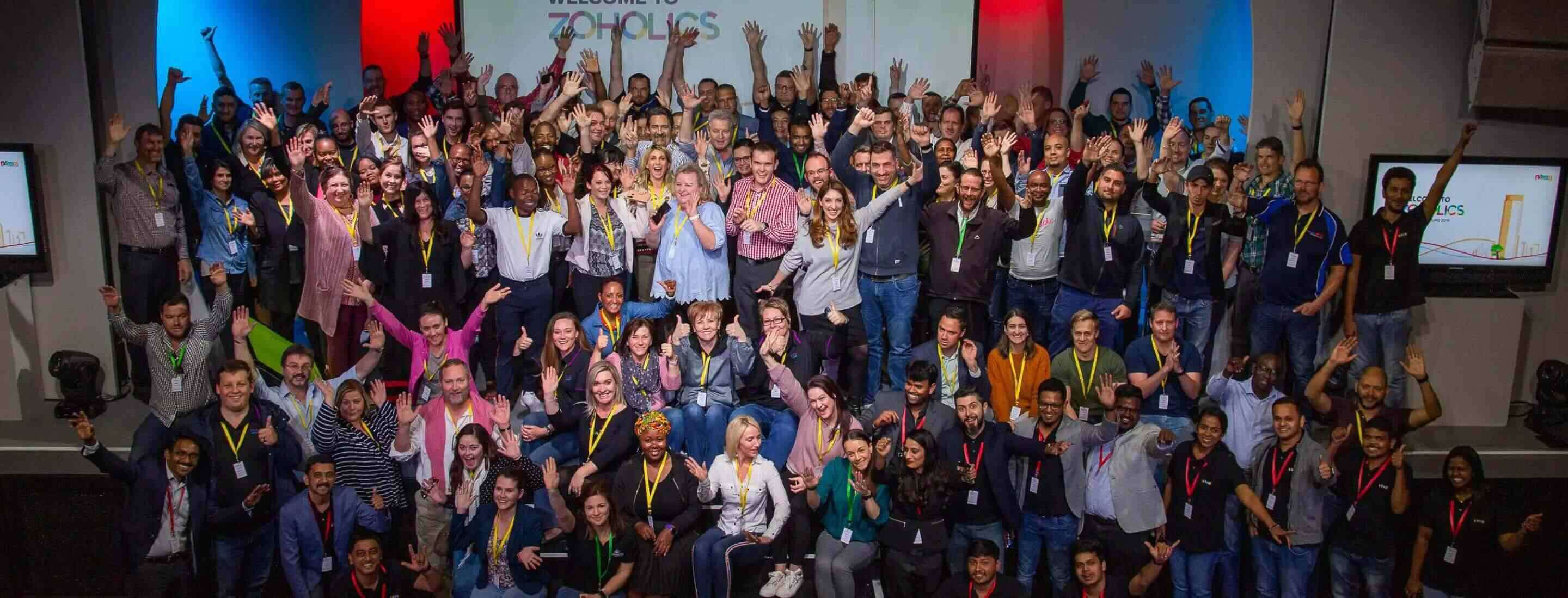
Zoho has rebuilt its Campaigns marketing platform, with changes concentrated in three areas: simpler email and SMS sending, native WhatsApp support, and AI agent workflows, according to a report from The Sun Malaysia on November 14.
Campaigns has been Zoho's marketing automation product for small and mid-sized businesses, built largely around email blasts and SMS touchpoints. The rebuild repositions it from a mostly single-channel email tool toward multi-channel outreach.
Native WhatsApp support is the most consequential part of the update. In markets across Southeast Asia, South Asia and Latin America, WhatsApp is the primary channel for everyday communication, so whether marketing and customer messages can be run compliantly from one platform directly determines how usable the tool is locally.
AI agent workflows push automation from rule triggers toward task execution. For marketing teams that means repetitive segmentation, content generation and follow-up can be chained into a flow instead of depending on people switching between modules, a model closer to handing an agent a goal.
The report does not disclose pricing for the new Campaigns, which regions it ships in, or a migration timeline for existing users. For current customers, the practical impact therefore depends on details that are not yet public.
What to watch is differentiation. Zoho has always competed on an integrated, self-owned product stack and relatively low prices; whether embedding agents into a marketing tool creates separation from incumbents such as HubSpot and Mailchimp, which already ship AI features, will come down to how widely the agent workflows are opened up and how they are billed.
Why it matters
Folding WhatsApp and agent workflows into one marketing platform shifts competition in the SMB segment from email delivery toward cross-channel task automation; whether Zoho's low-price route wins migrations depends on pricing and how much of the agent layer it opens.
Nearby Updates
All11/14, 17:52
Google launches Gemini 4 Hydrogen, a fast, low-cost model for coding and agents
Google has launched Gemini 4 Hydrogen, a model it describes as fast and low-cost and aimed at coding and AI agent workloads, according to IT Voice Media. The report does not disclose pricing, context limits or benchmark results for the new model.
11/14, 18:00
OpenAI brings API inference residency to India for banks and enterprises
OpenAI now lets Indian enterprises keep both their data and the computation behind AI answers inside the country through a new API inference residency option. The capability currently covers one model, GPT-6 Luna, for text workloads, and targets banks and other firms bound by data localisation rules.
11/14, 13:09
openEuler releases an operating system built for Agentic Infra
The open-source operating system community openEuler has released an OS aimed at agentic infrastructure, framing the work as part of a globally collaborative AI ecosystem, according to a report carried by Sohu. The release pushes questions of agent scheduling, permission boundaries and runtime environments down to the operating system layer, though the technical details remain undisclosed.
11/14, 10:00
Tencent Hunyuan ships Hy Realtime, a voice model that decides when to search
Tencent Hunyuan has released Hy Realtime, a new realtime voice model that decides for itself when a conversation calls for an outside search and can sing when a user asks, according to Pandaily. The launch puts realtime speech, where latency and turn-taking matter as much as answer quality, at the center of the voice-assistant race.