#01Agents
ChatGPT adds a Wallet so AI agents can pay at checkout
OpenAI has added a Wallet to ChatGPT that lets AI agents shop and check out on a user's behalf, starting with a limited rollout to U.S.Pro subscribers.
This issue collects 21 AI updates from 2026-11-14, led by ChatGPT adds a Wallet so AI agents can pay at checkout, Gemini 4 Hydrogen costs 76% less per task than 3.8 Flash, LexisNexis launches an AI agent detection tool, Cisco CEO says every employee inside the company will get a personal AI agent.
OpenAI has added a Wallet to ChatGPT that lets AI agents shop and check out on a user's behalf, starting with a limited rollout to U.S.Pro subscribers.
LexisNexis, part of RELX, has launched a tool for detecting AI agents, according to a November 13 report from ad hoc news.de that also framed the news around RELX's share price.The report does not detail the technical approach, coverage or pricing, leaving the launch as an extension of LexisNexis's legal, identity and compliance lines.
Google is extending Gemini 4 Hydrogen from its launch announcement into its main consumer and developer surfaces, including Search, Google apps and coding tools.Reports say the model is now live in Search for all users, not only paying subscribers.
Artificial Analysis has shipped v2.1 of its Coding Agent Index, widening the evaluation to 322 tasks and refreshing the test suite.Same day coverage reports that two Claude models share the top of the leaderboard.
The open source operating system community openEuler has released an OS aimed at agentic infrastructure, framing the work as part of a globally collaborative AI ecosystem, according to a report carried by Sohu.The release pushes questions of agent scheduling, permission boundaries and runtime environments down to the operating system layer, though the technical details remain undisclosed.
An analysis by FourWeekMBA puts Gemini 4 Hydrogen 76% cheaper per completed task than Gemini 3.8 Flash.For agentic workloads that make many calls per job, cost per task says more about a model generation than a benchmark score does.

Tencent Hunyuan has released Hy Realtime, a new realtime voice model that decides for itself when a conversation calls for an outside search and can sing when a user asks, according to Pandaily.The launch puts realtime speech, where latency and turn taking matter as much as answer quality, at the center of the voice assistant race.
OpenAI has reassigned researchers from its robotics work to other teams, according to the decoder, on the view that general purpose models may make specialised robotics AI unnecessary.The move suggests the company is betting its robotics ambitions on general models rather than a separate robotics research organisation.
DeepSeek has opened what it describes as a full suite API, letting developers freely combine and call the capabilities behind its official app, according to a QbitAI report on November 14.The move shifts the company from offering isolated model endpoints toward programmable application layer components.
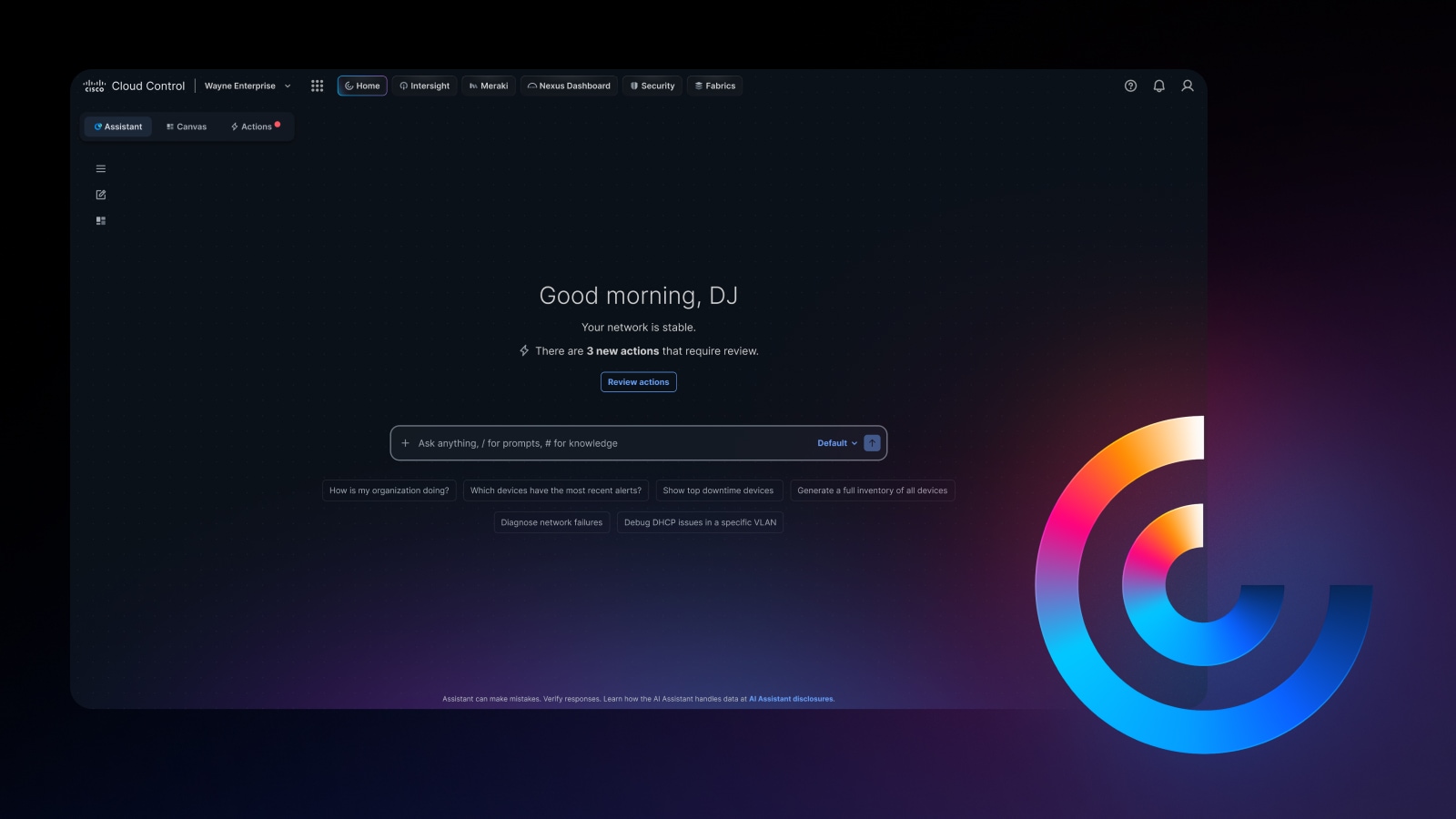
Cisco's chief executive told CNBC that every single employee inside the company will get a personal AI agent.The remark moves enterprise agents from team level pilots toward company wide rollout, raising questions about permissions, governance and cost at scale.
LangChain, the startup behind one of the most widely used open source frameworks for building LLM applications and agents, has reached a $3 billion valuation, according to Mezha.net.The report focuses on the valuation itself rather than the terms behind it, and the figure signals capital moving from model labs into agent tooling.

Security firm Unit 42 says a China linked hacking group used an AI attack framework built around the DeepSeek and Zhipu models to breach companies in the chip and defense sectors.MLQ.ai relayed the finding without disclosing victim names, the timing of the intrusions, or which parts of the attack chain the framework handled.

Mirendil, a startup founded by former Anthropic researchers, has raised $1 billion with the aim of having AI agents perform the work of an AI lab.MLQ.ai's report carries the funding figure and the team's background but discloses no investors, valuation or product details.
Jensen Huang's departure removes the architect of Nvidia's tens of billions push into AI startups, and founders and VCs tell TechCrunch they expect smaller checks and lower valuations.The report frames the change as a structural problem for a funding loop that leaned heavily on one strategic investor.

Investors are flocking to Anthropic's IPO while questioning whether its AI lead can endure, Reuters reported in an exclusive.The mixed signal suggests demand for AI listings is strong even as public market buyers start to price the durability of technological advantage rather than growth alone.
Zoho has rebuilt its Campaigns marketing platform, The Sun Malaysia reports, simplifying email and SMS sends while adding native WhatsApp support and AI agent workflows.The update moves a long email centric product toward multi channel outreach for small and mid sized businesses.
OpenAI now lets Indian enterprises keep both their data and the computation behind AI answers inside the country through a new API inference residency option.The capability currently covers one model, GPT 6 Luna, for text workloads, and targets banks and other firms bound by data localisation rules.
DI, a network built around financial AI agents, has closed a funding round at a $100 million valuation, according to a CryptoRank report.The disclosure is thin, covering the valuation and the close of the round without naming the amount raised, the investors, or the deal structure.
Reuters reports that Anthropic has been sued for trademark infringement over the name of its Mythos model.The case turns an overlooked product decision — what a model is called — into a legal question with brand and distribution consequences.
A new analysis claims that leading open weight models from DeepSeek, Moonshot AI, MiniMax and Ant Group carry traces of training on Nvidia Blackwell chips, which U.S.rules bar from export to China.

Shanghai's housing and construction sector has published its first three year "AI Plus" action plan, reported by Shangguan News on November 14.The document signals that the city's AI policy is moving from general technology promotion into industry specific implementation with a fixed timeline.