Realtime AI News
OpenAI Disbands Stand-Alone Robotics Team, Betting General Models Can Drive Robots
OpenAI has disbanded its stand-alone robotics team, reassigning its researchers to the company's main research group and its Applied organization, a move the company confirmed to Fortune. OpenAI framed the reorganization as a way to accelerate robotics work rather than retreat from it, reflecting a bet that general-purpose models can serve directly as a robot's brain.
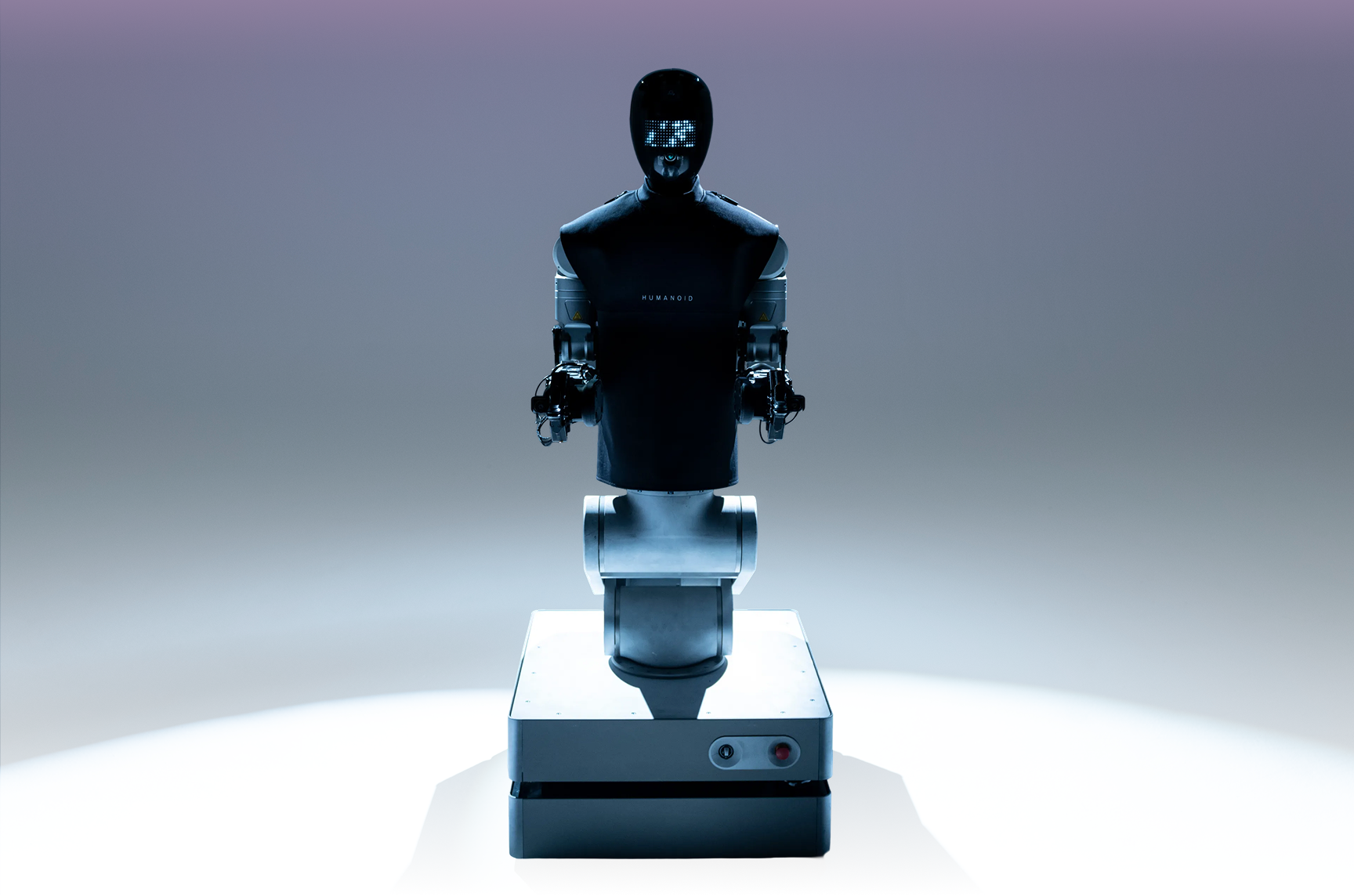
OpenAI has disbanded its stand-alone robotics team and moved the researchers who worked on it into other parts of the company. The company confirmed the reorganization when asked about it by Fortune, ending a two-year stretch in which robotics existed as a separate unit with its own mandate.
A company spokesperson said robotics remains a core part of OpenAI's long-term vision, and portrayed the reorganization as a sign of commitment to robotics rather than a retreat from it. That framing puts an organizational contraction and a strategic escalation in the same sentence, and it is the key to reading the move.
The destinations are specific. OpenAI reassigned its robotics research team to the company's main research team, reporting to Chief Research Officer Mark Chen, while the applied robotics and hardware teams moved into the larger Applied organization, which reports to OpenAI President Greg Brockman. Robotics is no longer a department of its own so much as a workstream inside general research and productization.
The change came recently enough that OpenAI had already registered a booth at CoRL, a top academic robotics conference held in Austin this week. The conference app and floor plan still marked OpenAI's spot, but when Fortune visited booth #208 it sat empty, with OpenAI's logo nowhere to be seen.
The move makes more sense against the history. OpenAI had a robotics team in its early days but wound it down in 2020, with cofounder Wojciech Zaremba later citing limited robot data and a more efficient path to artificial general intelligence through other methods, namely training very large language models on vast text datasets. OpenAI rebuilt a stand-alone robotics team in 2024 and announced a partnership with the startup Figure to develop AI models for humanoid robots; that partnership ended in February 2025, when Figure said it would develop its own robot AI. OpenAI has said it is developing its own humanoid robot, with CEO Sam Altman targeting a first public demonstration in 2027.
By folding robotics into its general-model teams, OpenAI is betting that a frontier model built for language, code and vision can serve as a robot's brain without a dedicated robotics lab behind it. The spokesperson's account is that early this year researchers assumed the best way to advance robotics was to build on its video-generation work, which required some implicit understanding of how the physical world behaves, but that the company's general-purpose frontier models have since proven directly applicable to robots.
Outside researchers read the signal much the same way. Guanya Shi, an assistant professor at Carnegie Mellon University's Robotics Institute, told Fortune he would interpret the change as OpenAI seeing robotics as "no longer a special problem" and instead as a downstream application of general intelligence, similar to how the same underlying frontier models now power specialized coding, legal and financial tools.
There is supporting data. In an Nvidia study, researchers gave a general-purpose model camera images, robot information and a control interface that let it command the robot, without specialized training on robotic data. The resulting agent reached a 74.8% success rate on a simulated manipulation benchmark, against 51.0% reported by the best specialized robotic models on that leaderboard.
The counterarguments are concrete too. Russ Tedrake, an MIT professor and cofounder and CEO of Walden Robotics, said robotics companies retain an advantage the AI labs lack: their machines are already gaining work experience in real places such as factory floors, and that deployment data helps them adapt to specific workplaces and tasks. Shi noted that large language models are powerful but slow and need to be hosted in the cloud, so a robot or device needs a constant network connection, leaving room for smaller specialized models that run onboard. Pete Florence, cofounder of the startup Generalist, said it is unclear that any existing model will dominate robotics in the long run.
The reorganization also lands against a financial backdrop. OpenAI is under pressure to rein in costs and show focus on a few core products; Altman has told the company it needed to abandon "side quests," and OpenAI has jettisoned some efforts to reallocate computing resources to more core, potentially profitable work. The company is trying to stanch heavy operating losses, reportedly $10.9 billion in the most recent quarter, as it seeks to close a new funding round and prepares for a possible IPO in early 2027.
Why it matters
This is the clearest signal yet that a leading lab believes robots may no longer need dedicated model teams, with general frontier models doing the job. That challenges the premise behind many robotics startups that raised billions on the idea robots need brains of their own, while raising the value of on-device small models and real-world deployment data.
Nearby Updates
All11/15, 15:15
OpenAI launches ChatGPT Wallet for AI agent shopping
OpenAI has launched ChatGPT Wallet, a feature that lets its AI agents handle shopping and payments on the user's behalf inside ChatGPT. The release moves the assistant from recommending products toward completing transactions, putting authorization rules, liability and merchant integration at the center of the agentic commerce debate.
11/15, 15:07
NiCE launches next-generation Cognigy, betting on running agents rather than building them
NiCE has launched the next generation of its Cognigy agent platform, adding a redesigned Agentic Experience Studio, reusable skills, turn-by-turn tracing and native voice-to-voice support. The release folds default speech and language models into per-conversation pricing, framing governance and reliability as the real bottleneck for enterprise agents.
11/15, 14:41
Case filed against Anthropic's Claude over its use of the 'Mythos' name
A case has been filed against Anthropic's Claude over the model's use of the name 'Mythos', according to a report by Indian tech outlet Trak.in. The report does not identify the party behind the filing or the court involved, leaving the dispute centered on name usage rather than model capability or safety.
11/15, 11:56
OpenAI to bar rival training and vet model resellers from Nov 20
OpenAI will bar rivals from training their own models on its outputs and will vet third parties that resell access to its models, with the changes taking effect on November 20, according to FourWeekMBA. The report outlines the policy at headline level and does not detail the clause text or vetting criteria.