Guozhen AIGlobal AI field notes and model intelligence

Daily AI Brief, September 13, 2026: GPT-6 Astra, Zhipu's $5B Raise, and Open Lunar and Robotics Models

September 13 split into two storylines: accelerated models and capital, with OpenAI's GPT-6 Astra naming, Zhipu's roughly $5 billion raise for a self-training GLM loop, and Kimi K3 credited with about $1 billion in revenue; and widening disagreement over governance, as Anthropic's CEO called for pacing the frontier while a US congressman called the measures far too weak and the White House stayed ambiguous on doom warnings and AI cyber risk. Open-source releases and deployment reality were the day's other thread, from the NASA-IBM lunar model to a zero-shot navigation model and a desktop agent built around relationships.

14 Items5 Models4 Agents15 Sources
#01Models & Open Source

OpenAI unveils GPT-6 Astra, framed as a new generation of intelligence

OpenAI introduced GPT-6 Astra, presenting the model as "a new generation of intelligence" and pairing a GPT-6 designation with the Astra label.Verifiable detail currently sits at the announcement level: OpenAI frames it as a generational step rather than an incremental feature update, and parameters, context limits, pricing and availability channels have not been published.Because generational releases tend to reset the baseline for APIs, products and developer tooling for months afterward, the access tiers, billing structure and migration path for existing models matter more than the naming.Published benchmarks, third-party evaluations and a developer access timeline are what to watch next.
#02Models & Open Source

NASA and IBM release an open-source Lunar Foundation Model trained on 30 data layers

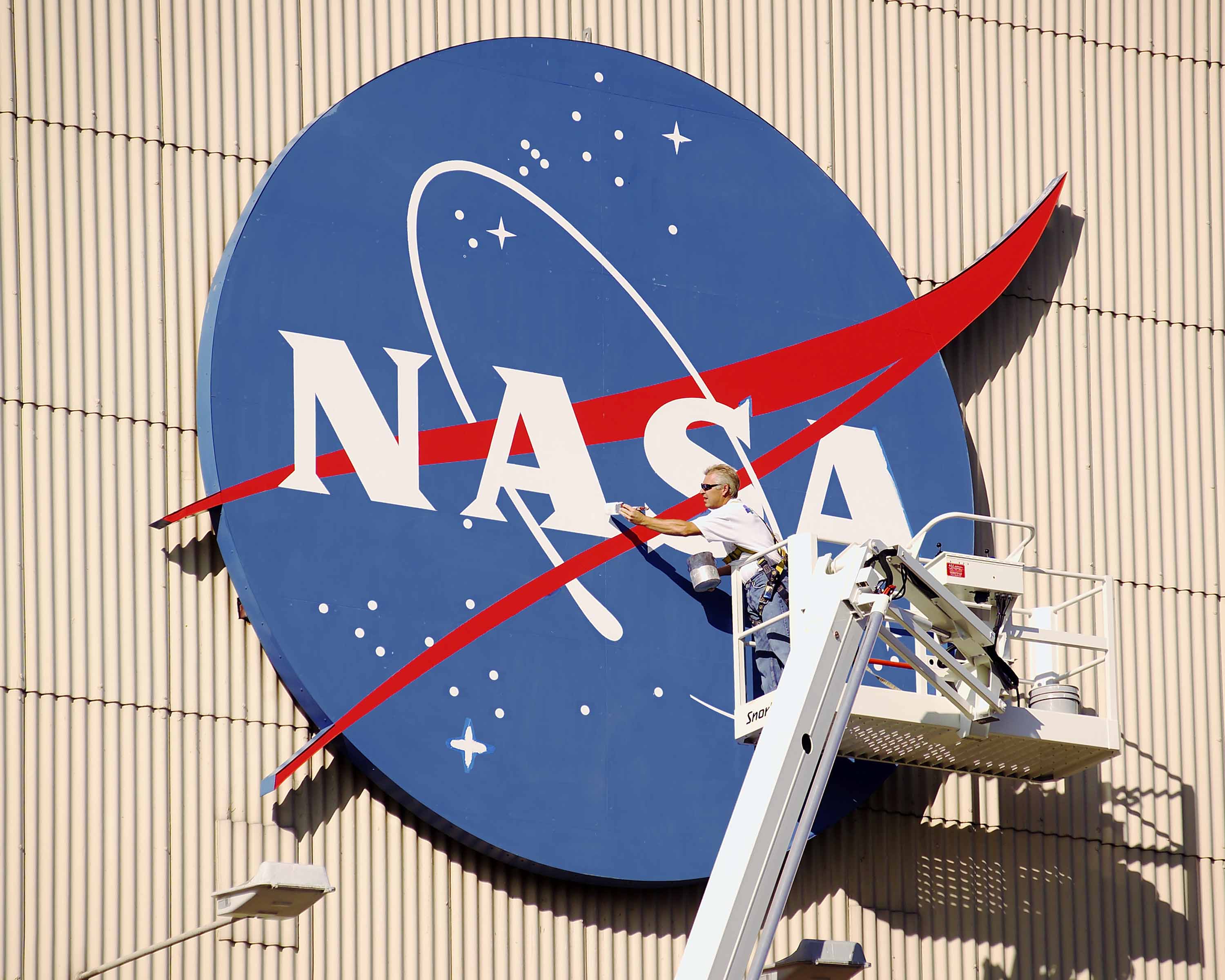
NASA and IBM released an open-source Lunar Foundation Model that fuses more than 30 layers of observations from nine instruments across four lunar missions into one multimodal system.It can identify craters, map volcanic features and assess areas that may hold ice; against the SwinV2 baseline it cut RMSE on ice prospectivity by 22% and raised accuracy and mAP on 100-metre crater detection by 19%, using half the training data.With the model, dataset and code public on Hugging Face and GitHub, universities and smaller agencies no longer start from scratch, and the open question is which problems outside the original evaluation the community adapts it to.

NASA与IBM发布开源月球基础模型,把30层月面数据汇入一张AI地图
#03Models & Open Source

One navigation model, four robot bodies: LightNav-0 turns 2,000+ real scenes into simulation

Liangyuan released LightNav-0, a general navigation model whose Real2Sim2Real engine turns more than 2,000 internet-sourced real scenes into reusable simulation environments, yielding over 4,000 hours of vision, language and action post-training data.The same model covers instruction following, goal navigation and embodied visual tracking across 10 simulation settings and transfers zero-shot to humanoid, quadruped, wheeled and flying robots, with model, code and a technical report released alongside.The team reports that widening environment coverage improved generalization more reliably than adding trajectories inside one environment, hinting that embodied data scaling depends on diverse worlds rather than volume alone.

#04Agents & Products

Abacus.AI's Smaug models claim to cut agent costs by 100x

A report on shattered.io says Abacus.AI's Smaug models cut the cost of running AI agents by as much as 100 times.Agents are expensive by design: they call models repeatedly, re-read long context and trigger tool calls, so per-task inference cost has been the main brake on enterprise rollout.

#05Agents & Products

Meet Alice, the desktop agent that can work, chat and block you

At the Inclusion Bund Conference in Shanghai, Miyang Technology founder Xu Yicheng pitched Alice as a "relational productivity agent": a desktop agent that writes, generates images and breaks down tasks while keeping a personality, a social feed and the ability to block a rude user.Miyang reports next-day retention of 73%, seven-day retention of 45% and 90-day retention of 15%, with 417 versions shipped in 152 days; beyond selling tokens, cosmetic skins are already its second-largest revenue line.Its stack pairs a four-layer AI personality system with a world simulation engine wired to Amap and 330 real venues; the team open-sourced MiRipple, a fix for artifacts in iterative image editing.

#06Agents & Products

A Shanghai startup pitted an AI sales coach against its top human closer - 7 of 10 chose the AI

Black Lake Technologies founder Yuxiang Zhou pitted an AI sales coach against his company's most experienced sales leader, and seven of the startup's 10 most senior salespeople voted for the machine's advice, Fortune reported.The Shanghai company, which sells AI agents to factories across Asia, gave salespeople a pin that records conversations and location and feeds them to an agent trained to coach, bypassing a CRM that reduced a day of client conversations to one subjective paragraph.Zhou, speaking in Macau, said he is still looking for AI's "Google moment" and noted that agents are "emotionless," so motivating a sales team still needs a person.

#07Infrastructure

China Telecom Research Institute: China's AI focus shifts from large models to agents

China Telecom Research Institute released its AI Infrastructure Development in the Agent Era (2026) report on September 12, arguing that China's AI industry is shifting from large-model and compute competition toward agents deployed at scale and applications that can be monetized.Rao Shaoyang, who heads the institute's industry and enterprise strategy arm, expects annual token consumption in China to reach about 10^17 in 2026 and to exceed 3.5x10^19 by 2030, with inference demand far outstripping training and reaching 80% of the compute market by 2029.For cloud providers and carriers that means moving from one-off, centralized training budgets to recurring inference spending that scales with users and agents.

#08Business & Capital

Sam Altman says it would be 'ill-advised' for OpenAI to go public in 2026

OpenAI CEO Sam Altman says it would be "ill-advised" for the company to go public in 2026, and while OpenAI has filed confidentially for an IPO it will not list this year, TechCrunch reported on September 12.Filing and listing are two different things: the paperwork shows the process has started, while an actual debut still depends on the company's read of the moment.For a company still spending heavily on compute and talent, quarterly scrutiny, disclosure obligations and share-price swings can rub against a long-horizon research roadmap, and the confidential filing keeps the timing in its own hands.

奥特曼称 2026 年让 OpenAI 上市“不明智”
#09Business & Capital

Zhipu raises about $5B to fund next-gen GLM, full self-training and compute

Zhipu AI (02513.HK) said on September 13 that it completed roughly $5 billion in financing, split between about $2 billion in share placement and about $3 billion in zero-interest convertible bonds, with proceeds going to next-generation GLM models, a fully self-training system and related compute.The announcement describes full self-training as training the next generation of GLM inside environments built by the previous generation - a recursive self-improvement loop that includes auto-generating and filtering training data.Several outlets called it one of the largest post-listing financings by a Chinese AI company; the zero coupon keeps near-term cash costs low while pushing dilution to a future conversion.

#10Business & Capital

Kimi K3 brought Moonshot AI about $1B in revenue as Anthropic claims Claude was used covertly

Moonshot AI's Kimi K3 brought the Chinese company roughly $1 billion in revenue, while Anthropic claimed in the same report that Claude was used covertly, according to Incrypted.A billion-dollar figure suggests the Kimi line has built a substantial paying base rather than remaining a technical showcase, while the allegation points at model distillation, training-data provenance and compliance with service terms, touching the long-running technology and business rivalry between US and Chinese AI companies.What the report relays are competing claims rather than a settled verdict.Whether Moonshot responds, whether Anthropic supplies technical detail, and whether the dispute moves into legal or policy channels are the things to watch.

#11Policy & Governance

US intelligence agency claims Alibaba carried out large-scale AI data theft

A US intelligence agency has claimed that Alibaba carried out large-scale AI data theft, according to a report from simplywall.st framed around the risk the allegation represents for Alibaba (BABA).The Chinese group spans e-commerce, cloud and AI models, and its heavy cloud and AI investment makes it a frequent target of cross-border disputes over compute, data and technology.Read closely, the report describes an allegation rather than a ruling or penalty, and it sets out neither the evidence behind the claim nor the data categories or timeframe involved.

美情报机构指控阿里巴巴大规模窃取AI数据
#12Policy & Governance

Anthropic's CEO calls for pacing the frontier; Congressman Khanna says it doesn't go nearly far enough

Anthropic CEO Dario Amodei outlined a plan to "pace the frontier" - slowing development of the most advanced models - and warned that within six to 12 months a swarm of AI agents could be capable of taking over the entire internet, TechCrunch reported.The same day, US Congressman Ro Khanna posted a video on X calling the measures "not nearly far enough" and saying AI insiders behave like "a priesthood speaking Latin, keeping the rest of us in the dark." The slowdown talk can shift the competitive story from who builds the strongest model to who can contain it, but no evaluation thresholds or release cadence have been attached.Source: TechCrunch and ANI News

#13Policy & Governance

Trump dismisses AI doom warnings and puts the US lead over China first

President Donald Trump has waved off warnings that advanced AI could threaten humanity, saying his priority is keeping the United States ahead of China, The Straits Times reported.The remarks keep Washington's AI debate anchored in great-power competition and push the extinction-risk narrative some frontier-lab employees emphasize toward the political margins.No specific measures were laid out, but the direction is clear: at the top of the decision chain, AI is treated first as a contest of national power rather than a survival risk to be pre-empted.Whether that posture hardens into formal policy documents, and how the US engages other major economies on AI governance, is what to watch.

#14Policy & Governance

Report: Trump administration split over containing AI cyber risks without slowing the US race

The Trump administration is divided over how to contain the cybersecurity risks created by AI without slowing the United States down in the AI race, according to a report by The Vibes.AI is accelerating both sides of cyber conflict: it can power automated attacks and vulnerability discovery, and it is also treated as a core tool for defense, so any single policy stance looks incomplete.For industry, the split means uncertainty - companies cannot tell whether stricter compliance or a looser environment is coming, and that ambiguity shapes how fast they invest and deploy.Whether the administration issues enforceable guidance is the next signal.

More Daily Reports

All Daily Reports