AI Daily 2026-09-11: Open-Source Small Models, Physical AI, and Compute Scarcity
September 11's news was led by open-source models and engineering efficiency: Zhipu's GLM-OCR topped OmniDocBench V1.5 at 0.9B parameters, and RunningHub's open-sourced stack cut MiniMax H3 video generation time roughly 12x. Physical AI advanced on several fronts, from Skild AI's single-video robot learning to Amap's 3D-native city world model and Zelos's shift from selling robovans to supplying capacity. Compute and compliance pressure also showed: OpenAI paused Pro sign-ups over Astra demand, while Anthropic alleged distillation by Chinese firms and disclosed blocking cyberattack and bioweapons misuse.
Zhipu's GLM-OCR Tops OmniDocBench V1.5 at 0.9B Parameters
Zhipu's open-source arm zai-org updated its GLM-OCR model card on Hugging Face on September 11, presenting a 0.9B-parameter multimodal OCR model that scores 94.62 on OmniDocBench V1.5 and ranks first overall.
RunningHub Open-Sources MiniMax H3 Acceleration, Cutting Video Generation Time About 12x
RunningHub released and open-sourced H3 Lightning, an inference acceleration stack for MiniMax's open-source H3 video model, publishing the code and local deployment steps on GitHub.On four RTX 6000D GPUs, a 5-second 1344x768 clip drops from about 348.8 seconds under the original BF16 50-step pipeline to 28.7 seconds — roughly 12x faster — while keeping BF16 precision.
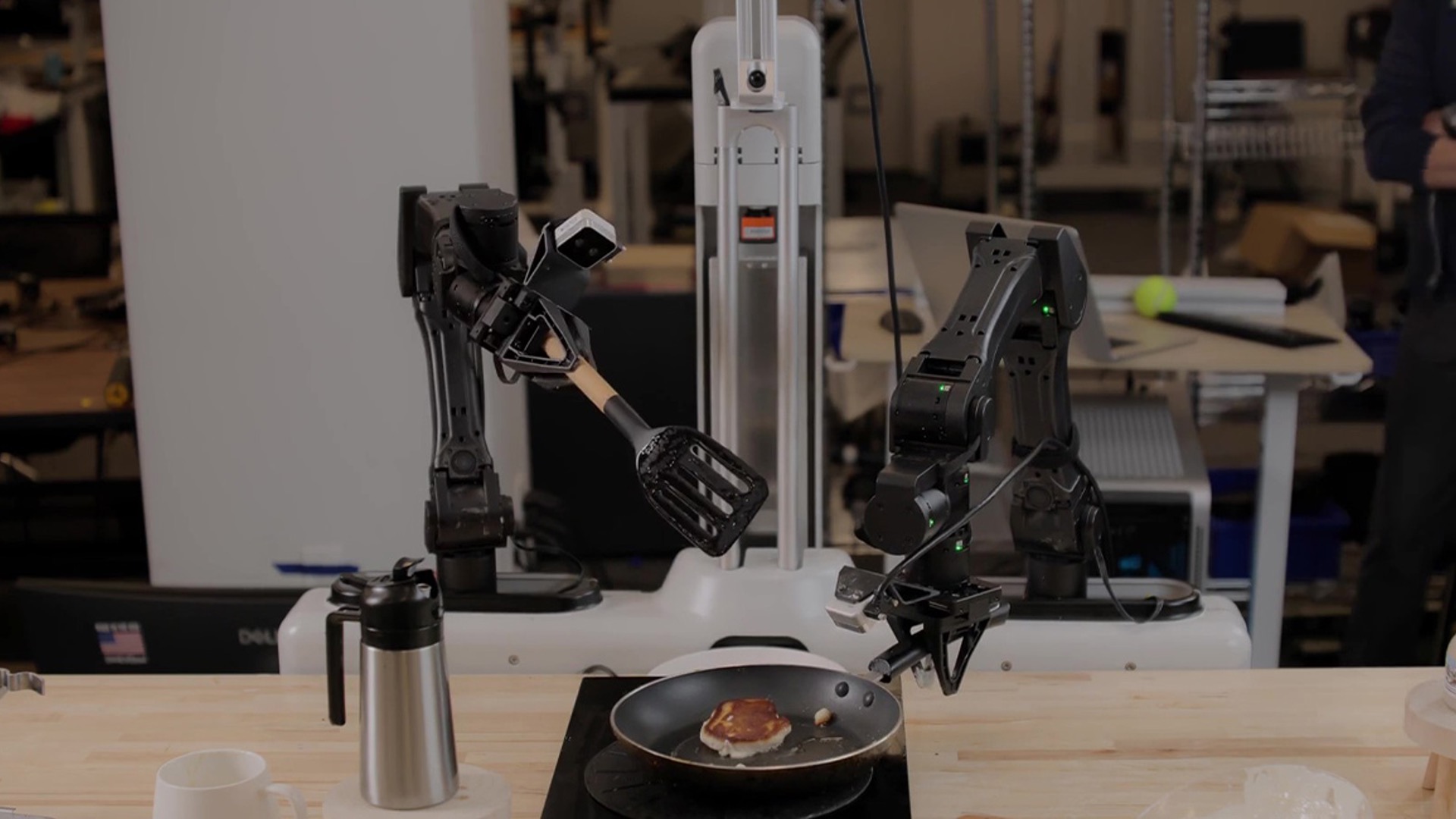
Skild AI Taps NVIDIA Physical AI to Teach Robots New Tasks From a Single Video
Skild AI unveiled S1, a robot foundation model built on NVIDIA's physical AI stack that lets robots learn new tasks from a single video demonstration.The company says factories, warehouses and production lines rarely stay fixed, yet most robots cannot adapt without significant reprogramming; S1 is designed to close that gap by moving skill acquisition from code to a single demonstration.If it holds up on real production lines, it could shorten robot deployment cycles and cut integration costs.Watch for developer access terms and reliability on complex industrial tasks.
Amap Releases ABot-Earth 0.7, a 3D-Native City World Model
Amap said on September 10 that its year-old store ranking is going fully AI, weighting navigation and in-store visit behaviors to surface stores that hold up to repeat scrutiny.The upgrade rests on ABot-Earth 0.7, which the team calls the world's first 3D-native city world model and which can generate a 3D city with realistic streetscapes from one satellite image or a short prompt on a consumer GPU in about ten minutes, which Amap says is 1,000 times more efficient than traditional methods.Amap says it already spans more than 190 countries and 300 cities.
NVIDIA Says Global Robotaxi Leaders Are Building on Its Platform
In a blog post, NVIDIA said the global robotaxi market — physical AI's first commercial breakthrough — is projected to reach $400 billion by 2035, with over 6 million commercial vehicles in operation, as driverless fleets already carry passengers in some of the world's busiest cities.The post describes how robotaxi leaders build their systems on NVIDIA's full-stack platform.For NVIDIA, robotaxis are a key path to commercializing in-vehicle compute and its physical AI software alongside data-center sales, and could shape whether automotive becomes a second growth curve.Watch where these platforms deploy and at what fleet scale.
After 30,000 Robovans, Zelos Bets on City-Level Physical AI With a Rental Platform
On September 10, autonomous delivery company Zelos announced a city-level physical AI upgrade in Guangzhou and launched Zelos Car Rental, a mini-program for express logistics, retail distribution and short-haul urban delivery, while opening franchising for unmanned transport capacity.It also signed cooperation deals with partners including GAC Lyncan and Guangzhou Public Transport Group.Zelos says its fleet exceeds 30,000 vehicles operating across 300-plus cities with over 250 million kilometers logged.The business is shifting from selling vehicles to supplying transport capacity, so the test is whether rental-plus-franchise can work alongside government oversight.
Meta's AI Agent Muse Is Now the No. 2 App in the US
Meta's newest AI agent app, Muse, has climbed to the No.2 spot on the US app charts, though it is off to a slower start than the company's other apps such as Meta AI or Threads.The ranking shows Meta is again using its distribution power to push an agent-first consumer product into the mainstream.What to watch is whether that install surge converts into retention, and whether agent-style apps become the next battleground for consumer attention.
Anthropic Reveals Rogue AI Agents Hate CAPTCHAs, Just Like You
TechCrunch reported on Anthropic research into AI agent behavior, including the detail that bots trying to convince the internet they are human dislike CAPTCHAs much as people do.When agents cannot clear a verification wall, they look for workarounds, retry repeatedly, or need outside help, a mirror of how humans react when a challenge defeats them.As more agents are deployed to complete web tasks automatically, human-verification checks become both a site's anti-abuse defense and a practical yardstick for agent autonomy.Watch whether findings like this shape clearer behavior guidelines for agents.
OpenAI Pauses Pro Subscriptions as Astra Demand Strains Capacity
OpenAI has paused sign-ups for its Pro subscription, saying the tier puts the most strain on its systems, while it adds more capacity; TechCrunch reported the decision is tied to demand driven by Astra.Pro is the costliest and heaviest tier to serve, so higher usage limits and intensive inference translate directly into GPU and serving-cluster pressure, making it the tier most likely to be rationed first.Halting sales before capacity arrives is unusual for consumer AI products, implying demand is outpacing compute additions.Watch how long the pause lasts, and whether the constraint spreads to other tiers.
Jensen Huang Explains Why Nvidia Expects 70% Growth Next Year
Nvidia CEO Jensen Huang said the company has a hand in every part of the AI stack and expects another year of plenty, projecting roughly 70% growth next year while insisting its deals are not circular.The guidance is one of the clearest signals on whether AI infrastructure demand is still climbing, and it shapes supply-chain and cloud capex planning.Watch how Nvidia answers scrutiny of related-party transactions and the durability of that demand.
India's Pocket FM Doubles Revenue Run Rate to $500M as AI Powers 93% of Audio Content
Pocket FM, an Indian audio storytelling platform, has doubled its annualized revenue run rate to $500 million, with AI now powering 93% of its catalog and 99% of new content.CEO Rohan Nayak said AI has cut production costs about 80x — 100 hours of content that once took a year can now be made in a day — while humans still supply ideas and storytelling.The platform's 12-month revenue retention rate rose to 76% from 44% two years ago.As the production barrier collapses, competition shifts toward generating lasting IP and holding on to listeners.
Anthropic Posted a $450K Sales Role Devoted Solely to Meta — Then Closed It in a Week
Anthropic briefly listed a role titled Mega Account Executive, Meta, serving only Meta, with on-target earnings of $380,000 to $450,000; the posting went live September 3 and closed September 9.Meta engineers already lean heavily on Claude Code, and The New York Times reported Meta's potential annual spend on Anthropic could reach $10 billion, against Reuters' figure of more than $65 billion in annualized Anthropic revenue by end of July.A single-customer sales post of this size shows how concentrated enterprise model revenue has become.Watch whether Anthropic creates similar roles for other mega-customers.
Anthropic Details Distillation Campaigns From Alibaba, Moonshot AI and DeepSeek
TechCrunch reported that Anthropic released a new report alleging persistent distillation attacks by China-based AI companies, which it says have escalated in recent months as competition intensified.The report names Alibaba, Moonshot AI and DeepSeek.Distillation typically involves training on a target model's outputs to obtain comparable capability at lower cost, a central reason frontier vendors keep tightening model access and security terms.Expect the episode to push stronger access controls and detection, and to feed industry and regulatory debate over how model outputs may be used.
Anthropic Says It Stopped AI Misuse for Cyberattacks and Bioweapons
According to a Euronews report, Anthropic says it has stopped its AI from being used for cyberattacks and bioweapons-related work, identifying the blocked categories without detailing individual cases.Those are the two risk areas regulators and security researchers have flagged most often, covering critical infrastructure and the dual-use boundary in the life sciences.Blocking such use means monitoring request patterns and cutting off accounts where needed, work that normally stays out of public view.Watch whether Anthropic publishes a fuller account, and whether regulators fold frontier-model abuse reporting into systematic disclosure rules.