English translation
Dify Troubleshooting Guide: Fix Common Issues in Generative AI App Development
AI Article Decision Snapshot
Turn the lesson into workflow, model, budget, and security checks before choosing tools.
Use this quick snapshot before leaving the article. It keeps the next search tied to practical AI software, model/API, cost, privacy, and implementation questions.
Workflow fit
Identify the real job behind the article: coding, research, document review, support, analytics, content, or internal automation.
Model or tool decision
Decide whether the next step is a software shortlist, an AI tool comparison, an API platform choice, or a model benchmark.
Budget and usage signal
Estimate seats, API calls, prompt volume, retries, review time, and fallback work before assuming the workflow is cheap.
Security and privacy review
Check whether source code, customer data, private documents, prompts, logs, or embeddings will enter the AI workflow.
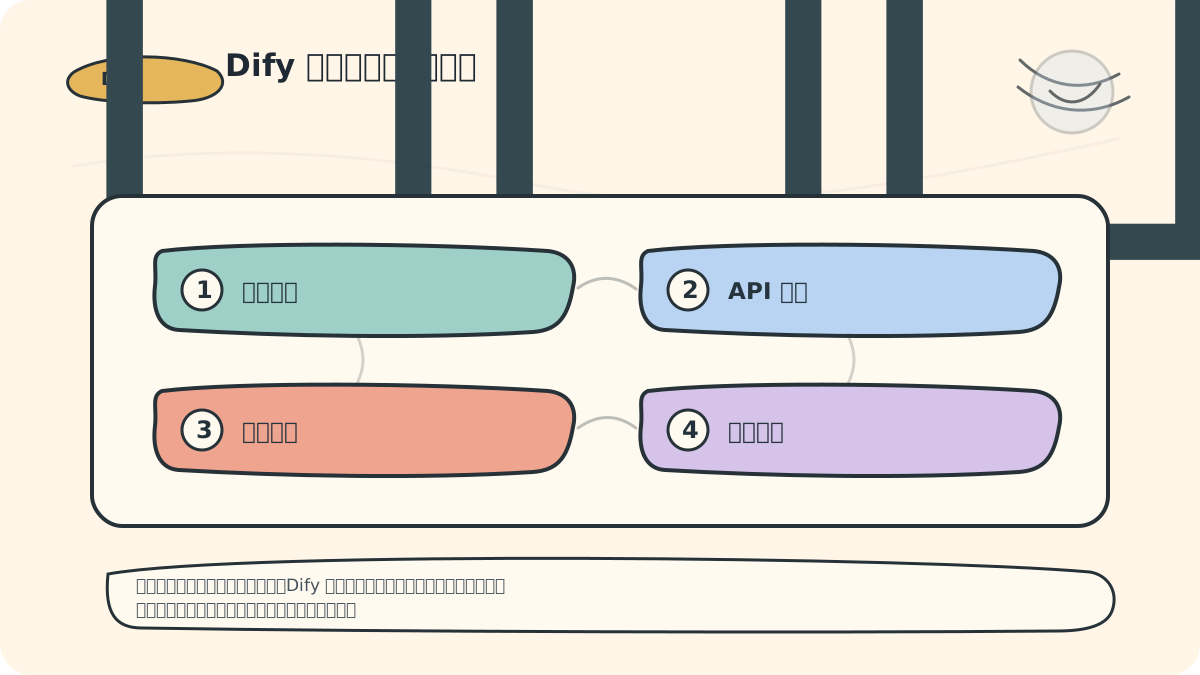
When troubleshooting, the biggest risk is making changes while forgetting what you’ve already modified. Dify involves interdependent components—services, models, knowledge bases, and workflow configurations—so even a minor change in one area can affect outcomes. Therefore, always preserve the current state before making adjustments.

I maintain a standardized fault-reporting template that includes: time of occurrence, user input, page screenshots, log snippets, current version, and recent configuration changes. Completing this template thoroughly significantly accelerates root-cause analysis and resolution.
In the previous article, we covered common issues and solutions encountered during Dify installation and initial usage. This article continues that theme, focusing on practical, step-by-step troubleshooting guidance to help users efficiently diagnose and resolve specific problems they may encounter while using Dify.
Common Issues and Their Solutions
1. Unable to Connect to the Dify Service

When diagnosing Dify issues, first verify: service status, dependency versions, database connectivity, model API availability, node input/output behavior, and failure logs.
Problem Description: Users encounter connection failure errors when attempting to start the Dify service.
Solutions:
-
Check Network Connectivity: Ensure your device is connected to the network. Try accessing other websites via a browser to confirm general connectivity.
-
Verify Service Status: Use the following command to check whether the Dify service is running:
systemctl status dify-
If the service is inactive, start it with:
systemctl start dify
-
-
Firewall Configuration: Confirm your firewall isn’t blocking ports required by Dify (e.g., port 8080). Check active firewall rules with:
sudo ufw status
2. API Requests Return Errors
Problem Description: API calls to Dify return HTTP error responses such as 500 Internal Server Error.
Solutions:
-
Review Error Logs: Examine Dify’s log file—typically located at
/var/log/dify.log—using:tail -f /var/log/dify.log- The logs often contain detailed error messages that help pinpoint the underlying cause.
-
Validate Request Parameters: Ensure all API request parameters are correctly formatted. You can test basic connectivity with this Python snippet:
import requests

response = requests.get("http://localhost:8080/api/some_endpoint")
if response.status_code != 200:
    print(f"Error: {response.status_code} - {response.text}")
else:
    print(response.json())
3. Model Training Fails
Problem Description: Model training terminates unexpectedly.
Solutions:
-
Resource Utilization Check: Verify system resources (CPU, RAM, GPU) aren’t exhausted. Monitor resource usage with:
top- If bottlenecks are detected, consider upgrading hardware or reducing training dataset size.
-
Data Format Validation: Ensure input data conforms to Dify’s expected format. For CSV files, validate structure using Pandas:
import pandas as pd df = pd.read_csv("your_data.csv") print(df.head()) -
Update Dify: Ensure you’re running the latest stable version:
pip install --upgrade dify
4. Feature Modules Fail to Load
Problem Description: Specific feature modules fail to load, displaying “module not found” or similar warnings.
Solutions:
-
Dependency Audit: Confirm all required packages and libraries are installed. List currently installed packages with:
pip list-
To install any missing dependencies, run:
pip install missing_library_name
-
-
Configuration File Review: Double-check that module references in configuration files (e.g., paths and names) are accurate and properly spelled.
5. Insufficient User Permissions
Problem Description: System reports “permission denied” when executing operations requiring elevated privileges.
Solutions:
-
Role Verification: Confirm the current user has appropriate permissions for the operation. When necessary, execute commands with
sudo:sudo your_command -
Permission Adjustment: To grant persistent access, add the user to an appropriate group:
sudo usermod -aG your_group your_username
When reviewing The Dify Generative AI Application Innovation Engine: Troubleshooting Guide, consolidate key concepts, procedural steps, and observable outcomes onto a single page for efficient revision.
When practicing The Dify Generative AI Application Innovation Engine: Troubleshooting Guide, document input conditions, corresponding actions taken, and resulting outputs together—this makes future audits and replication much easier.
Summary
Encountering issues while using Dify is common—and entirely expected. With the structured troubleshooting guidance provided above, users can rapidly isolate root causes and implement effective fixes, thereby improving overall productivity and experience. In the next article, we’ll explore Dify’s community support channels and available resources, helping users integrate more deeply into the Dify ecosystem and access additional assistance and inspiration.
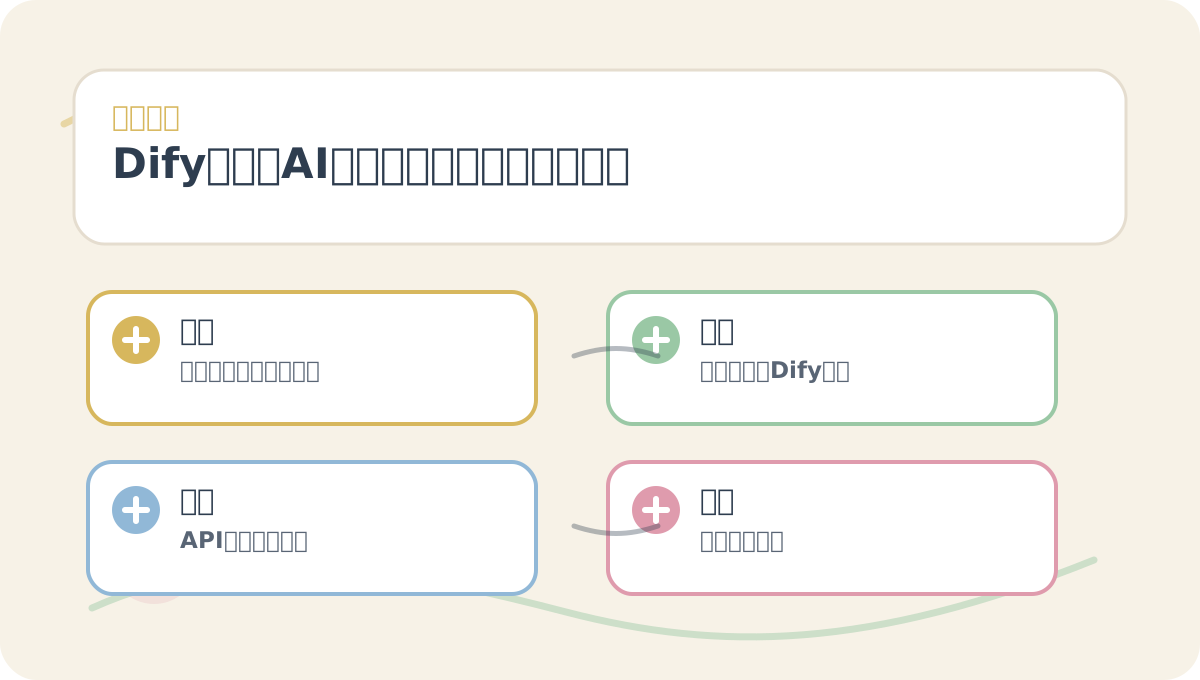
When reading The Dify Generative AI Application Innovation Engine: Troubleshooting Guide, begin by scanning the illustrations—especially those highlighting tasks, core concepts, practice prompts, and decision points—then return to the main text to fill in technical details. This approach helps you quickly assess which real-world scenarios this guide applies to.
Apply This Lesson
Turn this article into AI software, model, API, and security decisions.
English Article FAQ
Use this article as evidence before choosing AI tools
How should I use this AI Tutorials article?
Use it as the implementation or learning layer, then connect the idea to AI software buyer guides, tool comparisons, benchmarks, API choices, and security checks before making a production decision.
Is this English article different from the Chinese original?
The English edition is localized for global AI readers while preserving the original diagrams, screenshots, prompts, code examples, and source context from the Chinese article.
What should I read after Dify Troubleshooting Guide: Fix Common Issues in Generative AI App Development?
Continue with AI Software Buyer Guides, AI Tools Workbench, Best AI Coding Agents, AI Model Benchmarks, OpenAI vs Anthropic API, or LLM Security Tools depending on the decision you need to make.
Can this article alone choose an AI product or model?
No. Treat the article as evidence and context, then validate fit with pricing, privacy requirements, integration effort, benchmark results, workflow tests, and fallback planning.
Continue