English translation
Dify Tutorial #21: User Interaction and Feedback Channels for Generative AI Applications
AI Article Decision Snapshot
Turn the lesson into workflow, model, budget, and security checks before choosing tools.
Use this quick snapshot before leaving the article. It keeps the next search tied to practical AI software, model/API, cost, privacy, and implementation questions.
Workflow fit
Identify the real job behind the article: coding, research, document review, support, analytics, content, or internal automation.
Model or tool decision
Decide whether the next step is a software shortlist, an AI tool comparison, an API platform choice, or a model benchmark.
Budget and usage signal
Estimate seats, API calls, prompt volume, retries, review time, and fallback work before assuming the workflow is cheap.
Security and privacy review
Check whether source code, customer data, private documents, prompts, logs, or embeddings will enter the AI workflow.
More user interaction channels isn’t always better. Too many scattered entry points cause feedback to get lost; lack of clear ownership causes feedback to sink unaddressed; absence of version tracking means users can’t see improvements.
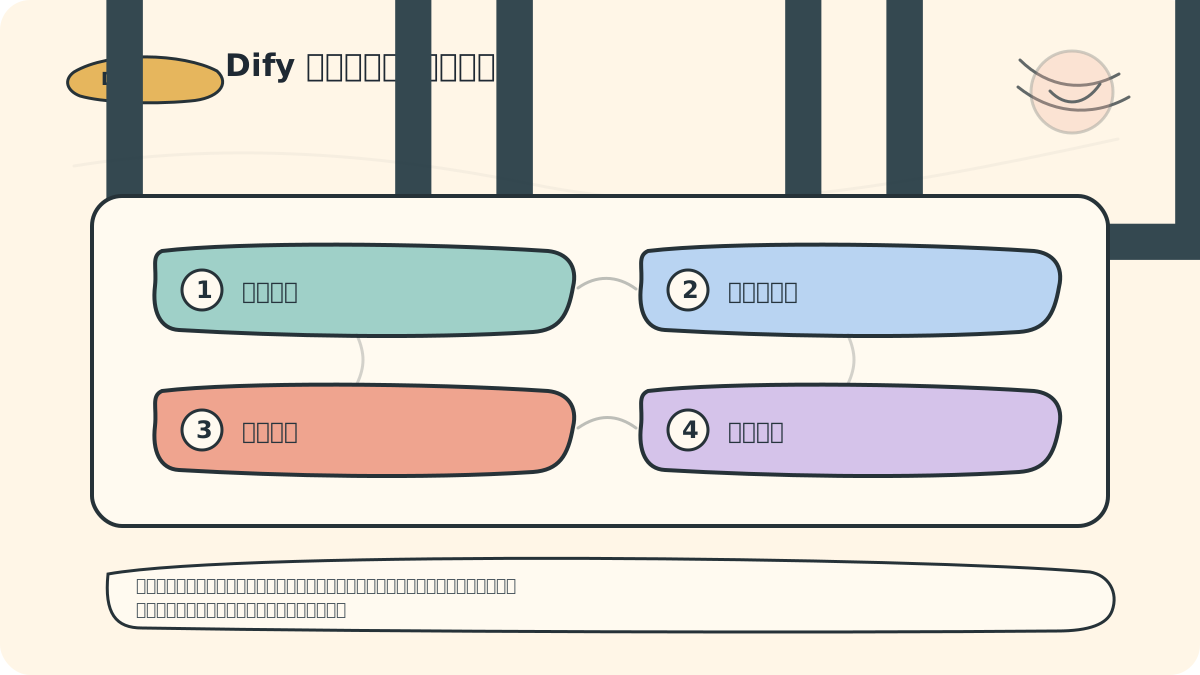
I’ll design the feedback process in four steps: user submission → team categorization → inclusion in a release plan → post-launch notification to users. Only when this loop is fully closed will users feel confident—and motivated—to keep sharing honest, actionable insights.
In previous tutorials, we explored Dify’s future development roadmap and outlined a series of exciting upcoming features and enhancements. In this installment, we shift focus to user interaction and feedback channels—a critical foundation for Dify’s continuous improvement and innovation.
Why User Interaction Matters
Users sit at the heart of Dify’s evolution. Their feedback not only helps refine existing capabilities but also reveals new needs and opportunities. Well-designed interaction channels help achieve three key goals:

When designing Dify application feedback channels, first assess: entry point location, issue categorization, user context, assigned owner, retrospective cadence, and verification in subsequent releases.
- Collecting feedback: Capturing users’ authentic experiences and unmet needs while using Dify.
- Strengthening user engagement: Making users feel heard, valued, and meaningfully involved.
- Enabling rapid iteration: Leveraging real-world input to adapt quickly to market shifts and continuously optimize the product.
Dify pursues these goals through the following interaction channels.
Interaction Channels
1. Community Forum
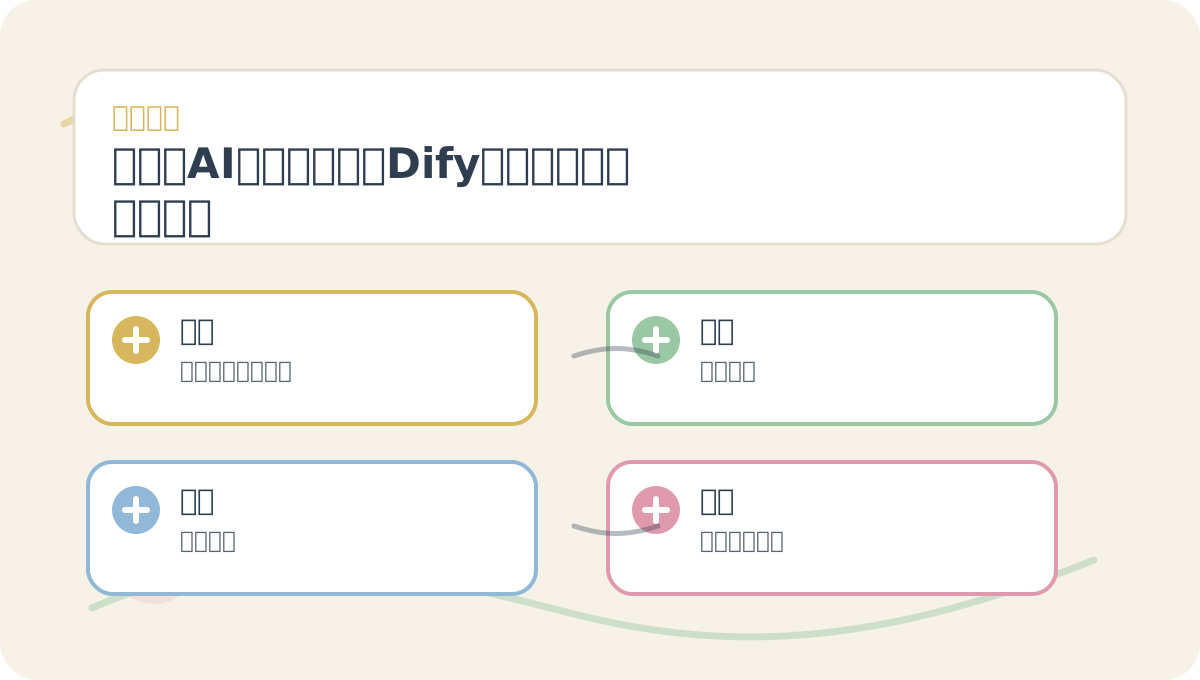
“User Interaction & Feedback Channels for Dify—the Generative AI Application Innovation Engine” is best read alongside its visual map. First confirm the core problem and evaluation criteria, then proceed to concept explanations and step-by-step practice—this helps connect ideas into a coherent mental model.
Dify maintains an active community forum where users can share opinions, suggestions, and technical issues. Beyond facilitating peer-to-peer exchange, the forum serves as a fertile ground for sparking new ideas and collaborative innovation.
Case Study:
A user proposed in the forum the ability to customize generated content by defining specific parameters. After internal assessment, the team prioritized this request, eventually delivering a “Custom Generation” feature—leading to a measurable increase in user satisfaction.
2. In-App Feedback Form
Dify embeds a lightweight, in-app feedback form, enabling users to submit thoughts and questions seamlessly during their workflow. We carefully designed the form to ask concise, focused questions—and guide users to provide concrete, actionable details.
<form>
  <label for="feedback">Please share your feedback:</label>
  <textarea id="feedback" name="feedback" rows="4" cols="50"></textarea>
  <input type="submit" value="Submit">
</form>
This frictionless channel ensures timely, contextual feedback—capturing insights precisely when users experience them.
3. User Surveys & Interviews
Regular surveys and in-depth interviews constitute another vital channel. Through qualitative conversations, we uncover deeper pain points, usage patterns, and latent needs—enabling targeted, high-impact improvements.
Case Study:
A recent survey on a newly launched feature revealed that many users struggled to understand how the generation logic worked. In response, we developed a suite of educational resources—including interactive explainers and guided walkthroughs—and published them directly within Dify. This not only clarified functionality but also helped users build consistent, effective habits.
4. Social Media & Instant Messaging Platforms
By engaging users on platforms like Twitter (X), WeChat Official Account, and Telegram, Dify reaches broader and more diverse audiences. These channels allow us to detect emerging sentiment in real time—and respond swiftly with transparency and empathy.
When reviewing “User Interaction & Feedback Channels for Dify—the Generative AI Application Innovation Engine,” place key concepts, procedural steps, and observable outcomes on the same page for efficient reflection.
When practicing “User Interaction & Feedback Channels for Dify—the Generative AI Application Innovation Engine,” write input conditions, processing actions, and visible outcomes together—making future review and validation straightforward.
Future Outlook
Looking ahead, Dify plans to further enhance its user interaction and feedback infrastructure. We aim to introduce intelligent feedback mechanisms—such as ML-powered analysis of user submissions—to automatically surface trends, recurring issues, and hidden opportunities.
Additionally, Dify will deepen its commitment to user voice through a formalized “User Feedback Recognition Program.” This initiative will incentivize participation with tangible rewards—strengthening the bond between users and Dify while directly elevating product quality through co-creation.
Summary
Through a diversified set of user interaction and feedback channels, Dify remains relentlessly focused on elevating user experience and fueling innovation. As highlighted earlier in our development roadmap, robust, well-structured user feedback is indispensable to successfully realizing those ambitious plans.
In the next tutorial, we’ll explore how Dify transforms this feedback into concrete product iterations and development cycles. Stay tuned—we look forward to growing together on Dify’s journey ahead!
Apply This Lesson
Turn this article into AI software, model, API, and security decisions.
English Article FAQ
Use this article as evidence before choosing AI tools
How should I use this AI Tutorials article?
Use it as the implementation or learning layer, then connect the idea to AI software buyer guides, tool comparisons, benchmarks, API choices, and security checks before making a production decision.
Is this English article different from the Chinese original?
The English edition is localized for global AI readers while preserving the original diagrams, screenshots, prompts, code examples, and source context from the Chinese article.
What should I read after Dify Tutorial #21: User Interaction and Feedback Channels for Generative AI Applications?
Continue with AI Software Buyer Guides, AI Tools Workbench, Best AI Coding Agents, AI Model Benchmarks, OpenAI vs Anthropic API, or LLM Security Tools depending on the decision you need to make.
Can this article alone choose an AI product or model?
No. Treat the article as evidence and context, then validate fit with pricing, privacy requirements, integration effort, benchmark results, workflow tests, and fallback planning.
Continue