English translation
11. Prioritizing AI Product Features
AI Article Decision Snapshot
Turn the lesson into workflow, model, budget, and security checks before choosing tools.
Use this quick snapshot before leaving the article. It keeps the next search tied to practical AI software, model/API, cost, privacy, and implementation questions.
Workflow fit
Identify the real job behind the article: coding, research, document review, support, analytics, content, or internal automation.
Model or tool decision
Decide whether the next step is a software shortlist, an AI tool comparison, an API platform choice, or a model benchmark.
Budget and usage signal
Estimate seats, API calls, prompt volume, retries, review time, and fallback work before assuming the workflow is cheap.
Security and privacy review
Check whether source code, customer data, private documents, prompts, logs, or embeddings will enter the AI workflow.
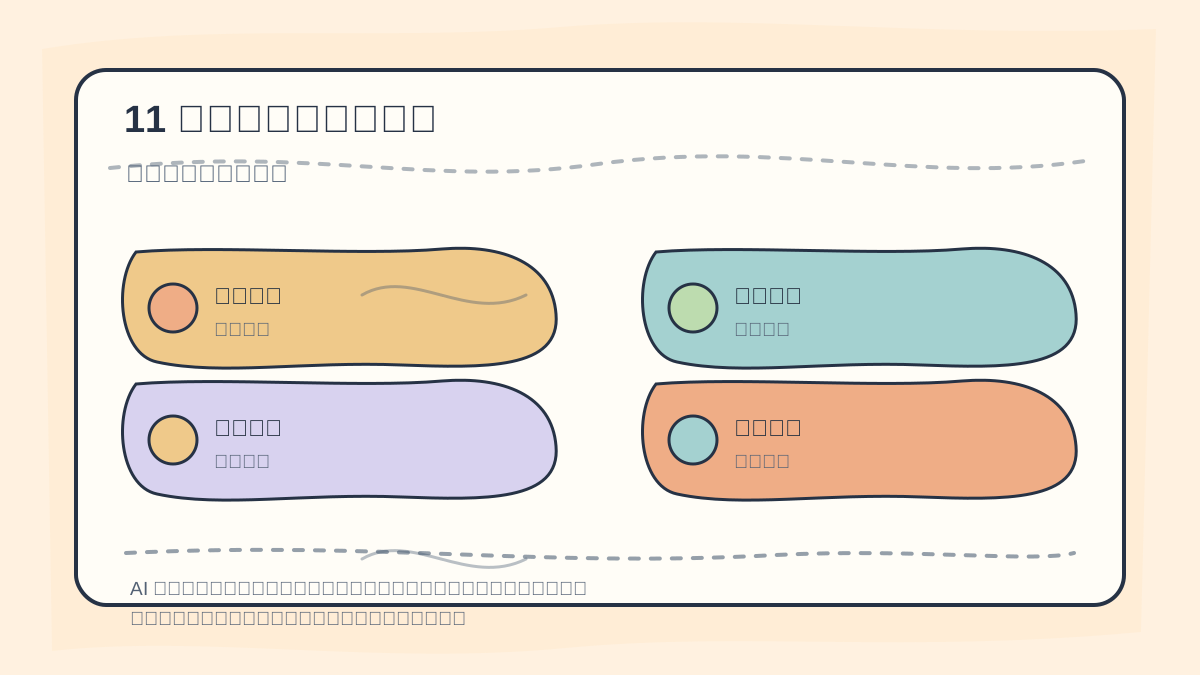
AI feature prioritization cannot rely solely on demand intensity; it must also consider data availability, model stability, and whether the cost of errors is controllable. High-risk features require smaller-scale pilots.
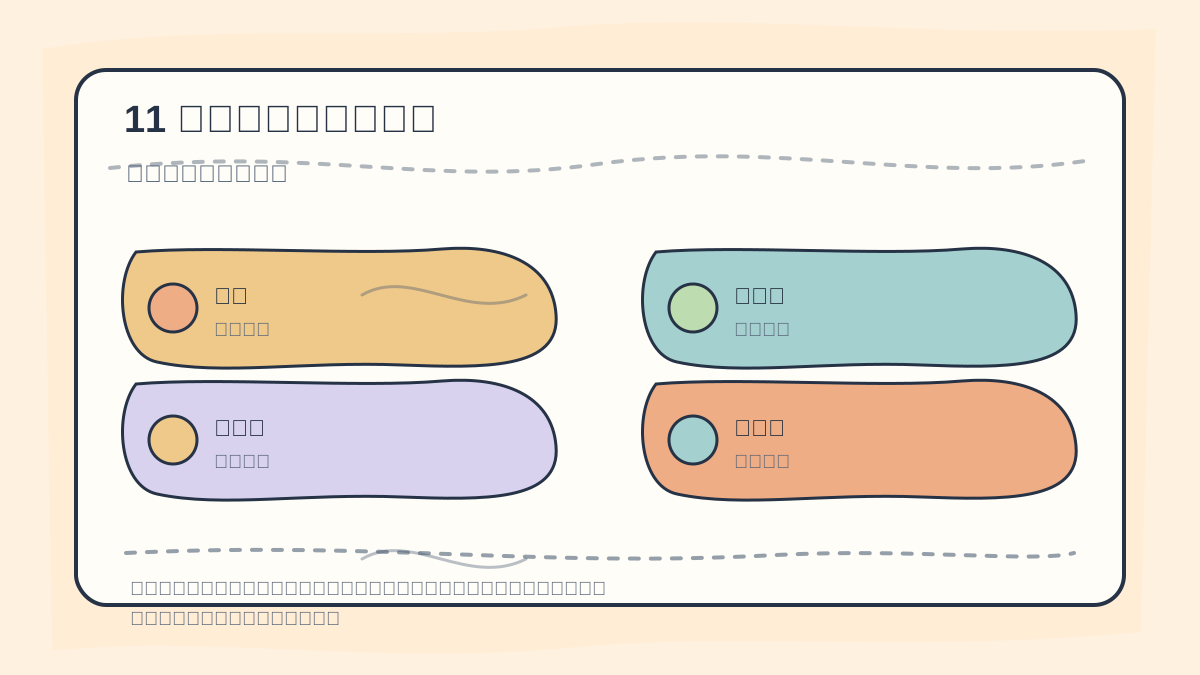
Assign each candidate feature four scores: Value, Frequency, Feasibility, and Failure Cost. Prioritize features that score highly on value and frequency—and where failure cost remains manageable.
In the previous chapter, we discussed the product’s business model and value proposition, emphasizing how to deliver unique value to the target market. Now, we shift focus to how to prioritize features in AI products, ensuring effective realization of those business goals and value propositions. This step is critical during the product planning and strategy phase—it directly impacts market launch timing and user satisfaction.
Understanding Feature Prioritization
Feature prioritization translates strategic objectives into concrete product requirements and features. This process can be analyzed and evaluated across several dimensions:
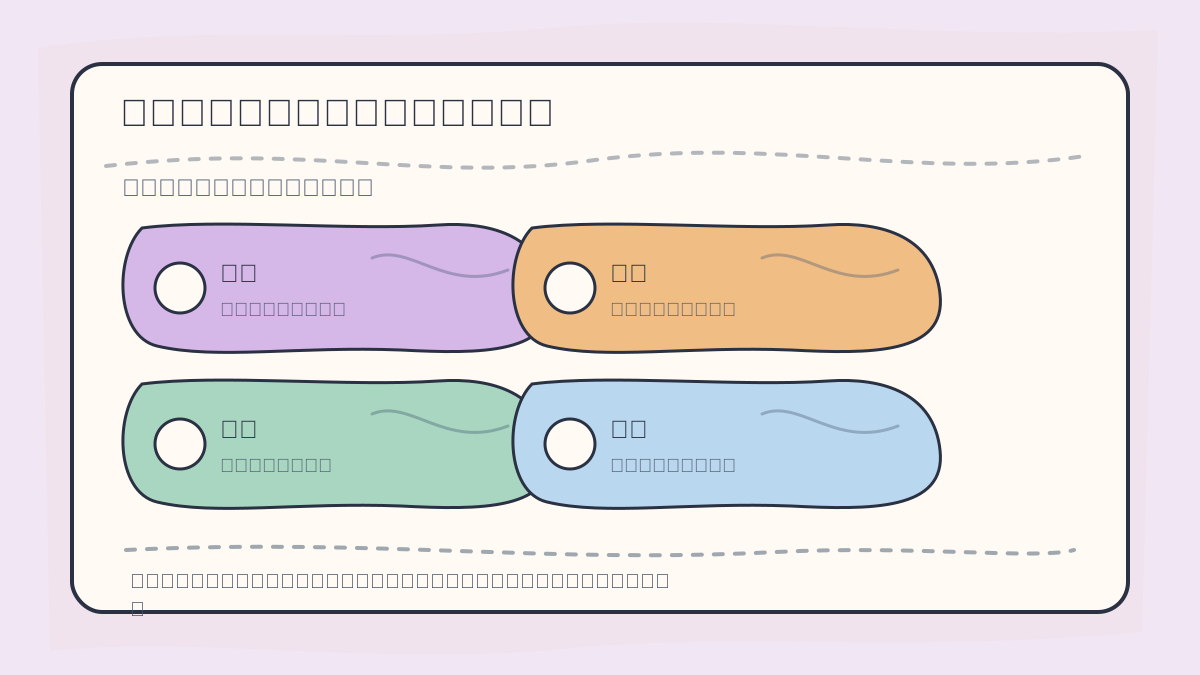
When determining feature priority, compare User Value, Business Impact, Development Cost, Dependencies, and Risk.
- Market Demand: What are users’ pain points and needs? Prioritize issues most frequently reported or strongly voiced by users.
- Business Value: How much potential revenue or strategic benefit does the feature generate? Can it improve user retention or conversion rates?
- Technical Feasibility: Does the engineering team possess the capability to implement this feature? Are required time and resources reasonable?
- Return on Investment (ROI): The ratio between implementation cost and projected benefits—i.e., ROI.
Taken together, these factors help you build a well-reasoned, actionable feature priority list.
Prioritization Evaluation Models
Several widely adopted evaluation models can guide your prioritization decisions:
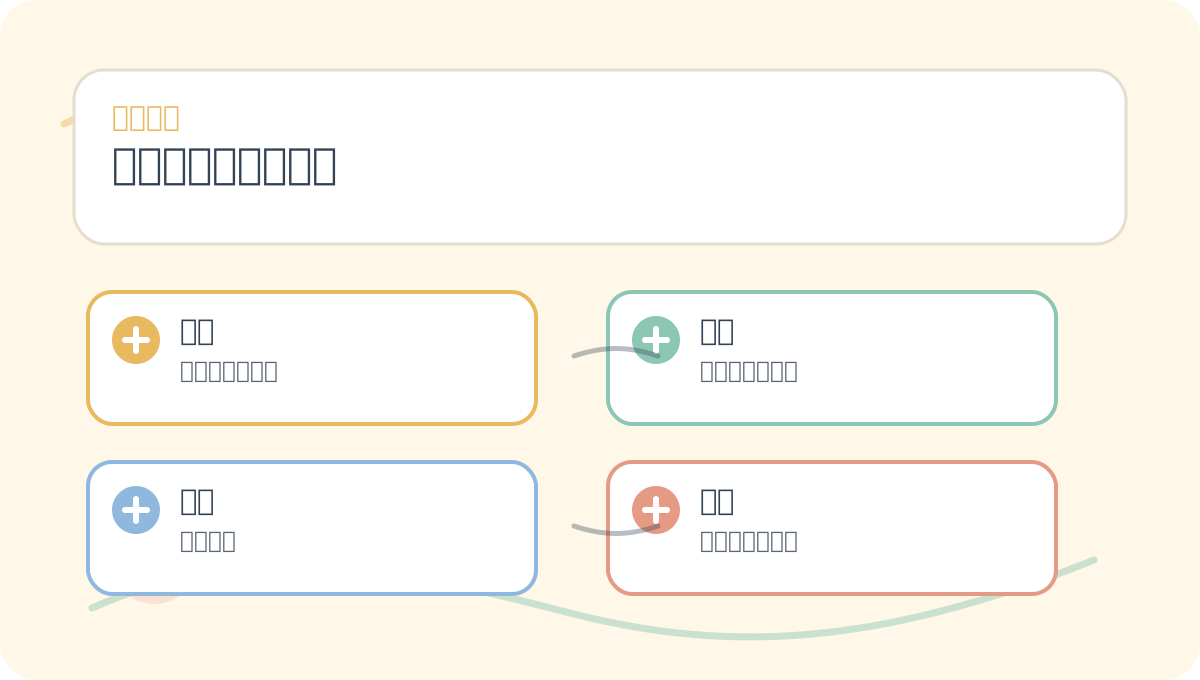
After reading “Prioritizing Product Features”, take one minute to reflect: Are key concepts clearly distinguished? Can the practice steps be reproduced? Can you restate conclusions in your own words?
-
MoSCoW Method:
- Must have (non-negotiable, essential for launch)
- Should have (important but not critical; deferred if necessary)
- Could have (desirable but low impact; included only if time/resources allow)
- Won’t have (explicitly excluded from current scope)
This method helps clarify functional importance and ensures teams concentrate effort on mission-critical items first.
-
Kano Model:
- Categorizes features into Basic, Performance, and Delighter types based on user expectations—revealing which features are “must-haves” versus “nice-to-haves.”
-
RICE Method:
- Quantifies priority using four dimensions: Reach (number of users affected), Impact (magnitude of effect per user), Confidence (certainty in estimates), and Effort (person-months or story points required).
The formula is:
This enables objective, multi-dimensional scoring and comparison across features.
Case Study
Consider an AI-powered customer support application requiring core features such as an intelligent chatbot, user behavior analytics, and support ticket management. Using the RICE method, we evaluate each:
| Feature                | Reach | Impact | Confidence | Effort | RICE Score |
|------------------------|-------|--------|------------|--------|------------|
| Intelligent Chatbot    | 10000 | 9      | 0.8        | 20     | 3600       |
| User Behavior Analytics| 5000  | 5      | 0.7        | 15     | 1166.67    |
| Support Ticket Mgmt    | 3000  | 4      | 0.9        | 10     | 1080       |
Here, the Intelligent Chatbot ranks highest—driven by broad reach and high impact—making it the top development priority.
User Feedback & Iteration
Feature priorities are not static. Throughout development, continuously gather user feedback and adjust priorities in response to evolving market conditions and user needs. Agile development enables rapid adaptation—integrating insights directly into the next iteration cycle.
Closing Thoughts
Prioritizing product features is pivotal to realizing your business model and value proposition. With disciplined evaluation and proven frameworks, you ensure features align with real market needs and deliver measurable business value. In the next chapter, we’ll explore Agile Development for AI Products, diving deeper into how to efficiently bring your product from concept to reality.
When revisiting “Prioritizing Product Features”, avoid launching large-scale projects upfront. Instead, start with a simple, illustrative example to verify clarity of the core logic.
If you haven’t yet fully internalized “Prioritizing Product Features”, walk through the four actions on this card to reinforce understanding.
Apply This Lesson
Turn this article into AI software, model, API, and security decisions.
English Article FAQ
Use this article as evidence before choosing AI tools
How should I use this AI Tutorials article?
Use it as the implementation or learning layer, then connect the idea to AI software buyer guides, tool comparisons, benchmarks, API choices, and security checks before making a production decision.
Is this English article different from the Chinese original?
The English edition is localized for global AI readers while preserving the original diagrams, screenshots, prompts, code examples, and source context from the Chinese article.
What should I read after 11. Prioritizing AI Product Features?
Continue with AI Software Buyer Guides, AI Tools Workbench, Best AI Coding Agents, AI Model Benchmarks, OpenAI vs Anthropic API, or LLM Security Tools depending on the decision you need to make.
Can this article alone choose an AI product or model?
No. Treat the article as evidence and context, then validate fit with pricing, privacy requirements, integration effort, benchmark results, workflow tests, and fallback planning.
Continue