English translation
AI Product Development Workflow: Collaboration Tools and Tech Stack
AI Article Decision Snapshot
Turn the lesson into workflow, model, budget, and security checks before choosing tools.
Use this quick snapshot before leaving the article. It keeps the next search tied to practical AI software, model/API, cost, privacy, and implementation questions.
Workflow fit
Identify the real job behind the article: coding, research, document review, support, analytics, content, or internal automation.
Model or tool decision
Decide whether the next step is a software shortlist, an AI tool comparison, an API platform choice, or a model benchmark.
Budget and usage signal
Estimate seats, API calls, prompt volume, retries, review time, and fallback work before assuming the workflow is cheap.
Security and privacy review
Check whether source code, customer data, private documents, prompts, logs, or embeddings will enter the AI workflow.
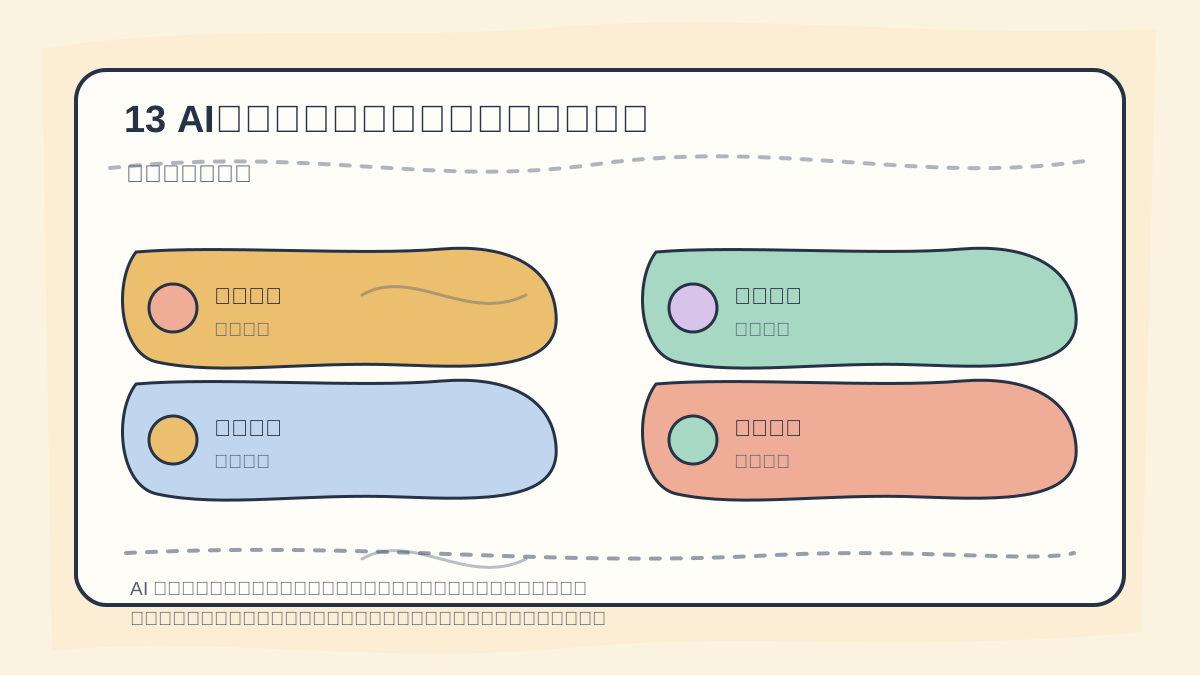
The tool stack for AI products encompasses more than just development tools—it also includes data management, evaluation, and operational tools. Without unified datasets, standardized metrics, and versioned records, teams struggle to determine whether a given change has genuinely improved or degraded performance.
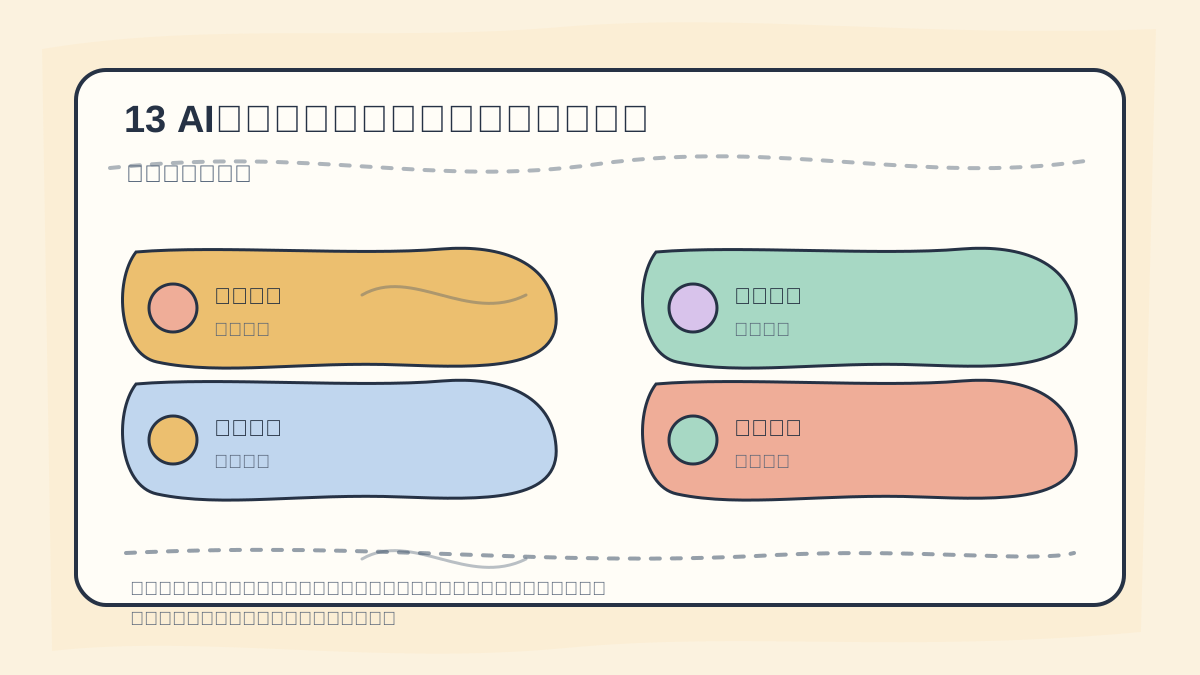
Start by building a small, curated evaluation set—populated with representative cases, edge cases, and known failure examples. Each time the model or prompt changes, re-run evaluation on this identical set of samples.
In the previous article, “Agile Development Process Overview for AI Products,” we introduced the principles and practices of agile development, emphasizing rapid iteration and cross-functional collaboration. In this article, we delve deeper into the collaboration tools and technology stacks required to support such an agile workflow—ensuring seamless information flow, well-organized tasks, and high-efficiency teamwork.
Collaboration Tools
1. Project Management Tools
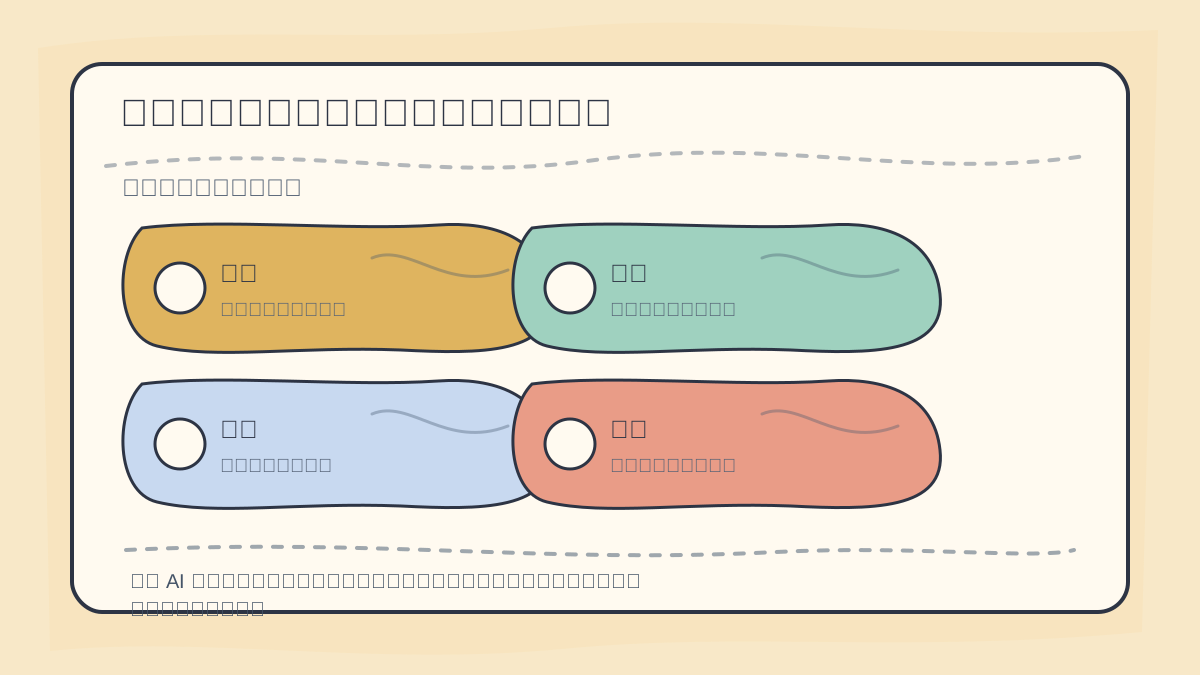
When selecting collaboration tools and tech stacks for AI products, first assess capabilities across five core dimensions: requirement management, design collaboration, engineering tracking, data feedback loops, and release documentation.
Project management forms the foundation of AI product development. Robust project management tools help teams track progress, assign tasks, and manage timelines effectively. Commonly used tools include:
-
Jira: Widely adopted in agile environments, Jira supports both Scrum and Kanban methodologies—enabling flexible task and sprint management.
Example use case for Jira: In an AI product development team, members create a Sprint board listing each developer’s To-Do items, prioritized accordingly. During daily stand-ups, the team quickly reviews task status updates—ensuring shared visibility and alignment on overall progress. -
Trello: A visual, card-based Kanban tool—simple and intuitive, ideal for small teams managing task assignments and tracking progress.
-
Asana: A highly visual task assignment and tracking platform—well-suited for managing complex, multi-phase projects.
2. Version Control Tools
Version control is critical in AI product development. Proper versioning ensures efficient, conflict-free collaboration—and prevents accidental code loss.
-
Git: The most widely used distributed version control system. Teams typically host repositories on platforms like
GitHuborGitLabto enable collaborative coding and code review.# Example: cloning a repository git clone https://github.com/yourusername/yourproject.git -
Git Flow: A branching strategy built on Git that supports parallel development—allowing teams to manage features, hotfixes, and releases cleanly and predictably.
3. Code Review & Collaboration
Code quality and maintainability are especially vital in AI development. Appropriate code review tools help uphold rigorous engineering standards.
-
Pull Requests (PRs): A core GitHub feature enabling structured peer review. Developers submit PRs to propose changes; reviewers examine logic, correctness, and adherence to style guidelines—reducing bugs and improving long-term maintainability.
Example code review workflow: After completing a new feature, a developer opens a PR and requests review from teammates. Reviewers engage in inline discussions about functional logic, suggest optimizations, and verify compliance with coding standards—collectively ensuring high-quality output. -
SonarQube: A continuous code quality inspection tool that automatically detects vulnerabilities, code smells, and coverage gaps—delivering actionable health reports.
Technology Stack
1. Programming Languages & Frameworks
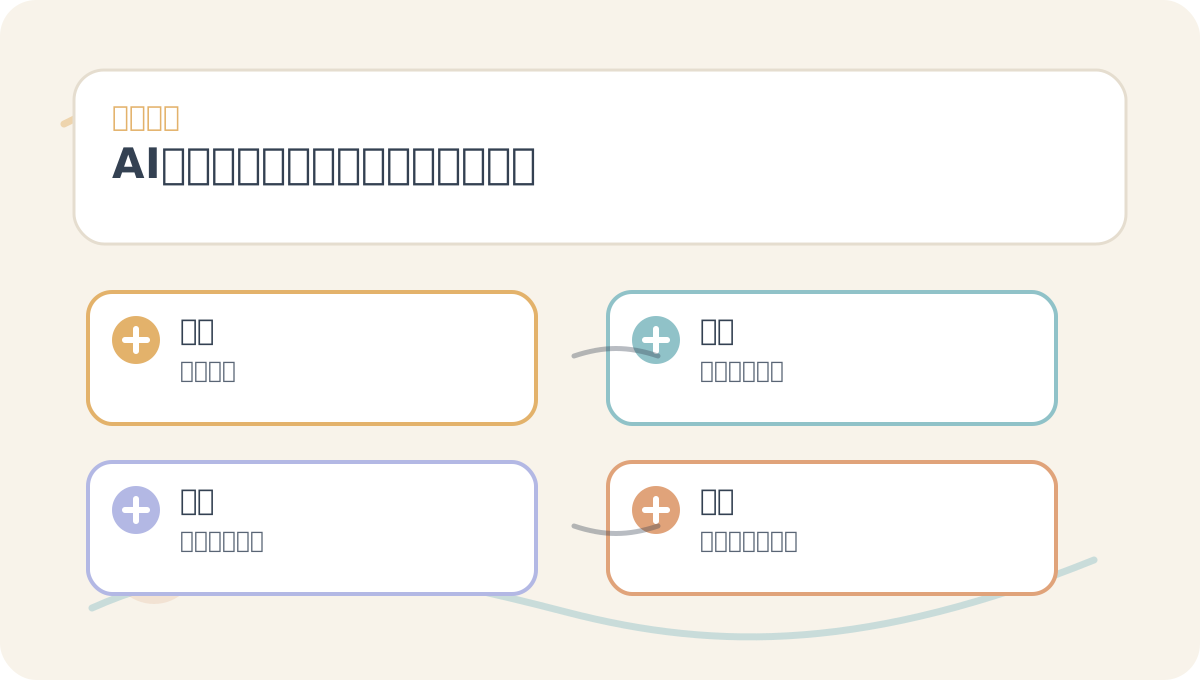
When reading “Collaboration Tools and Tech Stack for AI Product Development,” treat the accompanying diagrams as roadmap cards: First grasp the overall sequence; then understand why each step matters; finally, validate against edge conditions.
AI product development involves strategic choices of programming languages and frameworks—choices that directly impact development velocity and team capability alignment.
-
Python: Dominates AI development due to its rich ecosystem—including deep learning frameworks like
TensorFlowandPyTorch, plus robust libraries for prototyping and production. -
R: Excels in statistical analysis and exploratory data science—ideal for data preprocessing, hypothesis testing, and reporting.
-
JavaScript: Essential for frontend development and increasingly relevant for AI-powered web applications—especially with client-side ML libraries like
TensorFlow.js.
2. Data Processing & Storage
Efficient data handling and storage underpin AI product success. Choosing the right stack accelerates data ingestion, transformation, and analysis.
-
Databases: Select based on data structure and access patterns—for example:
PostgreSQL: Strong relational database for structured, transactional data.MongoDB: Flexible NoSQL option for semi-structured or rapidly evolving data schemas.
-
Data Processing Frameworks:
- Pandas: Python’s go-to library for data cleaning, transformation, and exploratory analysis.
- Apache Spark: A fast, general-purpose engine for large-scale data processing—ideal for batch and streaming workloads.
3. Deployment & Monitoring
Model deployment and runtime monitoring are pivotal phases in the AI product lifecycle.
-
Docker: Enables containerization—standardizing environments across development, testing, and production—greatly improving reproducibility and deployment speed.
-
Kubernetes: An industry-standard orchestration platform for managing containerized applications at scale—critical for resilient, auto-scaling AI services.
-
Prometheus + Grafana: A powerful open-source observability stack—providing real-time metrics collection, alerting, and interactive dashboards to monitor service health and proactively identify issues.
When reviewing “Collaboration Tools and Tech Stack for AI Product Development,” consolidate key concepts, procedural steps, and observable outcomes onto a single page for quick reference.
When practicing “Collaboration Tools and Tech Stack for AI Product Development,” explicitly document input conditions, actions taken, and resulting outputs—making future audits and knowledge transfer straightforward.
Summary
Selecting appropriate collaboration tools and technology stacks does more than boost team productivity—it is fundamental to delivering AI products reliably and at pace. When integrated with agile development practices, these tools empower teams to collaborate more effectively, respond faster to market shifts, and ultimately achieve product goals. In our next article—“Cross-Functional Team Collaboration in AI Product Development”—we’ll explore how product, engineering, data science, design, and operations teams align and coordinate to drive successful AI initiatives forward.
Apply This Lesson
Turn this article into AI software, model, API, and security decisions.
English Article FAQ
Use this article as evidence before choosing AI tools
How should I use this AI Tutorials article?
Use it as the implementation or learning layer, then connect the idea to AI software buyer guides, tool comparisons, benchmarks, API choices, and security checks before making a production decision.
Is this English article different from the Chinese original?
The English edition is localized for global AI readers while preserving the original diagrams, screenshots, prompts, code examples, and source context from the Chinese article.
What should I read after AI Product Development Workflow: Collaboration Tools and Tech Stack?
Continue with AI Software Buyer Guides, AI Tools Workbench, Best AI Coding Agents, AI Model Benchmarks, OpenAI vs Anthropic API, or LLM Security Tools depending on the decision you need to make.
Can this article alone choose an AI product or model?
No. Treat the article as evidence and context, then validate fit with pricing, privacy requirements, integration effort, benchmark results, workflow tests, and fallback planning.
Continue