English translation
Future Outlook and Best Practices for AI Security and Privacy
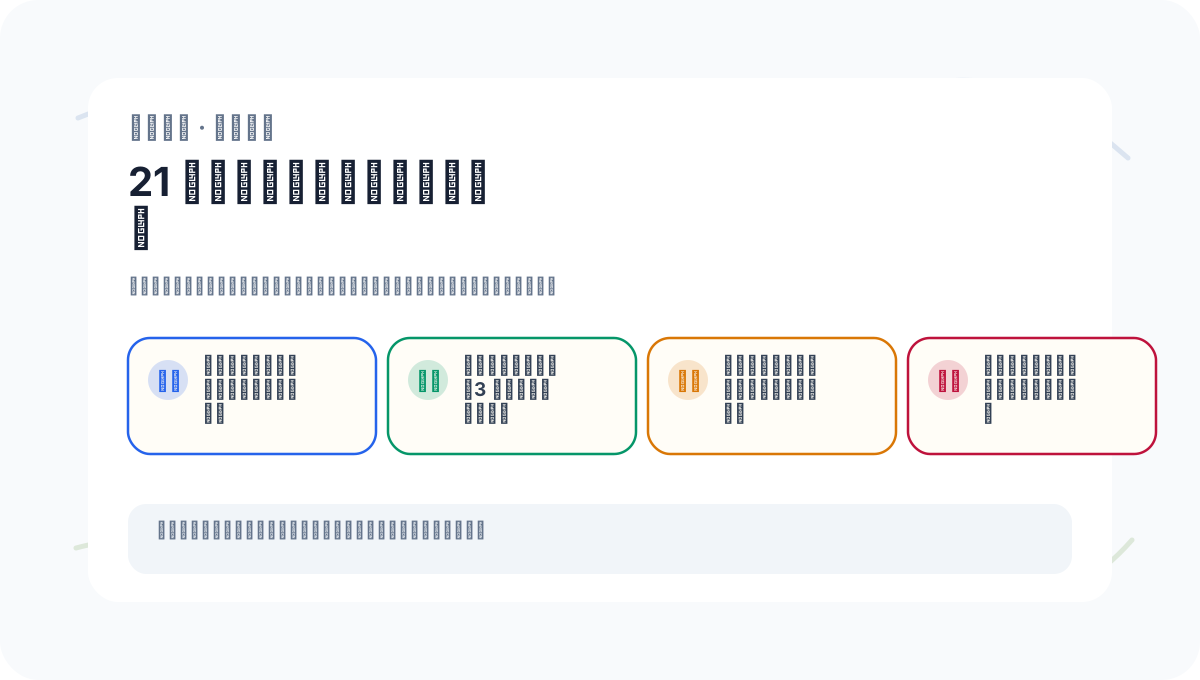
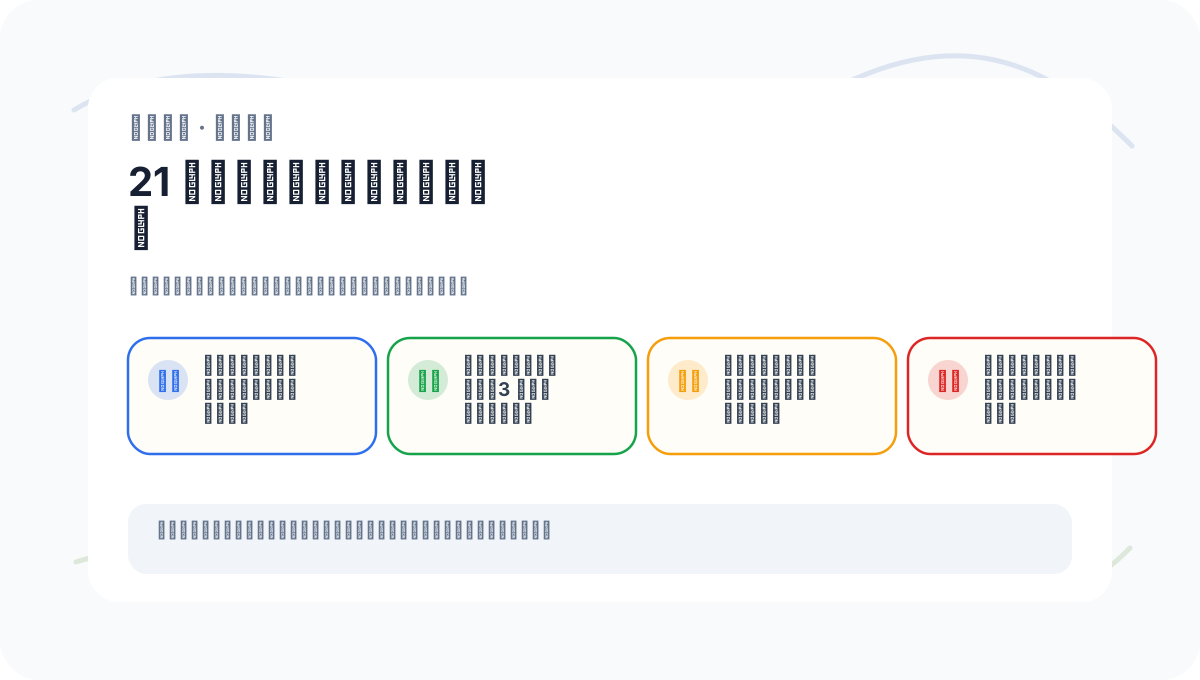
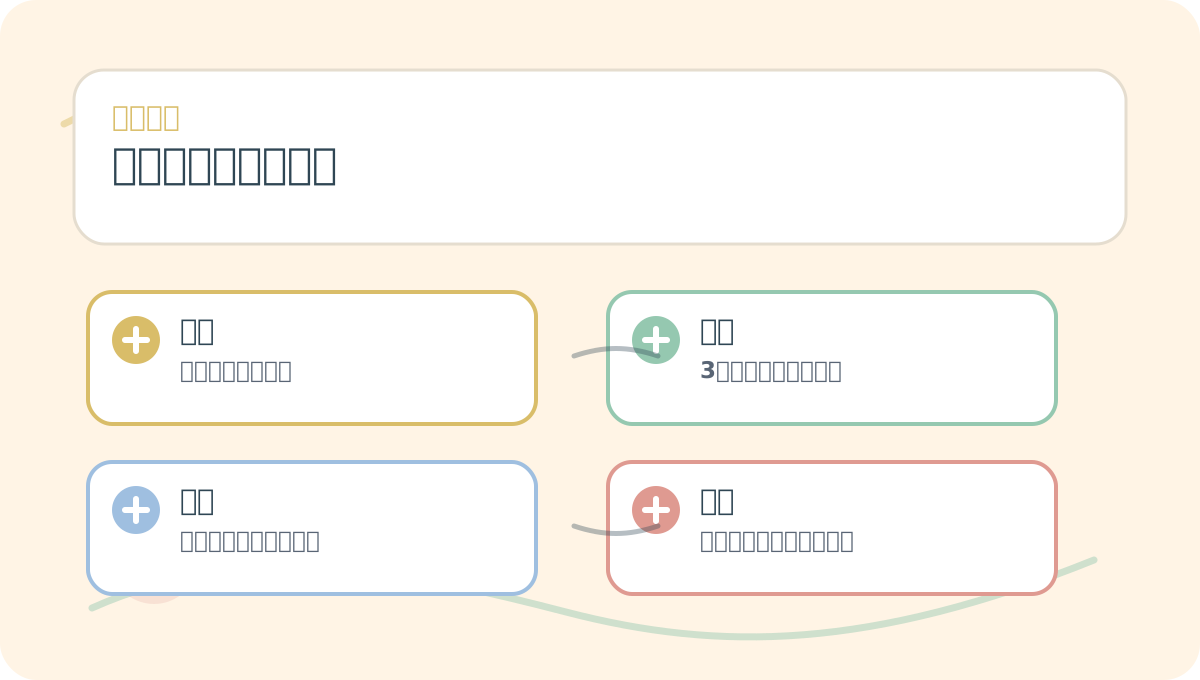
AI Article Decision Snapshot
Turn the lesson into workflow, model, budget, and security checks before choosing tools.
Use this quick snapshot before leaving the article. It keeps the next search tied to practical AI software, model/API, cost, privacy, and implementation questions.
Workflow fit
Identify the real job behind the article: coding, research, document review, support, analytics, content, or internal automation.
Model or tool decision
Decide whether the next step is a software shortlist, an AI tool comparison, an API platform choice, or a model benchmark.
Budget and usage signal
Estimate seats, API calls, prompt volume, retries, review time, and fallback work before assuming the workflow is cheap.
Security and privacy review
Check whether source code, customer data, private documents, prompts, logs, or embeddings will enter the AI workflow.
Security Risk Assessment Framework
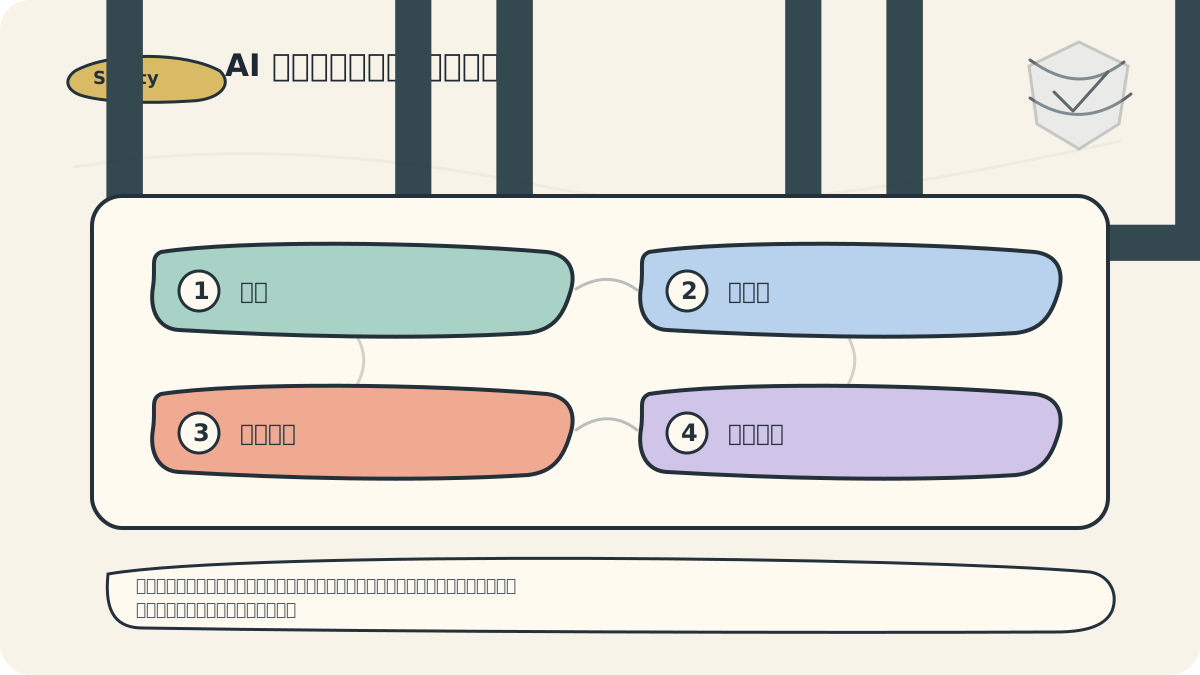
Ultimately, best practices are not merely a list of tool names—they form a closed loop: identify risks → minimize data exposure → enforce access controls → test adversarial cases → monitor in production → conduct periodic reviews.
In practice, adopt the NIST AI RMF 1.0 as your governance language, and use the OWASP checklist as your technical risk entry point.
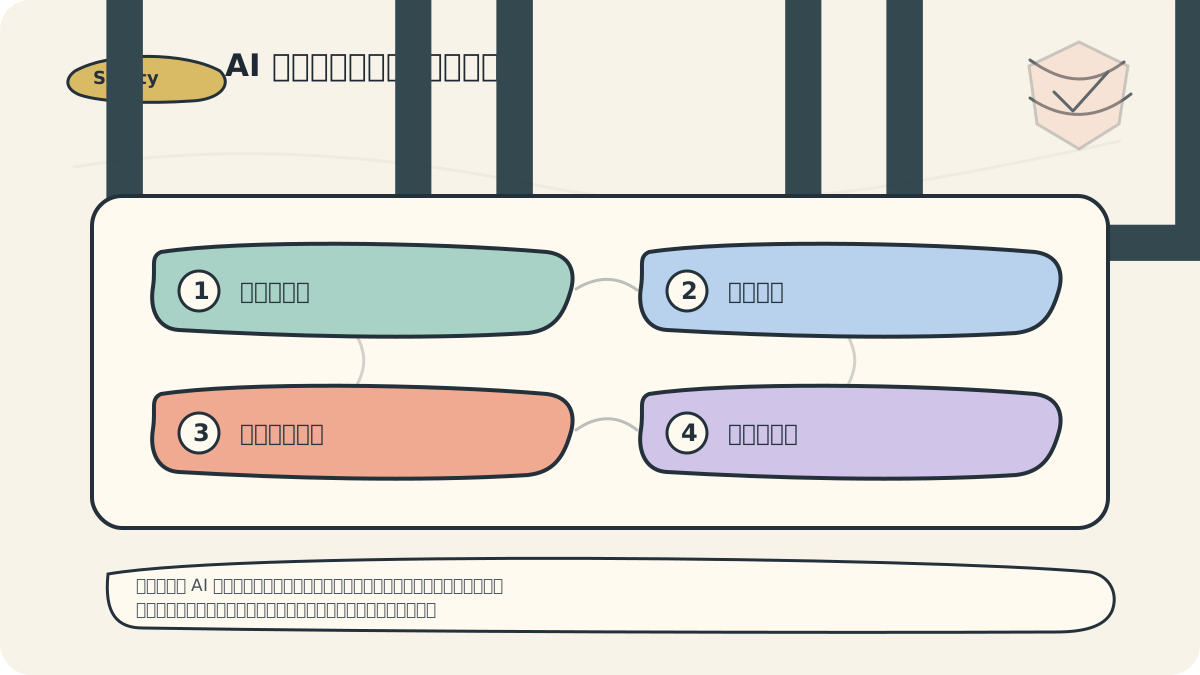
For each AI application, I maintain a single-page operational dossier: purpose, data used, permissions granted, test suite, known risks, responsible owner, and date of most recent review. This dossier is continuously updated—ensuring security remains an ongoing discipline, not an ad hoc activity.
7.3 Methods for Implementing Best Practices
In today’s rapidly digitizing and automating world, artificial intelligence (AI) is transforming industries across the board. Yet accompanying this transformation are increasingly prominent privacy and security challenges. Organizations must therefore adopt a comprehensive set of best practices to safeguard user privacy and ensure system security. This section outlines practical methods for effectively implementing those best practices.
When practicing Future Outlook & Best Practices, write the input conditions, processing actions, and observable outcomes together—making future reviews more efficient and actionable.
When reviewing Future Outlook & Best Practices, consolidate key concepts, procedural steps, and observable outcomes onto a single page for quick, holistic re-examination.
1. Establish a Multi-Layered Security Strategy
The first step in implementing best practices is building a multi-layered security strategy. Layering defenses significantly reduces potential attack surfaces. For example, a bank in the financial services sector adopted a defense-in-depth approach comprising:
- Infrastructure layer: Firewalls and intrusion detection systems (IDS).
- Application layer: Static and dynamic code analysis tools such as
SonarQubeto detect and remediate vulnerabilities early. - Data layer: End-to-end encryption using standards like AES (Advanced Encryption Standard) to protect sensitive user data.
2. Integrate Data Privacy and Security Holistically
Privacy and security considerations must be embedded throughout the AI system lifecycle—from design and development through deployment and maintenance. This integration can be achieved via:
-
Data minimization: Collect and process only the data strictly necessary for the intended purpose—avoiding redundant or excessive storage. For instance, certain social media platforms limit data collection to only what users explicitly volunteer.
-
Privacy by Design: Proactively embed privacy safeguards into system architecture from day one. Google, for example, employs automated data cleanup mechanisms that regularly purge unused or stale data—ensuring ongoing compliance with privacy principles.
3. Adopt Transparent Algorithms and Models
Transparency is foundational to building user trust. Organizations should prioritize interpretable models and clearly communicate how AI systems operate and handle data. A notable case is IBM Watson, which provides detailed decision rationales and result explanations—enabling healthcare professionals to understand, validate, and confidently apply its diagnostic recommendations. Transparency can be operationalized through these best practices:
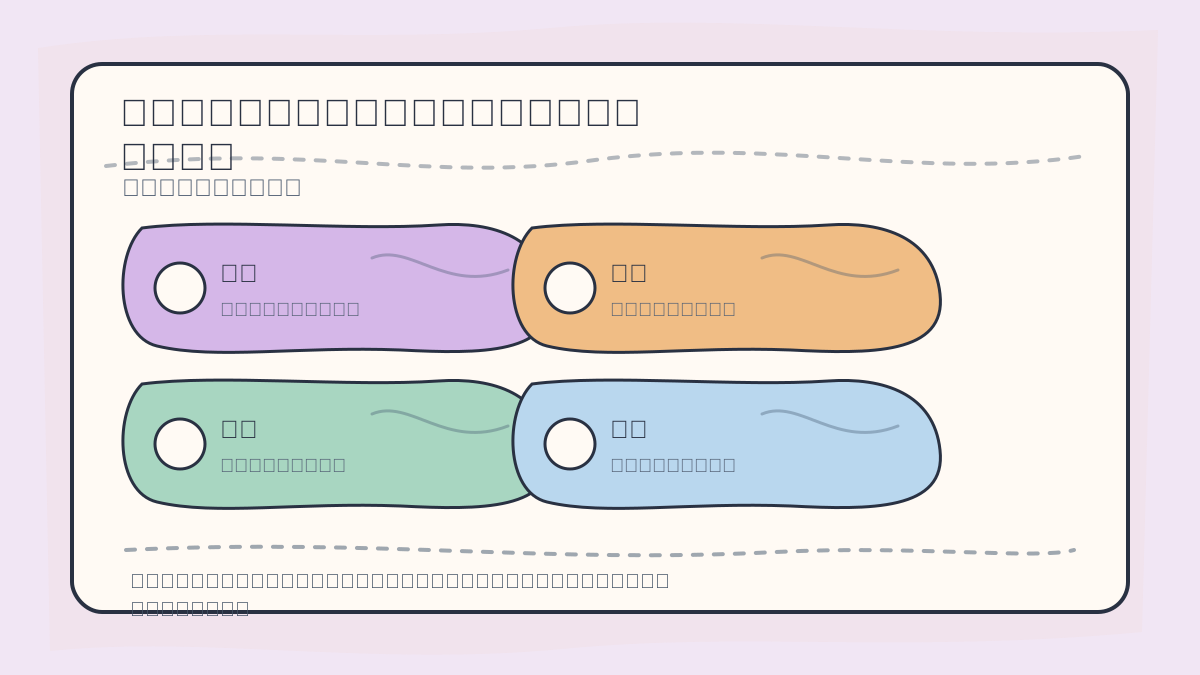
When summarizing the future outlook for security and privacy, assess six dimensions: regulatory developments, industry standards, data governance maturity, model auditability, user rights enforcement, and incident response readiness.
- Publish regular model performance reports—including algorithmic logic, training data provenance, and bias mitigation measures.
- Grant users meaningful access rights—allowing them to view what personal data is collected, how it is processed, and with whom it is shared.
4. Conduct Regular Security Assessments and Privacy Audits
To verify the effectiveness of implemented controls, organizations must perform periodic internal and third-party security assessments and privacy audits. These include:
- Red team / blue team exercises: Simulated adversarial attacks (red team) paired with real-time defensive responses (blue team), enabling continuous identification and remediation of vulnerabilities.
- Regulatory compliance checks: Systematic reviews against frameworks such as GDPR or CCPA—ensuring lawful data handling and timely updates to policies and procedures.
5. Strengthen Employee Security and Privacy Awareness
Technology and policy alone are insufficient without human engagement. Cultivating organizational awareness requires deliberate, sustained effort:
When studying Future Outlook & Best Practices, start with a small, reproducible scenario you understand—then map related concepts and practice steps onto it. After reading, restate the material using your own concrete example.
- Deliver recurring, role-based security and privacy training—for example, Facebook conducts regular phishing simulation drills and targeted workshops on secure data handling.
- Foster a “security-first culture” where every employee understands their role in protecting organizational assets—and feels personally accountable for upholding security and privacy standards.
6. Build Collaborative Networks with Stakeholders
Finally, enterprises should actively engage with internal and external stakeholders—including regulators, industry consortia, academic institutions, and peer organizations—to share threat intelligence, lessons learned, and emerging best practices. TechUK, for instance, convenes cross-sector working groups with leading technology firms to co-develop AI security guidelines and harmonize industry standards.
By applying these methods, organizations can systematically implement robust AI security and privacy best practices. The preceding steps emphasize the necessity of a holistic, integrated, and adaptive approach—ensuring resilience in complex threat environments while safeguarding user rights and data integrity. This foundation enables trustworthy digital transformation. In the final section of Chapter 7, we will explore specific technical tools and implementation techniques designed to strengthen and scale these practices in real-world deployments.
Apply This Lesson
Turn this article into AI software, model, API, and security decisions.
English Article FAQ
Use this article as evidence before choosing AI tools
How should I use this AI Tutorials article?
Use it as the implementation or learning layer, then connect the idea to AI software buyer guides, tool comparisons, benchmarks, API choices, and security checks before making a production decision.
Is this English article different from the Chinese original?
The English edition is localized for global AI readers while preserving the original diagrams, screenshots, prompts, code examples, and source context from the Chinese article.
What should I read after Future Outlook and Best Practices for AI Security and Privacy?
Continue with AI Software Buyer Guides, AI Tools Workbench, Best AI Coding Agents, AI Model Benchmarks, OpenAI vs Anthropic API, or LLM Security Tools depending on the decision you need to make.
Can this article alone choose an AI product or model?
No. Treat the article as evidence and context, then validate fit with pricing, privacy requirements, integration effort, benchmark results, workflow tests, and fallback planning.
Continue