Realtime AI News
NVIDIA expands confidential computing to help frontier model builders scale securely
NVIDIA is expanding its confidential computing capabilities so frontier model builders can spread workloads across global infrastructure while keeping models and data protected. The same-day OpenShell Reference Architecture is pitched as part of a portfolio for deploying agents safely at scale, with confidential computing sitting underneath as the layer that protects what those agents depend on.
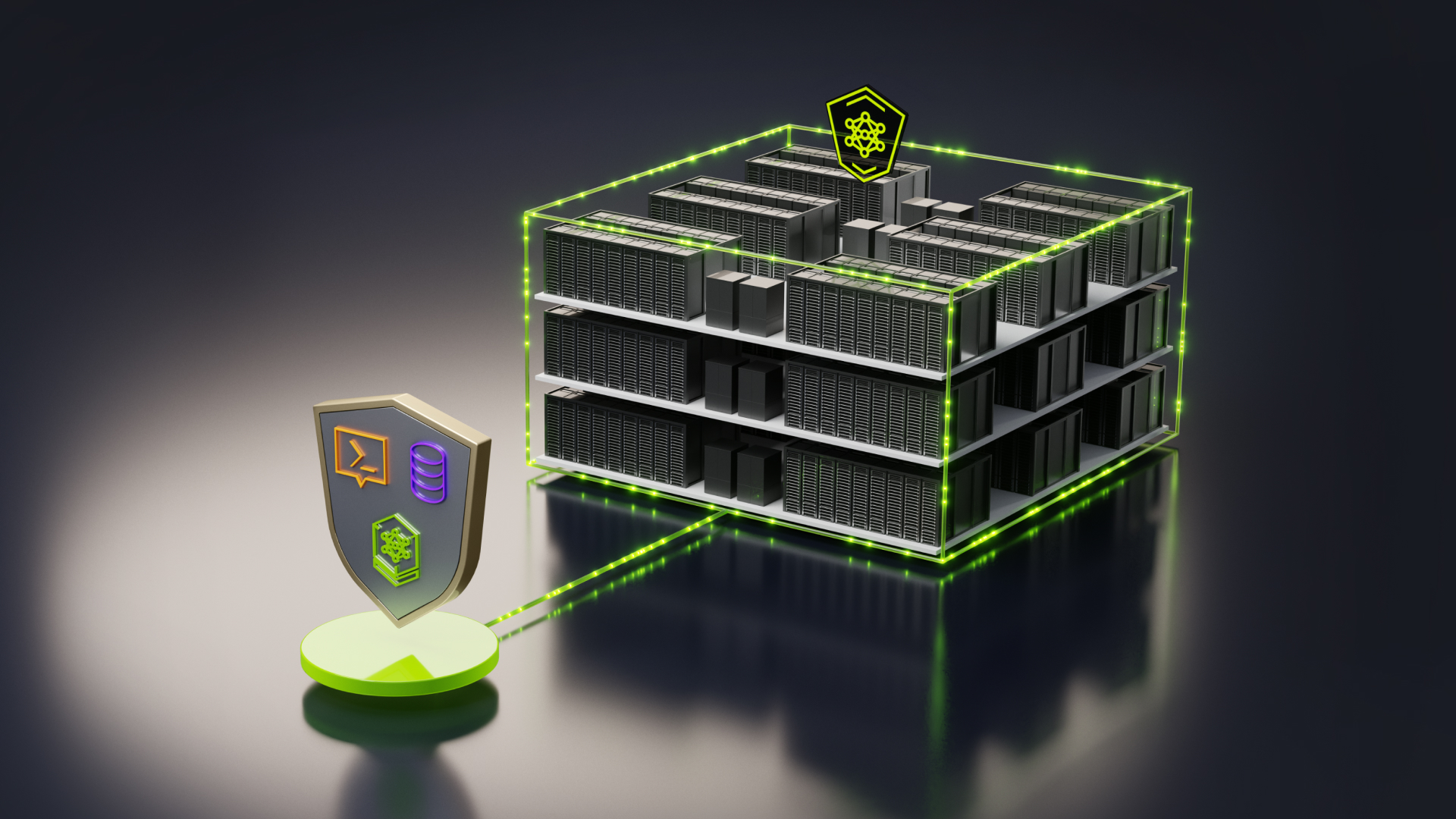
NVIDIA said on October 21 that it is expanding its confidential computing capabilities, aimed squarely at frontier model builders who need to scale workloads across global infrastructure without giving up protection for models and data. The blog post does not stop at the chip level; it frames the work in the context of agents being deployed at scale, where usefulness depends on the models they call and the data they rely on staying out of reach of unauthorized access.
Announced the same day, the NVIDIA OpenShell Reference Architecture is described as part of a growing portfolio of technologies that lets organizations deploy agents safely at scale. Confidential computing, in NVIDIA's framing, is the infrastructure layer that protects the models and data those agents depend on while they are running. One layer handles how agents get run; the other handles what happens to models and enterprise data underneath them.
The label matters. By calling confidential computing an infrastructure layer rather than a single accelerator feature or a software toggle, NVIDIA is pointing at a problem that does not line up with the boundaries of one data center. When inference happens in facilities an enterprise does not fully control, in third-party-operated regions, or across clouds, the question is whether models and data remain inside a protected boundary while the workload executes.
For frontier model builders, the pressure comes from scale itself. Compute is increasingly hard to concentrate in a single facility and has to be scheduled across regions, while customers' compliance expectations for models, prompts and business data do not relax simply because a workload crossed a border.
Read alongside the Agent Toolkit expansion NVIDIA also published the same day, the two posts describe a single stack: confidential computing draws the trusted execution boundary at the bottom, while reference architectures and tooling standardize how agents are deployed above it. For enterprises trying to move agents from pilot to production, neither half is optional.
The competitive implication is that security is shifting from an add-on to a default selling point of the infrastructure. As model providers schedule compute across clouds and jurisdictions, verifiable runtime protection becomes one of the conditions for taking on customers in sensitive industries.
What to watch next is the deployment cadence of the OpenShell reference architecture: when it moves past reference status into broader real-world use, which cloud providers and model vendors adopt the confidential computing stack, and how much performance overhead the security boundary carries under production inference loads.
Sources
Why it matters
By defining confidential computing as the infrastructure layer for agent deployments, NVIDIA is raising the security baseline for enterprise AI; for model vendors, demonstrable runtime protection is becoming a prerequisite for serving regulated industries.
Nearby Updates
All10/21, 18:30
NVIDIA's cuDSS reaches general availability, moving simulation workloads onto GPUs
NVIDIA said cuDSS, a library in its CUDA-X family, is now generally available. The release targets a critical step in engineering and scientific simulation, shifting that computation onto GPUs rather than leaving it on CPU-bound paths.
10/21, 18:30
Nvidia open-sources its factory agent blueprint, with Siemens as first anchor
Nvidia released its Factory Operations Blueprint, FOX, in early access on GitHub, giving developers a way to build always-on factory manager agents and specialists for inspection, root-cause analysis and fleet management. Siemens is already integrating FOX-built agents into Intelligence Center X, an effort Nvidia estimates can cut costs by 20%.
10/21, 18:30
Nvidia's European cloud partners scale up, and start fencing in agents
Nvidia used GTC Berlin to detail how European, Nordic, African and Central Asian cloud partners are expanding regional AI capacity on its DSX platform, with Nscale reporting 37% more GPUs and nearly 50% higher inference throughput inside the same power budget. It also introduced the OpenShell reference architecture, which enforces agent access boundaries in silicon.
10/21, 18:45
Google Cloud and NVIDIA Take Vera Rubin to General Availability With A5X Instances
Google Cloud and NVIDIA said A5X instances built on NVIDIA Vera Rubin reach general availability next month, with planned expansion into Europe. The platform combines Vera Rubin NVL72, ConnectX-9 SuperNICs, Google Cloud's Virgo network and fourth-generation liquid cooling, and Google Cloud plans to scale to as many as 960,000 Rubin GPUs across multiple sites.